Axewelledge, a leading exporter from India, specializes in high-quality Bentonite. With a commitment to excellence, we supply premium Bentonite to the Middle East and Southeast Asia markets.


North Angle Complex, 304,
150 Feet Ring Rd, Opposite Ambedkar Nagar BRTS Stop,
Madhav Park, Punit Nagar,
Mavdi, Rajkot, Gujarat 360004
© Axewelledge 2026, All Rights Reserved.
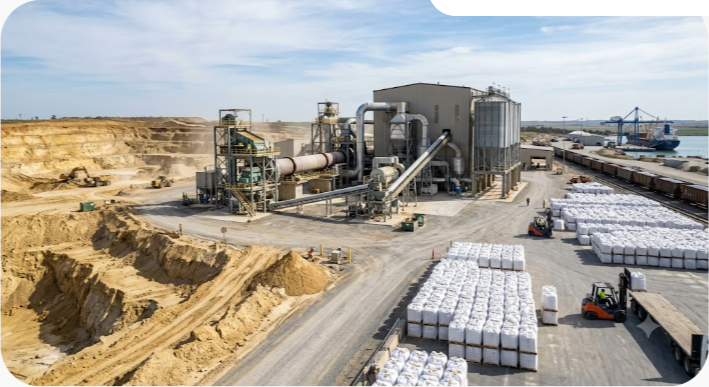
Bentonite does not have one universal price per ton. A buyer may receive a relatively low quote for crude mine-run clay, while a finely milled, chemically modified, tested, and tightly specified grade can cost several times more. The difference comes from what is being purchased, not simply from the word "bentonite" on the quotation.
For standard industrial material, price is usually shaped by bentonite type, swelling and rheological performance, processing, particle size, moisture, testing requirements, packaging, order volume, origin, and freight terms. Specialized grades can sit in a completely different price category because they require additional processing, purification, modification, or certification.
That distinction matters when comparing suppliers. A lower FOB price isn't necessarily the cheaper option if the material requires more treatment at your plant, arrives with higher moisture, uses expensive packaging, or fails to meet the performance specification.
This guide explains how bentonite pricing is built up, which specifications have the greatest effect on cost, how sodium and calcium bentonite compare, and how industrial buyers can calculate a more useful delivered cost per metric ton.
There is no single reliable global price for bentonite because commercial grades differ substantially in composition, performance, processing, and end use. As a broad purchasing reference, standard industrial bentonite may range from roughly tens to several hundred US dollars per metric ton, while highly processed or specialty modified grades can move into the four-figure range.
The following figures are best treated as indicative budgeting ranges rather than live market quotations. Actual offers can differ significantly by country of origin, mine quality, specification, order quantity, packaging, Incoterms, destination, and freight market conditions.
| Bentonite Grade / Application | Typical Characteristics | Indicative Price Range (USD / Metric Ton) |
|---|---|---|
| Raw / Unprocessed Clay | Crude mined material, usually higher moisture and limited processing | $40–$100+ |
| Calcium Bentonite | Low to moderate swelling, absorbent grades, standard industrial mesh | $80–$180+ |
| Foundry Grade Bentonite | Controlled bonding performance for green-sand casting | $120–$300+ |
| Drilling Grade Bentonite | High yield, controlled rheology, fluid-loss performance | $150–$350+ |
| Civil Engineering Grade | High swelling and low hydraulic conductivity requirements | $180–$400+ |
| Granular Sodium Bentonite | Controlled granulation for sealing and absorbent applications | $100–$250+ |
| Activated / Specialized Treatment Grade | Modified for specific adsorption, bonding, or treatment requirements | $250–$600+ |
| Highly Processed Cosmetic / Pharmaceutical Grade | Fine particle size, tighter purity and testing requirements | $1,000–$3,500+ |
| Organophilic Bentonite | Chemically modified for non-aqueous systems and specialty formulations | $1,000–$3,500+ |
These ranges shouldn't be used as a substitute for a supplier quotation. Even two products described as "sodium bentonite" can have very different yield, swelling, viscosity, moisture, particle-size distribution, and impurity profiles.
For a serious procurement decision, compare the same specification on the same commercial basis. A $180/ton FOB offer and a $240/ton CIF offer aren't directly comparable, just as a crude clay quote can't be compared with an API-compliant drilling grade.
The easiest way to understand bentonite pricing is to separate the cost into the material itself and the work required to turn that material into a product that meets a buyer's specification.
At a basic level, the price reflects:
The first few factors determine the product's manufacturing cost. The final factors determine how much of that cost reaches the buyer's warehouse.
The mineral chemistry of the deposit establishes much of the clay's natural behavior. Sodium bentonite generally has greater swelling and water-retention capability than calcium bentonite, although actual performance depends on mineralogy and test conditions rather than the label alone.
Sodium bentonite is widely selected for applications where swelling, gel formation, sealing, or water-based rheology is important. Common uses include drilling fluids, geosynthetic clay liners, civil engineering sealing, pond and lagoon sealing, and certain absorbent products.
Calcium bentonite generally has lower swelling in water but can provide useful adsorption and absorbent properties. It is used in applications such as absorbents, animal bedding, certain agricultural products, and other industrial processes where extreme swelling isn't required.
Natural sodium bentonite deposits with strong performance characteristics can command a premium because the deposit's mineralogy is valuable to the intended application. However, it's misleading to assign a fixed percentage premium to sodium bentonite in every market. Availability, quality, processing, and freight can easily outweigh the effect of type alone.
The practical lesson is simple: don't compare sodium and calcium bentonite solely by price per ton. Compare how much material each process needs to deliver the required result.
Some deposits contain naturally occurring sodium-dominant bentonite. Others are calcium-dominant and can be modified through sodium activation.
In a common activation process, calcium bentonite is treated with sodium carbonate, often called soda ash. The sodium ions alter the exchangeable-ion balance of the clay and can increase swelling and rheological performance. The result depends heavily on the starting clay, dosage, mixing, moisture, aging, and process control.
That additional processing adds cost through several channels:
Activated bentonite therefore shouldn't be priced against untreated calcium clay as though they were identical products.
Specialty grades require even more processing. Organophilic bentonite, for example, is chemically modified so the clay can function in non-aqueous systems. Such products may be used in oil-based drilling fluids, coatings, greases, inks, and other specialty formulations. Their pricing reflects chemical modification, tighter process control, formulation requirements, and smaller production volumes rather than ordinary clay-mining costs alone.
Particle size is another major cost driver, particularly when a buyer asks for a very fine powder.
Crushing a dried clay lump into a coarse granular product takes considerably less energy than producing a tightly controlled micronized powder. Fine grinding also increases equipment wear and can reduce production throughput.
Typical commercial forms include:
Mesh size alone doesn't tell the whole story. Two suppliers can both quote 200-mesh material while producing different particle-size distributions. If particle size matters to your process, specify the actual requirement and test method rather than relying only on a mesh label.
Over-specification is a common source of unnecessary cost. If a process performs well with a standard industrial powder, paying for a much finer grade may add expense without improving the finished product.
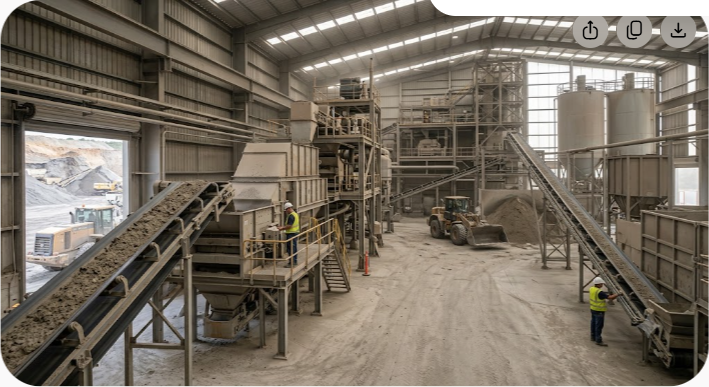
Testing is part of the product cost whenever a buyer needs documented performance rather than a general-purpose clay.
For drilling applications, buyers may request material that meets the relevant requirements of API Specification 13A. Depending on the product and application, testing can cover properties such as viscosity, filtration behavior, moisture, residue, and other specified characteristics.
Foundry buyers may focus on properties associated with green-sand molding performance, including bonding behavior, moisture response, green compression strength, and thermal stability. The exact testing program should match the foundry's process and internal specification.
Cosmetic and pharmaceutical applications can require tighter controls around purity, microbiological quality, heavy metals, particle size, and contamination. Dedicated processing and controlled handling can add significant cost compared with ordinary industrial clay.
The important procurement point is that certification has value only when the specification is relevant to your application. Paying for unnecessary testing can increase the price without improving performance.
Bentonite is commonly dried after mining because freshly extracted clay can contain substantial moisture. The amount varies by deposit, mining conditions, and processing method.
Drying costs include fuel or electricity, thermal equipment, labor, maintenance, and material handling. Energy-intensive drying becomes especially important when the buyer specifies a low moisture level.
Moisture also affects logistics. If a buyer pays by metric ton, excess water effectively occupies part of the shipment weight without contributing mineral value. It can also affect storage stability, flowability, and downstream processing.
For this reason, procurement teams should specify an acceptable moisture range and verify how moisture is measured. A quotation based on a dry basis and one based on an as-received basis are not equivalent.
A useful comparison is to calculate the dry-basis cost when moisture differs materially between suppliers. Otherwise, the apparently cheaper product may contain more water and less usable dry clay per shipment.
Packaging can make a noticeable difference to the final price, particularly for export shipments.
The main commercial options include:
Rather than assuming a fixed surcharge for each packaging format, ask suppliers to quote the same product in each packaging option. Packaging costs vary by bag construction, liner, printing, pallet requirements, labor rates, and order size.
If your facility has automated unloading equipment, larger bags or bulk delivery may lower handling costs. If it doesn't, the cheapest packaging option on the supplier's quotation may create additional costs at your plant.
Bentonite is a relatively low-value, high-weight mineral compared with many specialty chemicals. Freight can therefore have a major effect on the delivered price.
A buyer should consider the entire logistics chain:
India is an important source of bentonite, with major deposits and processing activity in Gujarat. For buyers located relatively close to Indian ports, sourcing from an established producer or exporter can provide a useful freight advantage. The actual benefit depends on the destination, port, vessel or container availability, and current freight market.
Incoterms must also be compared correctly.
Always confirm the exact Incoterm, named place, and included charges in the quotation. A price isn't meaningful until you know where the seller's responsibility ends.
Quantity can change pricing just as much as product specifications.
A supplier producing a full container or bulk shipment can spread loading, laboratory, documentation, and handling costs across more material. Small spot orders often have higher per-ton logistics and administrative costs.
For recurring demand, buyers may also negotiate annual supply agreements, scheduled releases, or volume-based pricing. These arrangements can improve supply predictability, although the commercial benefit depends on the contract terms and market conditions.
Don't commit to more material than you can use simply to obtain a nominal volume discount. Inventory carrying costs, storage requirements, moisture exposure, and working capital can erase the apparent saving.
The best-value bentonite is the grade that meets the process requirement with the lowest total cost of use. A cheaper clay can become expensive if it requires a higher dosage or fails to deliver the required swelling, viscosity, bonding, or sealing performance.
| Parameter | Natural Sodium Bentonite | Activated Calcium Bentonite | Natural Calcium Bentonite |
|---|---|---|---|
| Relative Cost | Moderate to high, depending on grade | Moderate to high, depending on processing | Often lower for basic grades |
| Water Swelling | Generally high | Can be increased through activation | Generally lower |
| Water-Based Rheology | Often strong | Can be engineered for specific requirements | Usually lower |
| Common Applications | Drilling, sealing, GCLs, civil works | Foundry, drilling, civil and industrial uses | Absorbents, agriculture, selected industrial uses |
| Processing Requirement | May require drying and milling | Requires activation in addition to normal processing | Often less processing for basic grades |
| Key Buying Metric | Swelling, yield, rheology, filtration | Performance after activation | Absorption, mineralogy, and application-specific performance |
Actual performance varies by deposit and processing method. A supplier's technical data sheet and Certificate of Analysis should therefore be reviewed before selecting a grade for a critical application.
Comparing only the quoted price per ton is one of the easiest ways to make a poor purchasing decision.
A more useful calculation is:
Landed cost per metric ton = product price + packaging + inland freight + export charges + ocean freight + insurance + destination charges + applicable duties and taxes
For process applications, take the calculation one step further:
Cost per unit of performance = landed bentonite cost ÷ usable performance delivered by the material
The second calculation is especially useful when grades have different swelling, yield, moisture, or dosage requirements.
For example, suppose Supplier A quotes a lower price but its material needs a higher dosage to achieve the same process result as Supplier B's higher-priced grade. Supplier B may actually be cheaper on a per-batch or per-project basis.
This is why procurement teams should compare:
A slightly higher purchase price can be justified if it reduces consumption, processing time, rejected batches, or handling costs.
Avoid asking suppliers simply for "best sodium bentonite" or "industrial bentonite." Give them the parameters that actually determine suitability.
Depending on the application, specify mineral type, swelling requirement, viscosity or yield, moisture, particle size, residue limits, packaging, testing requirements, and intended use.

The clearer the specification, the easier it is to compare like-for-like quotations.
If 200-mesh powder works in your process, there may be no reason to pay for a substantially finer product. Ask the supplier whether the requested particle size is necessary for the application.
Also distinguish between a nominal mesh designation and a measured particle-size distribution when consistency matters.
A supplier with a slightly higher FOB price may be closer to your destination market or may offer more efficient freight and packaging. Calculate the complete delivered cost before making the purchasing decision.
For imports, request quotations using the same Incoterm and named place wherever possible.
A COA helps confirm that the material being quoted corresponds to the material being supplied. Depending on the application, request relevant information such as moisture, swelling, viscosity, particle size, residue, pH, CEC, or other application-specific properties.
Don't ask for every available laboratory test. Focus on the parameters that control performance in your process.
If one bentonite grade achieves the required performance at a lower dosage, its higher price per ton may still produce a lower operating cost.
Run a small production or laboratory trial before changing suppliers for a critical application. A controlled test is usually more informative than a lower quotation alone.
If your facility can safely unload jumbo bags or bulk material, moving away from small bags may reduce handling and packaging costs. If your operation lacks suitable equipment, the labor and infrastructure required to change packaging may outweigh the saving.
Small shipments can carry disproportionate freight, handling, and documentation costs. Consolidating regular demand into larger shipments can improve the economics, provided the material can be stored correctly and inventory turnover remains healthy.
For recurring demand, negotiate around payment terms, shipment schedules, packaging, quality tolerances, replacement procedures, and price-review mechanisms as well as the base price.
A dependable supply contract can be more valuable than a marginal discount if production stoppages caused by late or inconsistent material are expensive.
A raw mine-run clay and an API-grade drilling product have different processing and testing requirements. Their prices should not be compared without accounting for those differences.
Two products with the same price per ton can contain different amounts of dry mineral. Moisture should be checked whenever it can materially affect processing or transport economics.
An attractive FOB price can become expensive after ocean freight, port charges, duties, and inland delivery. Calculate the delivered price to your actual facility.
Swelling is valuable for some applications but isn't the only performance parameter. Foundry, drilling, absorbent, and specialty applications each have different requirements.
A brochure may describe the typical or target properties of a product, but your purchasing decision should be based on the agreed specification and current batch documentation.
A lower unit price doesn't automatically mean a lower total cost. Consider warehouse space, inventory financing, shelf life, moisture exposure, and actual consumption before increasing order size.
A good request for quotation gives suppliers enough information to price the correct product on comparable terms.
Include:
This approach prevents suppliers from quoting different products under the same generic name. It also gives your procurement team a much cleaner basis for negotiation.
Bentonite pricing can change even when the mineral specification stays the same. Buyers should monitor several external factors rather than expecting a fixed annual price.
Energy costs affect drying, milling, and plant operation. Freight rates influence imported material, particularly when the product has a relatively low value per ton. Packaging costs can move with paper, polypropylene, liners, pallets, and labor prices. Exchange rates can also change the effective cost for international buyers and exporters.
Supply conditions matter too. Mining output, seasonal logistics, port congestion, production capacity, and regional demand can all affect quotation validity.
For recurring purchases, ask suppliers how long a quotation remains valid and which cost components are subject to adjustment. A transparent price formula can be more useful than an artificially low quote with a very short validity period.
India is an established source of bentonite, particularly for buyers looking for material from the major deposits of Gujarat. The region supports a significant bentonite mining and processing industry and serves both domestic and export markets.
For international buyers, the value of sourcing directly from a producer or established exporter is not limited to the mine price. A capable supplier can coordinate mining, processing, drying, milling, testing, packaging, documentation, and export logistics as one supply chain.
When evaluating an Indian bentonite supplier, ask for information about the source of the material, processing capabilities, product specifications, available packaging, laboratory testing, production capacity, export experience, and shipment terms.
A direct relationship with a primary producer can also make it easier to discuss custom particle sizes, moisture limits, activation requirements, or recurring shipment schedules. However, buyers should still verify the technical specification and commercial terms independently rather than assuming that mine ownership alone guarantees product suitability.
For companies evaluating suppliers such as Axewelledge, the same procurement principles apply: compare the actual product specification, documented performance, packaging, Incoterm, freight, and delivered cost against competing offers.
The answer to "How much does bentonite cost per ton?" depends on the grade and the commercial basis of the quotation. Basic industrial clay can cost far less than highly processed specialty bentonite, and the gap can become even larger after packaging and international freight are added.
The most important pricing factors are mineralogy, swelling and rheological performance, processing, particle size, moisture, testing, packaging, order volume, origin, and logistics.
For procurement decisions, use these principles:
A supplier quotation becomes genuinely useful when you can answer one question: what will this material cost to deliver the required performance at my plant? That is the number worth comparing.













Have questions about our products? We're here to help!