Axewelledge, a leading exporter from India, specializes in high-quality Bentonite. With a commitment to excellence, we supply premium Bentonite to the Middle East and Southeast Asia markets.


North Angle Complex, 304,
150 Feet Ring Rd, Opposite Ambedkar Nagar BRTS Stop,
Madhav Park, Punit Nagar,
Mavdi, Rajkot, Gujarat 360004
© Axewelledge 2026, All Rights Reserved.
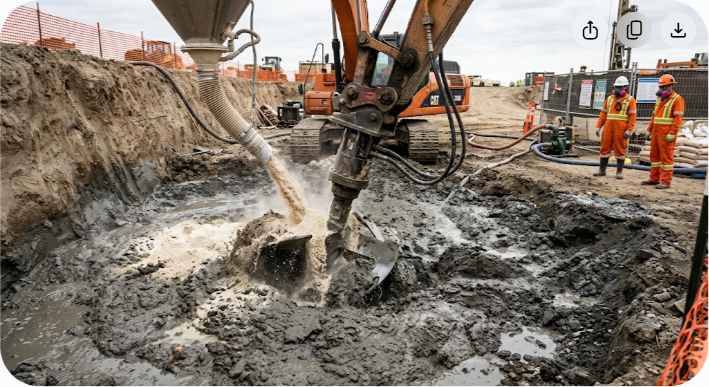
Solidifying hazardous liquid waste requires more than just dumping clay into a pit and hoping it passes a slump test. Selecting the wrong grade of bentonite leads to free liquid release during transport, failed Paint Filter Liquids Tests (EPA Method 9095B), excessive disposal costs, and severe regulatory fines.
Bentonite is not a single uniform commodity. A high-swelling sodium bentonite processed to 200 mesh behaves fundamentally differently than natural calcium bentonite or organophilic chemically modified clay. When treating complex industrial waste streams—ranging from metal-plating sludge and drill cuttings to hydrocarbon-laden lagoon sediment—the molecular structure, swelling ratio, and cation exchange capacity (CEC) of your bentonite govern whether contaminants stay bound or leach into groundwater.
This guide breaks down the technical selection criteria environmental engineers, waste facility managers, and remediation contractors need to choose the correct bentonite clay for hazardous waste solidification.
Before evaluating mineral properties, it is essential to clarify two technical terms that are frequently conflated in environmental engineering: solidification and stabilization.
Bentonite excels because it acts as both a physical solidifier and a chemical stabilizer. Its dual-action mechanism stems from its unique crystalline structure.
Bentonite is primarily composed of montmorillonite, a 2:1 expandable smectite clay mineral. Each microscopic particle consists of an aluminum octahedral sheet sandwiched between two silicon tetrahedral sheets.
In an exchange reaction, sodium ions residing within the hydrated interlayer space are displaced when heavy metal cations enter the matrix, allowing the clay layers to tightly hold contaminants through electrostatic attraction.
Not all bentonite clays perform equally in waste treatment pits. The primary counter-ion present in the mineral lattice dictates whether the clay expands dramatically or acts merely as a mild absorbent.
Sodium bentonite contains single-charged sodium ions between its montmorillonite layers. Because sodium ions have a relatively large hydrated radius and a single positive charge, water easily enters the interlayer spaces, pushing the plates apart.
?7 cm/s when compacted.
Calcium bentonite contains double-charged calcium ions. The stronger electrostatic attraction of divalent calcium holds the clay layers tightly together, preventing deep water penetration into the interlayer space.
Standard sodium and calcium bentonites are hydrophilic (water-loving). When exposed to pure oils, solvents, or high concentrations of hydrocarbons (like gasoline, benzene, or heavy crude), natural bentonite repels the liquid and fails to hydrate.
Organophilic bentonites are chemically modified by exchanging the naturally occurring sodium or calcium ions with quaternary ammonium cations (surfactants). This transforms the surface from hydrophilic to hydrophobic (organophilic). The resulting clay swells in organic solvents, binding non-polar waste streams that standard clays cannot touch.
| Property / Performance Metric | Natural Sodium Bentonite | Natural Calcium Bentonite | Organophilic Bentonite |
|---|
| Primary Cation | Sodium (Na + ) | Calcium (Ca 2+ ) | Quaternary Ammonium |
| Swelling Capacity | High (15–20x dry volume) | Low (2–4x dry volume) | High in organic solvents |
| Water Absorption | Exceptional (Up to 10x dry weight) | Moderate (1–2x dry weight) | Poor (Hydrophobic) |
| Hydrocarbon Binding | Low to Moderate | Low | Exceptional |
| TCLP Heavy Metal Binding | High (via CEC) | Moderate | Low to Moderate |
| Cost per Ton | Moderate | Economical | Premium |
| Primary Waste Applications | Aqueous sludge, drill cuttings, lagoons | Dry soil blending, high-salinity waste | Solvent waste, fuel spills, oil sludge |
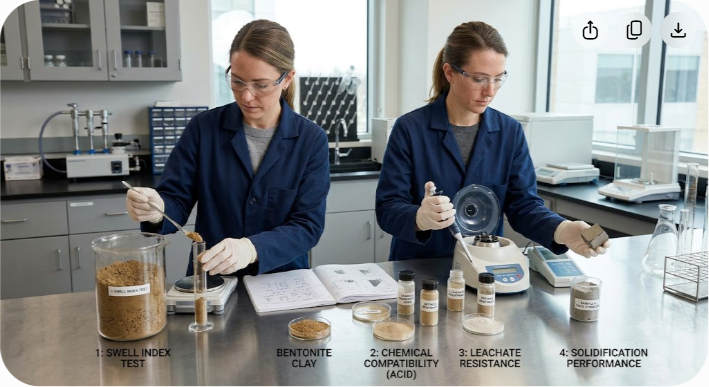
When specifying bentonite for a hazardous waste solidification project, rely on standard laboratory testing parameters rather than generic marketing descriptors.
The functional engine of bentonite is montmorillonite. Commercial bentonite ores contain impurities like quartz, feldspar, gypsum, and cristobalite. High-grade industrial bentonite should contain at least 75% to 85% montmorillonite. Lower purity clays require higher dosage rates, increasing material, freight, and landfill tipping fees.
Particle size directly influences hydration kinetics:
Expressed in milliequivalents per 100 grams (meq/100g), CEC measures the clay's ability to swap cations and lock up heavy metals. Target a CEC rating of 70 to 100+ meq/100g for hazardous waste stabilization.
For pumpable slurry solidification, parameters measured according to API Specification 13A (such as 600 RPM Dial Reading, Yield Point, and Plastic Viscosity) dictate how the bentonite behaves during fluid transfer before final gelling.
High levels of salt (NaCl, CaCl 2 ?
), extreme pH values (below 4 or above 12), or concentrated solvents break down the hydration shell of standard sodium bentonite. This phenomenon—known as flocculation or osmotic collapse—causes the expanded clay lattice to shrink, releasing previously bound water back into the waste matrix.
To ensure your selected bentonite passes site compliance tests without inflating project budgets, apply this systematic five-step decision process:
Perform analytical testing on representative samples of the waste matrix:
+ , Ca 2+ , Cl ? , SO 4 2? ?
)
Identify the regulatory tests the final solidified mass must pass:
?7 cm/s for cap/liner applications.
Never order bulk materials based solely on theoretical estimates. Run jar tests using real waste samples to establish minimum effective dosage rates:
Determine whether dry powder bulk delivery (pneumatic tankers) or super sacks fit your mixing infrastructure (in-pit excavator mixing, continuous pugmills, or batch shear tanks).
Bentonite is rarely the only reagent considered for solidification projects. It is frequently evaluated alongside Portland cement, fly ash, kiln dust, and synthetic polymers. Understanding how bentonite compares against these materials helps avoid costly specification errors.
When evaluating choices, Sodium Bentonite provides high swelling, re-hydratable sealing, and high cation exchange capacity. Portland Cement produces a rigid curing matrix but yields an irreversible cure with low cation exchange capacity. Coal Fly Ash delivers pozzolanic bulking at high volumes, though its chemical quality varies depending on the coal source.
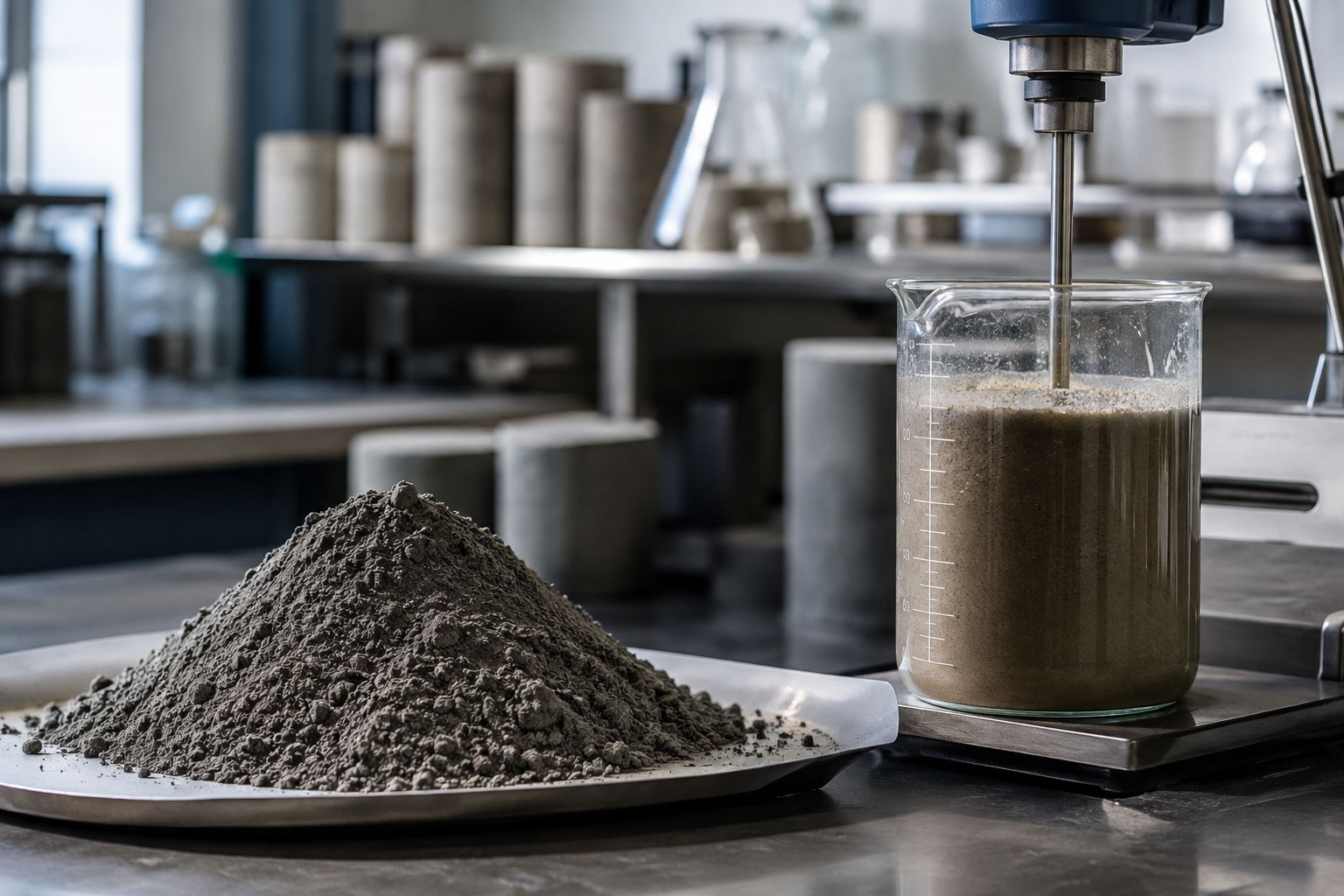
Portland cement cures chemically through hydration reactions, forming rigid calcium silicate hydrates (CSH). While it produces high structural strength, cement significantly increases the pH of the waste (often above 12.0), which can cause amphoteric metals like lead and zinc to re-solubilize. Cement also adds substantial weight and bulk, increasing hauling and disposal costs.
Fly ash is an economical pozzolanic material that acts primarily as a bulking agent. However, Class F fly ash lacks self-cementing properties and requires high dosage rates (often 30% to 50% by weight). Fly ash also carries a risk of heavy metal leaching (As, Se, B) originating from the ash itself.
Synthetic polymers can absorb hundreds of times their dry weight in water. However, SAPs provide zero chemical stabilization or cation exchange. Under mechanical pressure—such as compaction equipment at a hazardous waste landfill—water can be squeezed back out of polymers like a soaked sponge, causing late-stage Paint Filter Test failures.
| Reagent | Primary Mechanism | Dosage Range (% wt) | Volume Expansion | Cation Exchange | Shear Stability Under Load |
|---|---|---|---|---|---|
| Sodium Bentonite | Hydration, Swelling, Ion Exchange | 4% – 12% | Moderate | High (70–100 meq) | Excellent (Viscoelastic) |
| Calcium Bentonite | Capillary Absorption | 8% – 20% | Low | Moderate (40–60 meq) | Good |
| Portland Cement | Chemical Hydration / Curing | 10% – 25% | High | Low | Excellent (Rigid Matrix) |
| Class F Fly Ash | Bulking / Weak Pozzolanic | 20% – 50% | High | Low | Fair |
| Super Absorbent Polymers (SAP) | Osmotic Absorption | 0.5% – 2% | Minimal | None | Poor (Releases under pressure) |
In complex hazardous waste projects, single-reagent solutions often fall short. Blending bentonite with cement or fly ash creates a complementary system:
Translating lab treatability tests into field execution requires accounting for equipment limitations, mixing efficiency, and environmental variables.
Lab mixing achieving 100% shear homogenization is impossible to replicate with an excavator bucket in a waste pit. As a standard engineering rule, apply a 1.2x to 1.5x field safety factor to your laboratory dosage rate.
For example, if lab testing shows that a 6% dry weight dosage of sodium bentonite reliably passes the Paint Filter Liquids Test, your field calculation becomes:
If solidifying $100 ext{ metric tons}$ of wet lagoon sludge at $7.8\%$:
Mixing safety factors vary based on site equipment:
Even experienced environmental remediation teams run into failures due to overlooked physical and chemical variables. Here are four common pitfalls and how to avoid them:
Purchasing low-cost civil engineering or well-drilling bentonite without checking the montmorillonite content or swelling volume often backfires. Low-purity clays contain high concentrations of inert sand and silt, forcing you to double the dosage rate to achieve the same sealing effect.
Adding standard sodium bentonite to concentrated brine solutions, landfill leachate, or seawater drill cuttings results in zero swelling. The high concentration of cations crushes the electric double layer surrounding the clay particles.
Solution: Test the electrical conductivity or TDS of the waste liquid prior to reagent selection. For TDS levels above 10,000 mg/L, pre-hydrate the bentonite in fresh water before mixing, or specify polymer-modified bentonite grades.
When solidifying wastes containing high levels of free oils or solvents, excessive mechanical shear can break oil droplets into micro-emulsions, making them harder for hydrophilic clays to adsorb.
Solution: Use an organophilic bentonite or a pre-conditioned organoclastic blend with gentle, low-shear fold-in mixing techniques.
Every ton of bentonite added increases the total weight and volume of waste shipped off-site. Adding excessive amounts of low-swelling clay to pass a slump test swells your final landfill tipping bill. Optimizing your reagent blend with high-yield sodium bentonite minimizes total material added while achieving full compliance.
Solidified hazardous waste destined for Subtitle C (hazardous waste) or Subtitle D (non-hazardous waste) landfills in the USA must satisfy strict U.S. EPA regulations:
Securing consistent, high-purity sodium bentonite is the foundation of every successful waste solidification project. Variances in mine seams can cause performance swings if your mineral supplier lacks stringent quality controls.
With over 60 million tons of high-grade natural reserves and more than 15 years of mineral processing expertise, Axewelledge stands as one of the world's leading producers and exporters of premium bentonite minerals. Holding a top-five global producer ranking, Axewelledge processes high-purity sodium bentonites optimized for demanding environmental, drilling, and industrial applications.
Axewelledge provides:
Whether you are designing a bench-scale treatability study for a refinery lagoon cleanup or specifying bulk minerals for a major industrial site remediation, matching your waste chemistry to the correct bentonite grade guarantees compliance and keeps operational costs under control.













Have questions about our products? We're here to help!