Axewelledge, a leading exporter from India, specializes in high-quality Bentonite. With a commitment to excellence, we supply premium Bentonite to the Middle East and Southeast Asia markets.


North Angle Complex, 304,
150 Feet Ring Rd, Opposite Ambedkar Nagar BRTS Stop,
Madhav Park, Punit Nagar,
Mavdi, Rajkot, Gujarat 360004
© Axewelledge 2026, All Rights Reserved.
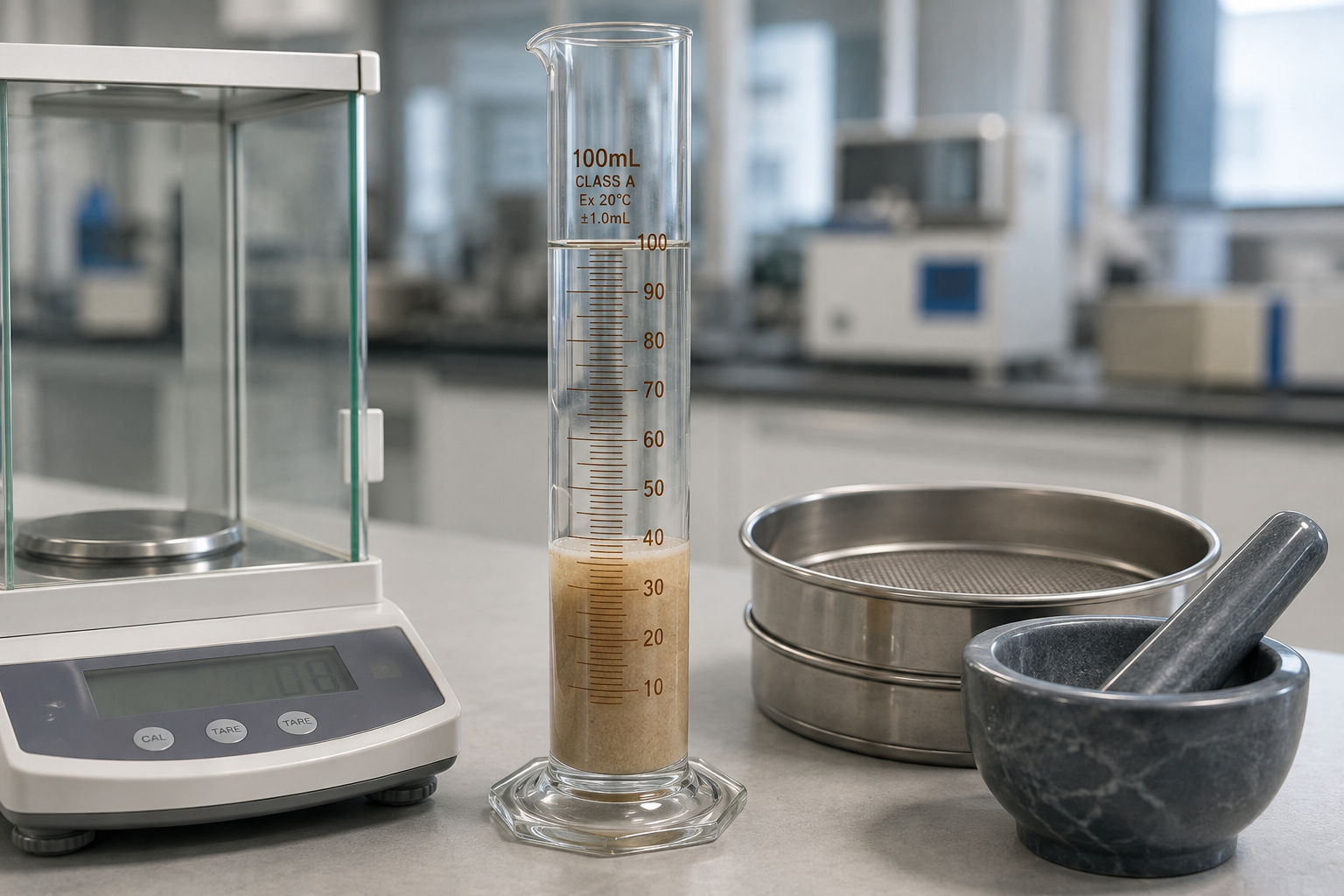
A 2-gram sample of high-grade sodium bentonite can absorb enough water to swell beyond 24 mL in a graduated cylinder, while a low-quality calcium bentonite under identical conditions barely reaches 3 to 5 mL. That single metric—measured strictly via the ASTM D5890 protocol—dictates whether a shipment of clay will successfully seal a hazardous waste landfill, stabilize a deep wellbore, or fail under hydrostatic pressure.
Testing bentonite swelling capacity isn't just a routine quality control exercise. For civil engineers, geo-environmental specifiers, foundry managers, and mud engineers, the free swell index serves as the direct indicator of montmorillonite content and ionic exchange capability. When lab results fluctuate due to minor procedural errors, projects face costly material rejections or on-site hydraulic failures.
In this practical guide, we break down the ASTM D5890 test method step by step, cover the critical technical nuances that standard operating procedures often overlook, explore real-world industrial benchmarks, and outline how to troubleshoot erratic laboratory data.
ASTM D5890 is the standard test method for determining the swell index of the clay component of geosynthetic clay liners (GCLs) and raw bulk bentonite minerals. The test quantifies the volumetric free swell produced by 2 grams of dried, finely ground bentonite when added incrementally to 100 mL of reagent-grade water.
The resulting value is expressed in mL per 2 grams (mL/2g).
Bentonite consists primarily of smectite clay minerals, dominated by montmorillonite. Montmorillonite possesses a 2:1 expansive crystal lattice consisting of an aluminum octahedral sheet sandwiched between two silicon tetrahedral sheets.
Natural isomorphic substitution within this lattice—such as magnesium ($Mg^{2+}$) replacing aluminum ($Al^{3+}$)—leaves the clay layers with a net negative surface charge. Counter-ions like sodium ($Na^+$) or calcium ($Ca^{2+}$) adsorb onto these exterior faces to balance the charge imbalance.
When exposed to water, two distinct swelling mechanisms take place:
Calcium bentonite contains divalent $Ca^{2+}$ ions. Because calcium holds adjacent clay sheets tightly together with double the electrostatic charge, water cannot easily separate the layers. As a result, sodium bentonite typically exhibits a swell capacity of 24 to 32+ mL/2g, whereas natural calcium bentonite tops out at 4 to 8 mL/2g.
Precision in ASTM D5890 testing depends on apparatus calibration and chemical purity. Skimping on water quality or using improperly dried glassware corrupts your volume readings.
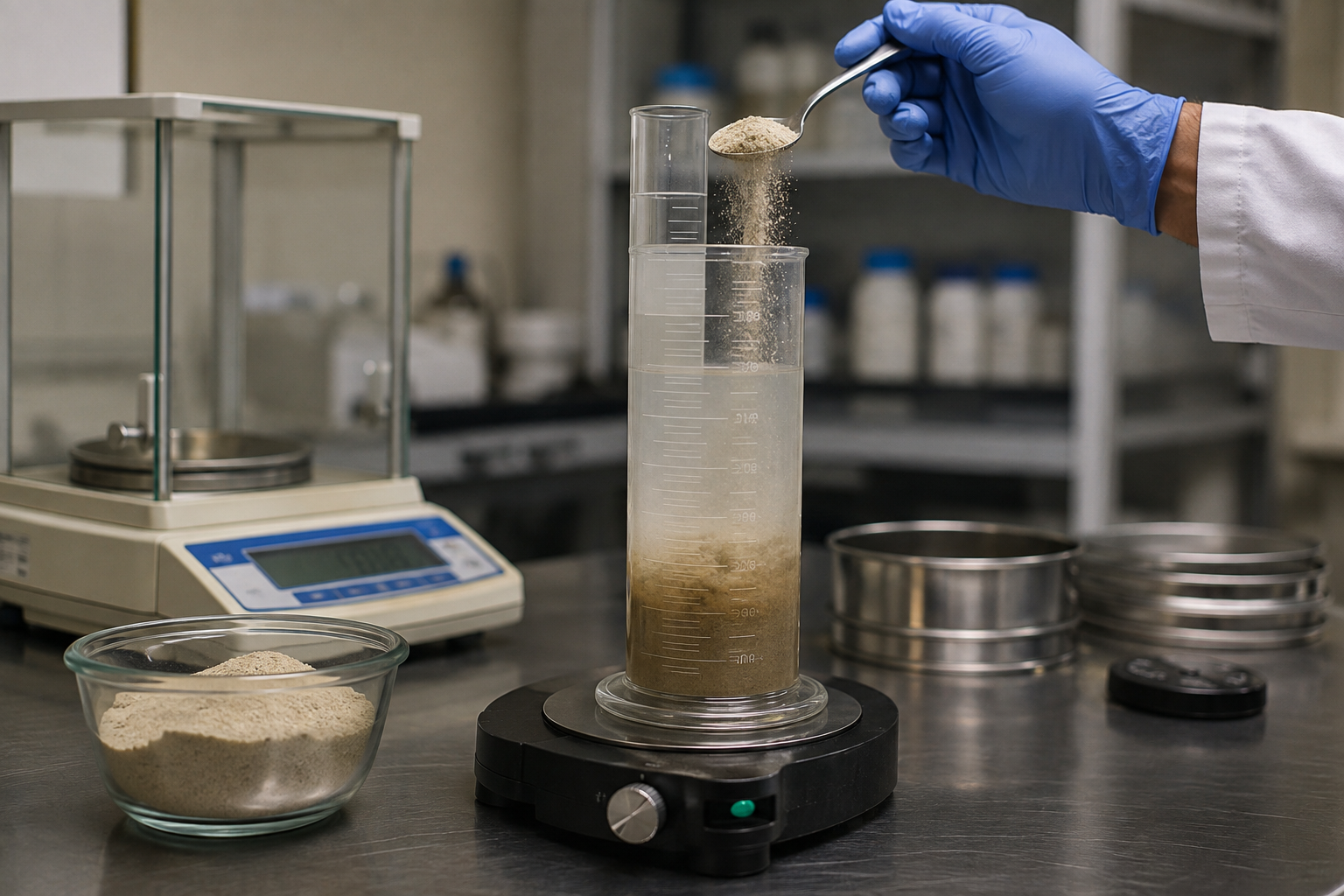
To achieve repeatable, audit-ready laboratory results, follow this precise operational sequence. Skipping pre-drying or rushing sample dust distribution represents the primary source of inter-laboratory variance.
Crucial Operating Standard: Never dump large clumps of powder into the cylinder. If dry agglomerates accumulate on the liquid surface or sink as unhydrated core lumps, trapped air pockets will form, creating false volume readings and invalidating the test.
Because the test starts with a standardized dry clay mass of 2.00 grams, the direct volumetric reading from your 100 mL cylinder equals your ASTM D5890 Free Swell Index.
If your sample preparation required testing non-oven-dried field samples, apply a moisture correction factor to determine equivalent dry mass:
$$\text{Corrected Mass } (g) = \frac{\text{Wet Mass } (g)}{1 + \left(\frac{\text{Moisture Content } \%}{100}\right)}$$
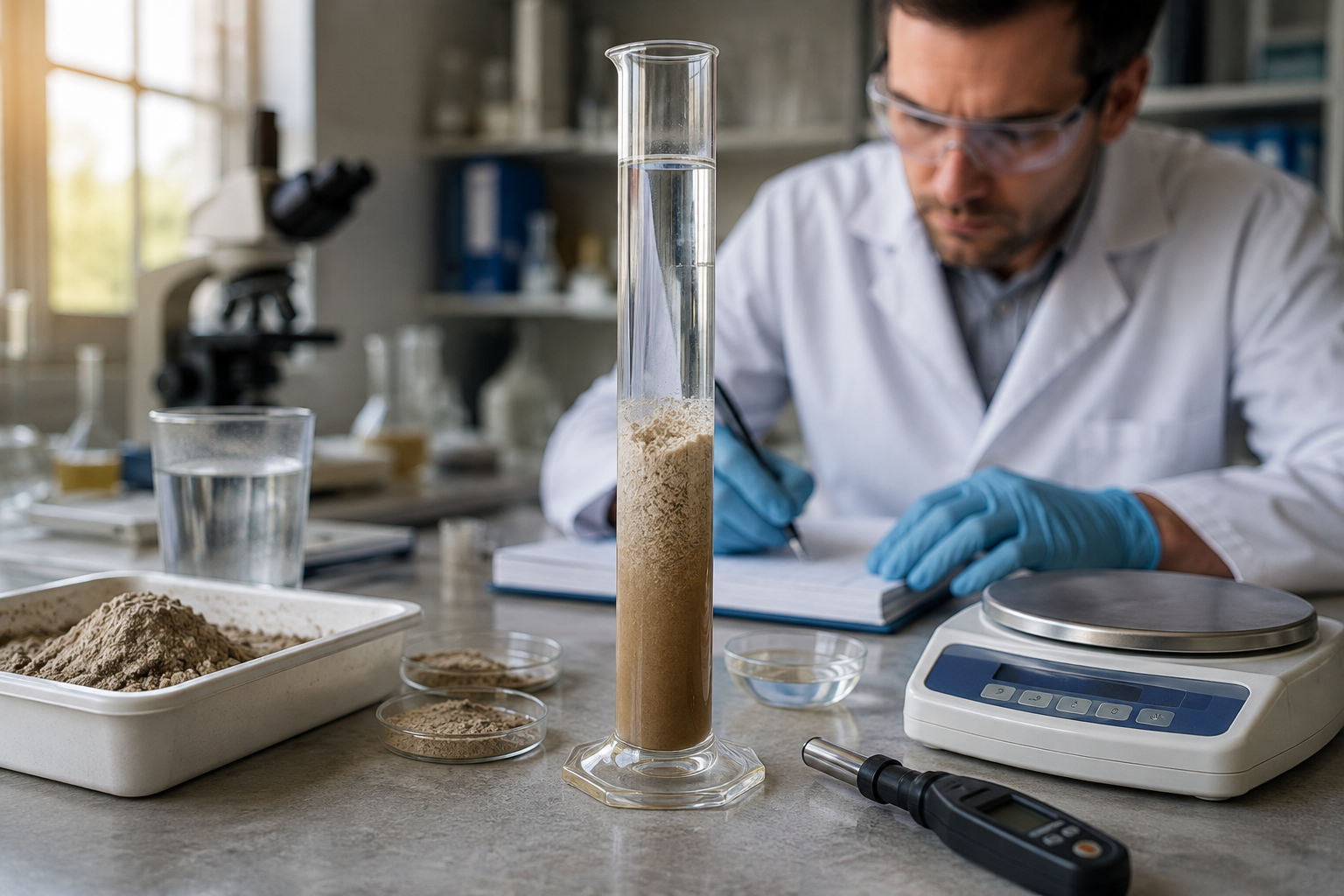
Different industrial applications demand specific degrees of swelling performance. The table below outlines typical ASTM D5890 free swell values across raw bentonite grades and end-use applications:
| Bentonite Grade / Material Type | Typical Swell Index Range (mL/2g) | Primary Industrial Applications |
|---|---|---|
| Raw Natural Calcium Bentonite | $4 - 10\text{ mL/2g}$ | Animal feed binder, foundry casting sands, soil amendment |
| Soda-Ash Activated Calcium Bentonite | $16 - 22\text{ mL/2g}$ | Civil engineering cut-off walls, standard drilling muds |
| High-Purity Natural Sodium Bentonite | $24 - 32+\text{ mL/2g}$ | Geosynthetic Clay Liners (GCLs), environmental containment, HDD |
| API Specification 13A Section 9 Bentonite | $\ge 24\text{ mL/2g}$ | Oil & Gas well drilling fluids, deep shaft drilling |
| Polymer-Modified Bentonite | $30 - 45+\text{ mL/2g}$ | High-saline containment barriers, aggressive leachate sealing |
High-grade sodium bentonite exported by global suppliers like Axewelledge consistently yields natural swell values exceeding 26 to 30 mL/2g, confirming high montmorillonite purity without heavy reliance on synthetic chemical additives.
When two independent laboratories report differing swell index numbers for the same batch of bentonite, the inconsistency usually stems from procedural deviations. Four main execution errors drive these testing discrepancies:
Laboratory personnel frequently confuse ASTM D5890 (Swell Index) with ASTM D5891 (Fluid Loss). While both standards evaluate bentonite quality for engineering projects, they measure distinct physical characteristics.
| Parameter | ASTM D5890 (Swell Index) | ASTM D5891 (Fluid Loss) |
|---|---|---|
| Property Measured | Unconfined volumetric expansion | Filtration volume through a filter bed |
| Core Objective | Measures intrinsic hydration capacity | Evaluates filter cake impermeability under differential pressure |
| Sample Mass | 2.00 g dry powder | 22.5 g prepared in a 350 mL aqueous slurry |
| Test Duration | 24 Hours (static hydration) | 30 Minutes under 100 psi (690 kPa) applied pressure |
| Reporting Units | mL / 2g | mL of filtrate loss |
For environmental containment applications like GCL installation, a high swell index (ASTM D5890) directly correlates with low hydraulic conductivity ($K < 1 \times 10^{-9}\ \text{cm/s}$). Consequently, ASTM D5890 serves as the primary quality control screening test prior to conducting complex fluid loss or flexible-wall permeameter evaluations.
If your laboratory encounters erratic swell index results, use this diagnostic action plan to resolve performance variations:
Whether you are designing containment liners for mining tailings or formulating drilling muds for deep directional wells, raw material purity dictates long-term performance. Chemical treatments like soda-ash activation can artificially boost low-grade calcium bentonite's swell index to pass initial receiving inspections. However, field exposure to saline groundwater or acidic leachates can exchange those sodium ions back out over time, causing the clay matrix to shrink and leak.
This risk leads geotechnical engineers to specify naturally high-yielding Sodium Bentonite. Operating from high-purity mineral reserves, suppliers like Axewelledge extract natural montmorillonite deposits that deliver swell values exceeding 24 to 30 mL/2g natively. Selecting naturally high-grade sodium bentonite reduces reliance on synthetic polymers, helping ensure durable hydraulic sealing under demanding environmental conditions.
By implementing the ASTM D5890 testing protocol rigorously in your lab, you establish clear visibility over incoming material quality, safeguard project specs against premature sealing failures, and confirm that every shipment meets international engineering standards.













Have questions about our products? We're here to help!