Axewelledge, a leading exporter from India, specializes in high-quality Bentonite. With a commitment to excellence, we supply premium Bentonite to the Middle East and Southeast Asia markets.


North Angle Complex, 304,
150 Feet Ring Rd, Opposite Ambedkar Nagar BRTS Stop,
Madhav Park, Punit Nagar,
Mavdi, Rajkot, Gujarat 360004
© Axewelledge 2026, All Rights Reserved.
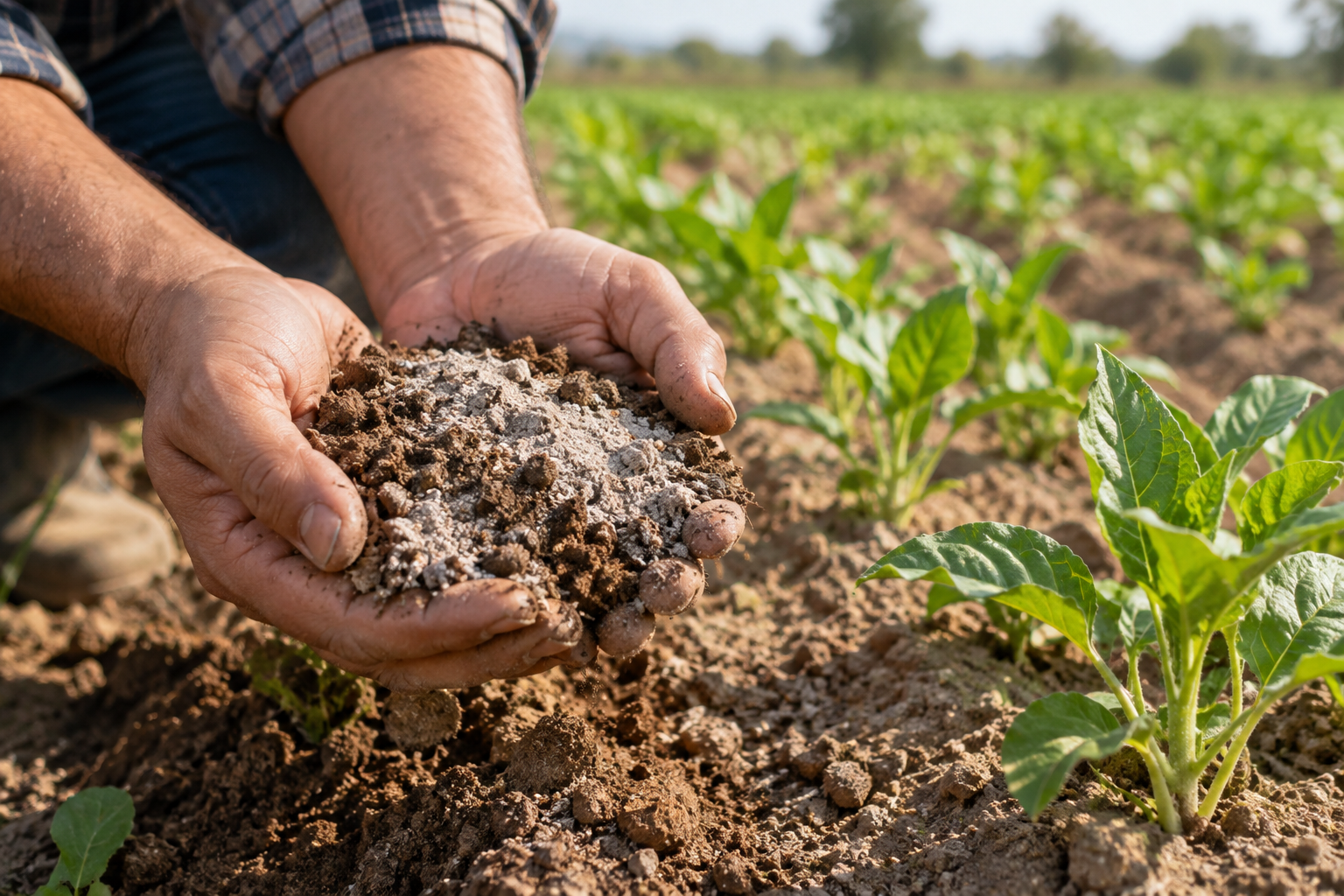
Bentonite can improve water retention in sandy soil, but it isn't a simple matter of adding clay and expecting a dry field to behave like loam. The result depends on the bentonite type, application rate, soil texture, mixing depth, drainage, and the chemistry of the site.
For coarse soils, the main benefit is straightforward: swelling clay can occupy some of the large pore spaces that let water drain rapidly beyond the root zone. Bentonite also contributes cation exchange capacity, which can help a soil hold certain positively charged nutrients. Used carefully, it can make a sandy growing medium hold water and nutrients more effectively. Used carelessly, particularly at high rates, it can restrict drainage, create dense zones, or introduce too much sodium.
That distinction matters. Bentonite is a soil amendment, not a substitute for good irrigation, organic matter, drainage management, or a properly matched fertilizer program. Before applying it across a field or garden, test the soil and trial the amendment on a small area.
Bentonite is a clay material dominated by smectite minerals, commonly including montmorillonite. Its structure gives it a high specific surface area and, depending on its mineral composition, a strong ability to interact with water. Sodium-rich bentonite generally swells much more than calcium-rich bentonite when hydrated.
Sandy soil behaves differently from clay-rich soil because its particles are relatively large and the spaces between them are also relatively large. Water can move through those pores quickly, particularly when the soil has little organic matter and receives more irrigation or rainfall than the root zone can temporarily store.
When suitable bentonite is thoroughly distributed through sandy soil, the fine clay particles occupy some of those larger spaces. The resulting mixture can contain a greater proportion of smaller pores, which hold water more strongly than large drainage pores. The goal isn't to stop water movement. It is to slow excessive drainage while preserving enough pore space for air and healthy roots.
The effect can be easier to understand by comparing the two materials:
| Soil condition | Typical behavior | Potential role of bentonite |
|---|---|---|
| Coarse sand | Rapid drainage and limited water storage | Adds fine mineral particles that can increase water-holding capacity |
| Loamy sand | Better retention than pure sand, but still relatively free-draining | May improve moisture storage when clay content is very low |
| Loam | Balanced water and air storage | Often provides less benefit because the soil already has a useful pore-size distribution |
| Heavy clay | High water retention but potentially poor drainage | Usually not the first amendment to consider |
Bentonite also has charged mineral surfaces. Many clay minerals can retain positively charged ions, or cations, such as calcium, magnesium, potassium, and ammonium. This is one reason clay amendments can influence nutrient retention as well as water behavior. The exact benefit depends on the bentonite's mineralogy and the starting soil, so it should not be treated as a guarantee against fertilizer losses.
Sandy soil isn't inherently poor soil. Its drainage, aeration, and ease of cultivation can be valuable, especially for crops that dislike waterlogged roots. The problem occurs when the soil's water-holding capacity is too low for the crop, climate, or irrigation system.
A coarse soil contains many relatively large pores. After irrigation or rainfall, gravity pulls water through these spaces quickly. Some water remains as thin films around soil particles, but a substantial portion can move below the active root zone before plants can use it.
Low organic matter can make the problem worse. Organic matter contributes to aggregation and water storage, while roots and soil organisms help create a more complex pore network. In a heavily weathered or intensively cultivated sandy soil, these benefits may be limited.
Adding bentonite changes the mineral component of the soil. It doesn't make the soil fertile by itself, and it doesn't replace compost or other organic inputs. Instead, it can complement them by changing the physical and chemical environment in which water and nutrients are stored.
Choosing between sodium and calcium bentonite deserves particular attention because the two materials behave differently in water and soil.
Sodium bentonite has a high swelling potential. When hydrated, its particles can expand substantially and form a low-permeability mass. That property is useful in applications such as pond sealing, landfill liners, and other engineered barriers where limiting water movement is the objective.
For agricultural root zones, however, high-swelling sodium bentonite needs more care. Adding too much can reduce infiltration and aeration. Sodium can also contribute to soil sodicity when sufficient exchangeable sodium accumulates, particularly in soils with unfavorable chemistry and poor drainage.
This doesn't mean sodium bentonite is automatically unsuitable for agriculture. It means the product, rate, soil chemistry, and application method need to match the intended use. A material selected for pond sealing should not automatically be treated as a general-purpose garden amendment.
Calcium bentonite generally has a lower swelling capacity than sodium bentonite. Its behavior can make it more appropriate for applications where moderate clay addition is desired without the same degree of swelling associated with sodium-rich material.
The term "calcium bentonite" also shouldn't be treated as a guarantee of a particular agronomic result. Commercial bentonites vary in mineral composition, exchangeable cations, particle size, and processing. Product specifications and a soil test are more useful than the name alone.
| Feature | Sodium Bentonite | Calcium Bentonite |
|---|---|---|
| Swelling potential | Generally high | Generally lower |
| Dominant exchangeable cation | Sodium | Calcium |
| Water interaction | Strong swelling and water retention | Moderate swelling and water interaction |
| Main concern in soil | Excessive swelling and possible sodicity at inappropriate rates | Performance varies with mineral composition and soil chemistry |
| Common engineered use | Sealing and low-permeability barriers | Lower-swelling clay applications |
| Agricultural use | Requires careful product and rate selection | May suit some direct soil-conditioning applications |
There is no universal rule that one type is always best for every crop. The right choice depends on what you're trying to change in the soil.
Successful application starts with the soil rather than the product. A reasonable process is to assess the soil, define the target depth, calculate the amount, spread it uniformly, incorporate it thoroughly, and then monitor the result.
Start with a representative soil sample. At minimum, identify soil texture and test pH and electrical conductivity. Where sodium bentonite is being considered, exchangeable sodium or a related sodicity assessment can be particularly important.
A texture test helps distinguish sand from loamy sand and sandy loam. The same application rate can have very different effects in these soils because their existing clay and organic matter contents aren't the same.
For commercial agriculture, laboratory testing is preferable to relying only on a simple jar test. A laboratory report can provide a better basis for decisions about soil structure, salinity, sodicity, and nutrient management.
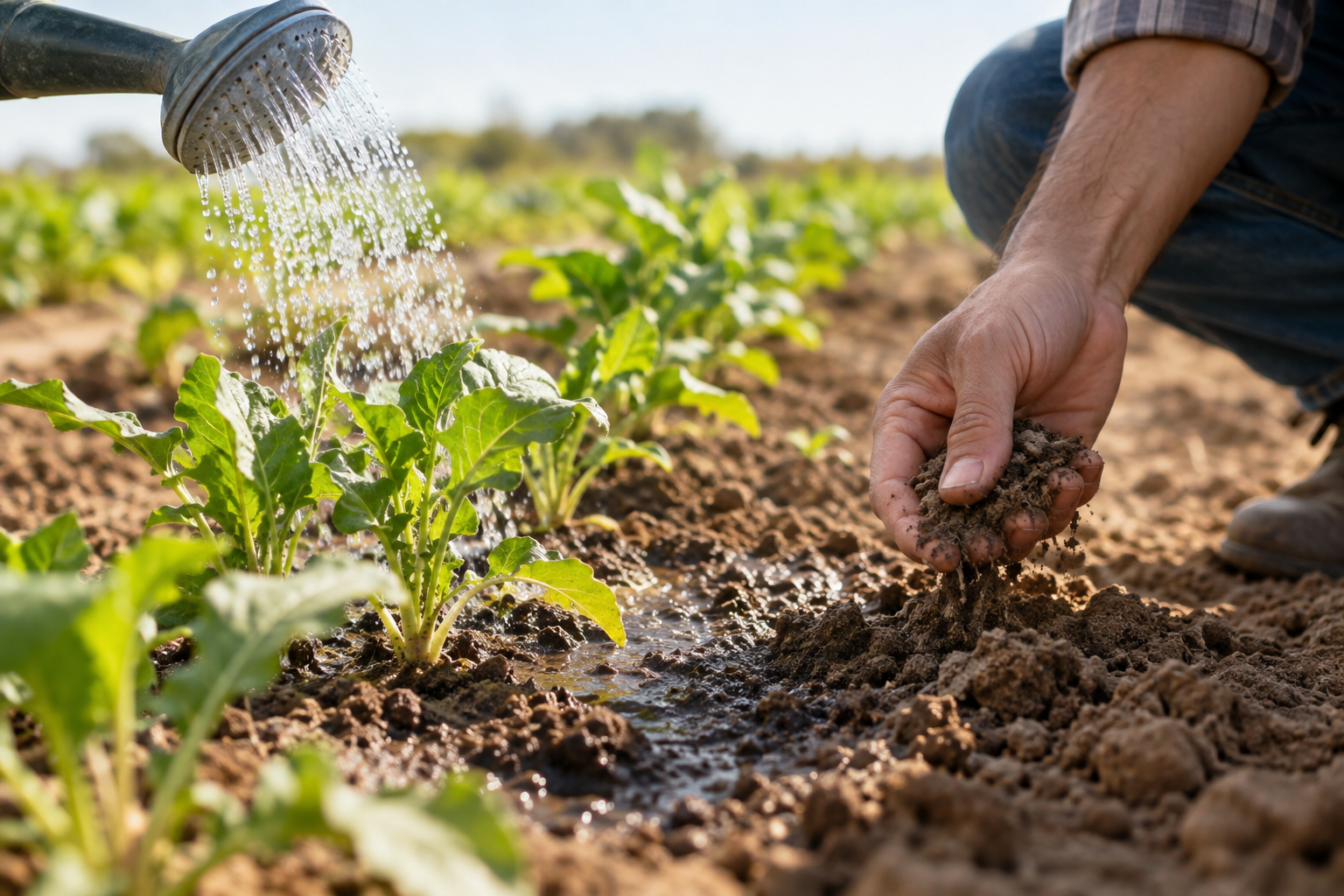
Decide how deep the amendment needs to be incorporated. Annual crops and shallow-rooted plants may have a different effective root zone from orchards, turf, or deep-rooted perennial crops.
The important point is uniformity. If bentonite is mixed into only a thin surface layer while roots extend much deeper, the amendment won't influence the entire zone where water storage matters.
Application rates shouldn't be copied from another field without adjustment. The appropriate amount depends on soil texture, bulk density, incorporation depth, bentonite properties, crop requirements, irrigation method, and the desired change in water-holding capacity.
Some projects use a percentage of amendment by dry soil weight, but translating that percentage into a field application rate requires knowing the mass of soil within the selected depth. For example, a treatment specified as 3 percent by dry weight cannot be converted accurately to pounds per acre without considering soil bulk density and incorporation depth.
A simple calculation is:
For field planning, a soil scientist or agronomist can help convert the target fraction into a practical application rate. Small test plots are strongly recommended before committing to a large area.
Don't assume that every bag labeled "bentonite" has the same agricultural properties. Check the product specification for mineral type, swelling behavior, moisture content, particle size, purity, and any information about sodium or calcium content.
A product designed primarily for industrial sealing may behave very differently from a material intended for soil conditioning. For food crops or sensitive horticultural applications, also check whether the supplier provides documentation appropriate for the intended use.
Uneven application creates uneven soil. A concentrated pocket of swelling clay can behave very differently from a small amount distributed throughout the root zone.
For large areas, calibrated spreading equipment can provide better uniformity than manual application. In gardens and small beds, weigh the material rather than estimating by eye, then distribute it evenly before incorporation.
Thorough mixing is one of the most important practical steps. Use equipment suited to the area and target depth, such as a rotary tiller, cultivator, disc, or other appropriate soil-working equipment.
The objective is to distribute bentonite through the soil rather than create a distinct clay layer. A concentrated layer can interfere with infiltration and root penetration. Uniform distribution gives the amendment a better chance of changing the pore structure throughout the treated zone.
Avoid simply dumping a thick layer of dry bentonite onto the surface and expecting irrigation to distribute it evenly. Once hydrated, bentonite can be difficult to redistribute.
After incorporation, apply water according to the crop's normal needs rather than deliberately saturating the soil. Watch how quickly water infiltrates, how long the soil stays moist, and whether the surface develops crusting or puddling.
The irrigation schedule may need adjustment after the amendment is established. If the soil remains wet longer than before, reducing irrigation frequency or duration may be appropriate. The aim is not maximum water retention; it is a useful balance between water storage, drainage, and root-zone aeration.
Consider a sandy garden bed that drains so rapidly that plants require frequent irrigation. A grower might first test the soil and determine that it contains very little clay and organic matter. Instead of applying a large amount of bentonite across the entire bed, the grower can establish a small trial area.
The trial should use a measured application rate and a consistent incorporation depth. A comparable untreated section should remain nearby. Over several irrigation cycles, the grower can compare infiltration, soil moisture, plant performance, and any signs of surface crusting.
If the amended section remains moist for longer without becoming waterlogged, the approach may be worth expanding. If infiltration slows dramatically or the soil becomes dense when wet, the rate or product needs to be reconsidered.
This type of side-by-side test is often more useful than relying on a generic application recommendation because it reveals how the specific bentonite interacts with the specific soil.
Bentonite can help retain some nutrient cations because clay minerals have negatively charged surfaces and contribute to cation exchange capacity. Potassium, calcium, magnesium, and ammonium are examples of positively charged ions that can interact with exchange sites.
That doesn't mean bentonite prevents all fertilizer leaching. Nitrate, for example, is negatively charged and behaves differently in soil. Water movement, soil organic matter, drainage, fertilizer timing, crop uptake, and rainfall all influence nutrient loss.
For this reason, bentonite should be considered one part of a nutrient-management strategy rather than a replacement for good fertilizer practice. Applying fertilizer at the right rate and time remains important even when the soil has been amended with clay.
Bentonite changes soil texture and pore characteristics, but its effect on aggregation depends on the clay type, soil chemistry, organic matter, and biological activity. It shouldn't be described as a universal soil-structure fix.
In a sandy soil, adding fine clay can increase the proportion of smaller particles and alter the balance between large and small pores. Organic amendments can contribute a different set of benefits by supporting aggregation, microbial activity, and water storage.
Combining mineral and organic approaches may therefore make more sense than relying on bentonite alone. Compost, crop residues, cover crops, reduced disturbance, and appropriate irrigation can all contribute to healthier soil structure when they fit the farming system.
More bentonite doesn't automatically mean more useful water retention. At high concentrations, swelling clay can reduce infiltration and air-filled pore space. Roots need oxygen as well as water.
This is especially important with high-swelling sodium bentonite. A treatment that works as a thin, engineered sealing layer can be completely inappropriate when distributed at a high concentration throughout a crop's root zone.
Surface application without adequate incorporation can create an uneven clay-rich layer. Once wet, that layer may become difficult for water and roots to cross.
For most soil-conditioning applications, uniform incorporation through the intended treatment zone is preferable.
Sodium deserves particular attention in arid and semi-arid environments, where evaporation can concentrate salts near the soil surface. Irrigation water may also contain dissolved salts that influence soil chemistry.
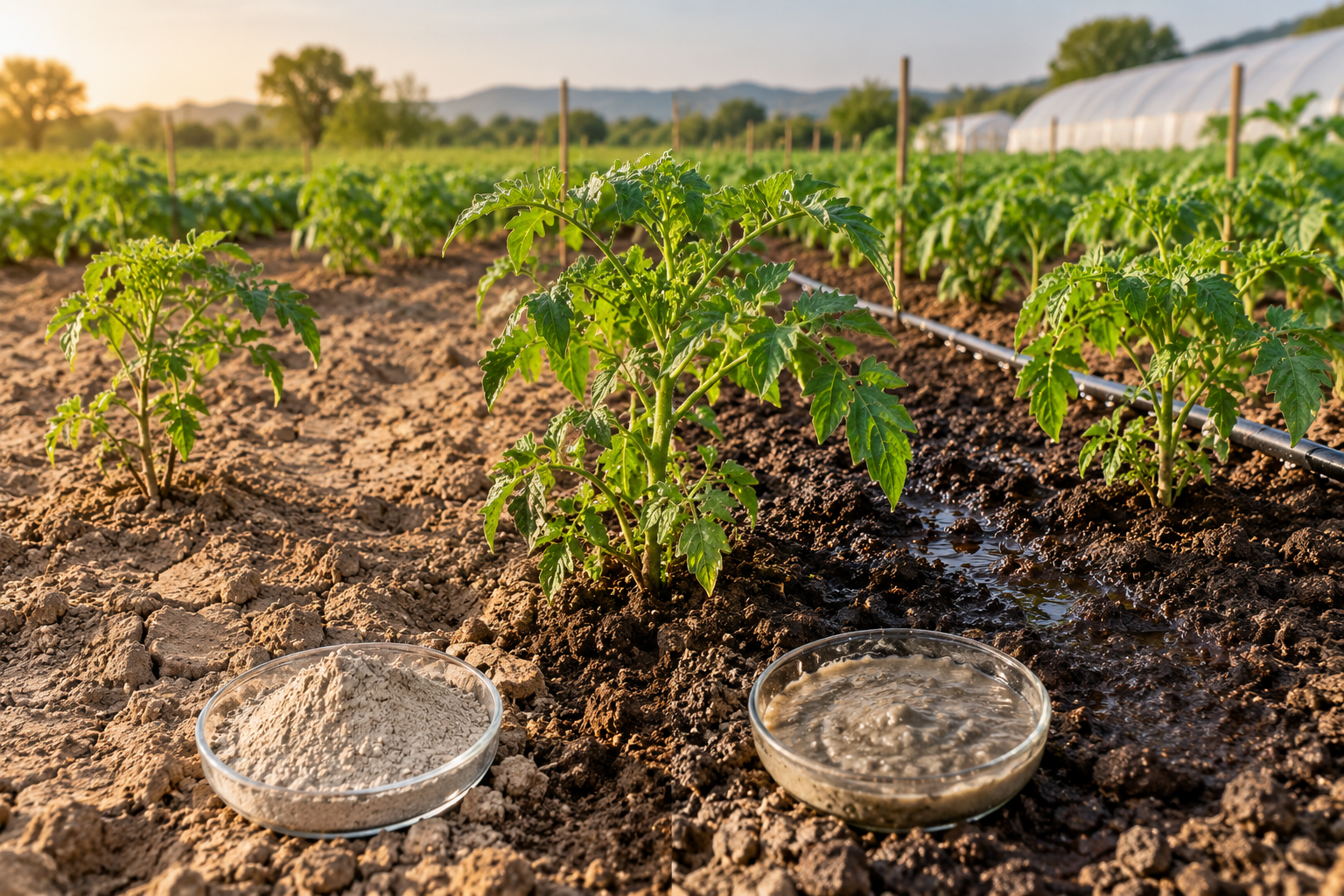
Monitor electrical conductivity and, where appropriate, sodicity indicators before and after amendment. A soil that already has a sodium problem requires a different management strategy from a clean, well-drained sandy soil.
Industrial bentonite products can be manufactured for very different purposes. Swelling behavior, particle size, additives, and purity can vary considerably.
Ask the supplier for a technical specification and confirm that the product is appropriate for soil use. Don't select a material solely because it has a high swelling number.
Bentonite is primarily a mineral amendment. It may influence nutrient retention, but it isn't a complete source of plant nutrition.
A soil fertility program should still be based on crop needs and soil-test results.
A small test can reveal problems before they become expensive. Compare treated and untreated soil under the same irrigation conditions, and measure the changes rather than relying only on how the soil looks after application.
Bentonite and organic matter can both improve the performance of some sandy soils, but they work in different ways.
| Characteristic | Bentonite | Organic matter |
|---|---|---|
| Main contribution | Changes mineral particle distribution and water interaction | Supports aggregation, biological activity, and water storage |
| Persistence | Mineral particles can remain in the soil | Decomposes over time at a rate influenced by material and conditions |
| Nutrient effects | Can increase cation exchange capacity | Can supply or retain nutrients depending on the material and decomposition stage |
| Sodium concern | Relevant for sodium-rich products | Usually not the primary concern |
| Application strategy | Requires attention to type, rate, and uniform mixing | Requires attention to maturity, quality, rate, and nutrient content |
| Best approach | Targeted mineral amendment where appropriate | Ongoing soil-building practice where suitable |
For many sandy soils, the best long-term strategy isn't bentonite versus organic matter. It is a combination of appropriate mineral management, organic matter inputs, vegetation, and efficient irrigation.
It can, but the result isn't guaranteed and shouldn't be expressed as a fixed percentage reduction. If bentonite increases the amount of plant-available water held in the treated soil, irrigation intervals may be extended.
The practical outcome depends on climate, crop rooting depth, evapotranspiration, soil texture, amendment rate, and irrigation system. A sandy soil under intense heat may still dry quickly even after amendment.
The safest approach is to monitor soil moisture and plant response rather than follow a predetermined irrigation schedule. Irrigate when the crop and soil require water, not simply because a calendar says it is time.
Bentonite may be worth evaluating in several settings where coarse soils lose water rapidly.
The amendment is less attractive when the existing soil already has adequate water retention, when drainage is poor, or when the main problem is salinity or sodicity rather than rapid drainage.
Dry climates can make sandy soil management especially difficult because high evaporative demand removes water quickly while coarse soil allows irrigation water to move downward rapidly. Bentonite can address part of the second problem by changing water movement through the soil profile.
It cannot compensate for every limitation of an arid production system. Irrigation quality, salt accumulation, crop selection, mulching, organic matter, wind erosion, and irrigation efficiency remain important.
In some situations, targeted amendment of the root zone may be more practical than treating an entire field. The most economical strategy depends on the crop, soil depth, irrigation system, and cost of transporting and incorporating the mineral.
Bentonite is a mineral, so it doesn't decompose in the same way as compost or other organic amendments. Once incorporated, its particles can remain in the soil for a long time. However, "permanent improvement" should be used carefully because soil is a dynamic system.
Tillage, erosion, root growth, salt movement, organic matter decomposition, irrigation quality, and changes in soil chemistry can all alter soil behavior over time. The bentonite itself may remain, while the overall performance of the amended soil changes.
Long-term monitoring is particularly useful for repeated applications. If irrigation water contains significant salts or sodium, periodic soil testing can show whether the chemical balance is moving in an undesirable direction.
For agricultural or horticultural projects, consistency matters as much as the headline swelling capacity. Ask suppliers for clear technical information covering mineral type, particle size, moisture content, swelling characteristics, and relevant chemical properties.
If you're buying at commercial scale, request a representative product specification and, where appropriate, a certificate of analysis. The supplier should be able to explain whether the material is sodium-rich, calcium-rich, or another formulation and what applications it is designed to support.
Axewelledge supplies bentonite for industrial and commercial applications, and product selection should still be matched to the intended agricultural use and the chemistry of the receiving soil. A technically suitable product is only one part of a successful amendment program.
Bentonite can provide a long-lasting change because its mineral particles don't decompose like organic matter. When properly incorporated into sandy soil, they can continue to influence pore structure and water movement for many years. However, the overall improvement isn't necessarily permanent in practical terms because erosion, tillage, salinity, organic matter changes, and other soil processes can alter performance over time.
There is no single rate that works for every soil. The appropriate amount depends on texture, bulk density, treatment depth, bentonite properties, drainage, and crop requirements. Some programs use a percentage of dry soil weight, but that figure must be converted using the actual soil mass in the treatment layer. Test a small area before broad application.
Yes. Excessive bentonite can reduce pore space, slow infiltration, and make wet soil too dense for healthy root growth. Sodium-rich bentonite also deserves caution because excessive sodium can contribute to sodicity. Thorough mixing and a measured application rate are important. Test the soil first, and avoid treating a root zone with a sealing-grade product without confirming its suitability.
Sodium bentonite generally swells more strongly and is widely used where low permeability and sealing are required. Calcium bentonite usually swells less and behaves differently in soil. Neither type is automatically ideal for every crop or soil. The better choice depends on the product's mineral properties, soil chemistry, drainage, and intended application. Always review the technical specification before use.
Bentonite can increase cation exchange capacity and help retain positively charged nutrients such as potassium, calcium, magnesium, and ammonium. It won't prevent every form of nutrient loss, however. Nitrate and other anions behave differently, while water movement remains a major factor. Use bentonite alongside appropriate fertilizer rates, timing, irrigation management, and soil testing rather than treating it as a complete leaching-control solution.
Spread the measured amount as evenly as possible, then incorporate it throughout the intended root zone with suitable tillage equipment or hand tools. Avoid leaving a concentrated surface layer because hydrated bentonite can form a dense zone that interferes with infiltration. Work with relatively dry, workable soil and follow the product's recommended application method. Water afterward and monitor drainage and moisture retention.
Bentonite can improve water retention in sandy soil, but the best results come from treating it as a carefully selected soil amendment rather than a universal moisture solution.
The central question isn't simply whether bentonite holds water. It does. The more useful question is whether adding the right bentonite at the right rate will improve the water balance of your particular soil without creating drainage, salinity, or root-zone problems. Soil testing and a controlled trial are the best way to answer that question before investing in a large-scale application.













Have questions about our products? We're here to help!