Axewelledge, a leading exporter from India, specializes in high-quality Bentonite. With a commitment to excellence, we supply premium Bentonite to the Middle East and Southeast Asia markets.


North Angle Complex, 304,
150 Feet Ring Rd, Opposite Ambedkar Nagar BRTS Stop,
Madhav Park, Punit Nagar,
Mavdi, Rajkot, Gujarat 360004
© Axewelledge 2026, All Rights Reserved.
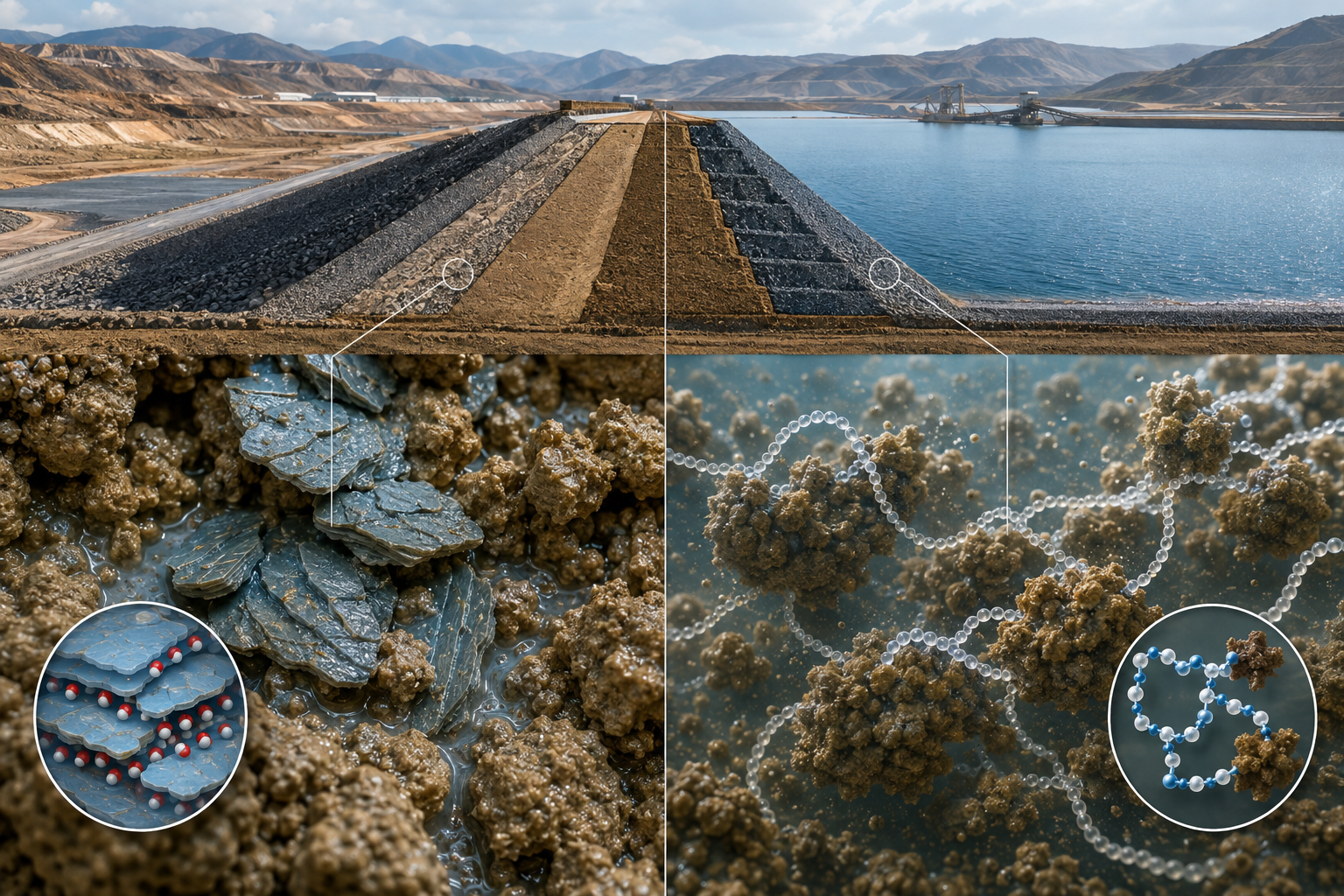
Tailings dam failures rarely begin with a dramatic structural collapse; they almost always start with unseen seepage through the embankment or base foundation. Uncontrolled fluid migration weakens structural shear strength, dissolves critical embankment supports, and leaches heavy metals into regional aquifers. When selecting a primary sealing mechanism for tailings storage facilities (TSFs), geotechnical engineers and mine operators face a core dilemma: Should you rely on the natural, self-healing hydraulic barrier of high-swell Sodium Bentonite, or utilize synthetic Polyacrylamide (PAM) polymer sealants?
Sodium Bentonite provides a permanent, self-healing mineral barrier with hydraulic conductivity ratings regularly below 1×10 ?9 m/s. Polyacrylamide functions primarily as a high-efficiency fluid-flocculant and soil binder that drastically accelerates solids settling and alters pore water behavior. While synthetic polymers offer rapid initial fluid clarity and immediate viscosity shifts, natural sodium bentonite delivers superior, long-term geological stability that does not degrade under ultraviolet exposure, microbial action, or sheer mechanical stress. For mine operators seeking long-term containment that satisfies strict environmental regulations, bentonite remains the baseline foundation of effective seepage control.
Here is a comprehensive breakdown comparing Sodium Bentonite and Polyacrylamide across hydraulic performance, chemical durability, installation logistics, long-term costs, and environmental safety.
To choose the right liner strategy, you must first understand how these materials alter soil matrix mechanics and fluid movement.
Sodium Bentonite is an aluminum silicate clay composed predominantly of montmorillonite. Its mineral structure consists of microscopic, three-layer crystalline sheets stacked together. When exposed to water, sodium ions trapped between these silicate layers hydrate rapidly, drawing water molecules deep into the lattice.
This process causes the clay to swell up to 15 to 18 times its original dry volume. When compressed within a soil matrix or sandwiched between geotextiles in a Geosynthetic Clay Liner (GCL), the expanding clay turns into a dense, semi-solid gel. This gel fills macro and micro void spaces between surrounding sand or rock particles, effectively closing off pathways for fluid migration.
Key characteristics of Sodium Bentonite include:
Polyacrylamide is a synthetic, long-chain polymer created from acrylamide subunits. It is produced in non-ionic, anionic, or cationic charge configurations depending on the target water chemistry and suspended solids.
In tailings management, PAM functions primarily as a soil conditioner, fluid loss control additive, and flocculant. When introduced into wet soil or fine tailings, the ultra-long polymer molecules bind to suspended mineral particles through electrostatic attraction and hydrogen bonding. This bridging mechanism causes micro-fine clay and silt particles to clump into larger aggregates (flocs), forcing them to settle out of suspension rapidly.
When used as a sealant additive, PAM cross-links within the soil pores to form a sticky, viscoelastic gel matrix that temporarily blocks water channels.
Key characteristics of Polyacrylamide include:
When evaluating a tailings sealant, low hydraulic conductivity (k) is the single most critical parameter. Mining regulations typically require liner systems to achieve a hydraulic conductivity of 1×10 ?9 m/s or lower to protect groundwater reserves.
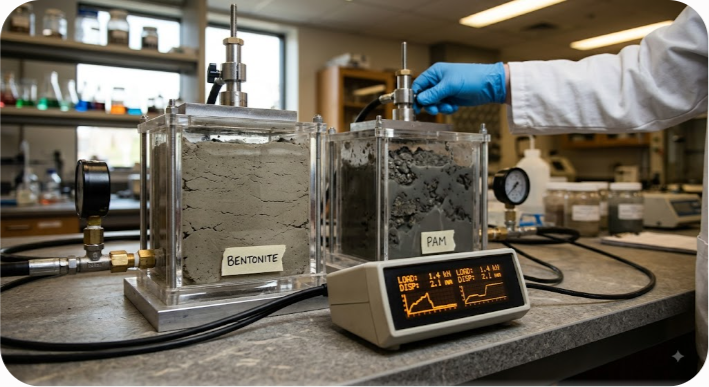
High-grade Sodium Bentonite naturally produces extremely low permeability rates. When blended with site soils at a ratio of 5% to 10% by dry weight and compacted properly, it routinely delivers hydraulic conductivity values between 1×10 ?9 m/s and 1×10 ?11 m/s.
The swelling pressure generated within confined pores restricts fluid movement to microscopic diffusion rather than bulk advective flow. Because the seal relies on physical lattice expansion rather than temporary chemical bonding, it maintains this low flow rate across decades under sustained hydraulic heads.
Polyacrylamide can achieve initial permeability reductions comparable to raw clays, frequently reaching 1×10 ?8 m/s to 1×10 ?9 m/s immediately after application. The long polymer chains block pore throats and increase water viscosity, which impedes seepage.
However, PAM's hydraulic barrier efficiency is sensitive to hydraulic gradient and continuous flow. Under high pressure, water can shear the polymer bonds or stretch the flexible gel, causing fluid channels to reopen. Unlike bentonite, which forms a static physical plug, PAM relies on an ongoing chemical structure that degrades under mechanical stress.
Tailings slurry is rarely pure water; it often contains extreme pH levels, elevated salinity, heavy metals, cyanides, and sulfuric acid from sulfide ore oxidation. Chemical compatibility determines whether your seepage barrier will survive for five years or fifty.
Polyacrylamide is an organic compound subject to chemical, thermal, and biological degradation:
Sodium Bentonite suffers from none of these organic breakdown pathways. It is inert, non-toxic, immune to UV radiation, and unaffected by soil bacteria.
| Performance Metric | Natural Sodium Bentonite | Polyacrylamide (PAM) |
|---|---|---|
| Primary Mechanism | Physical lattice swelling & micro-pore blockage | Chemical particle flocculation & viscoelastic gel network |
| Hydraulic Conductivity (k) | 1×10 ?9 to 1×10 ?11 m/s | 1×10 ?7 to 1×10 ?9 m/s (initial) |
| Long-Term Durability | Permanent; indefinite mineral lifespan | Temporary; degrades via UV, shear, and bacteria |
| Self-Healing Ability | Exceptional; re-hydrates and expands into tears | Poor; broken chemical bonds do not auto-repair |
| Chemical Sensitivity | Sensitive to divalent ions (salts); mitigated via pre-hydration | Highly sensitive to pH, salinity, and heavy metals |
| Freight & Handling Mass | High bulk weight (requires dry storage/silos) | Low product weight (concentrated powder or liquid) |
| Environmental Risk | Completely natural mineral; zero toxicity | Residual monomer concerns; monitor acrylamide levels |
| Primary Best Use | Permanent bottom liners, cap seals, cutoff walls | Rapid solids settling, dust control, temporary fluid loss |
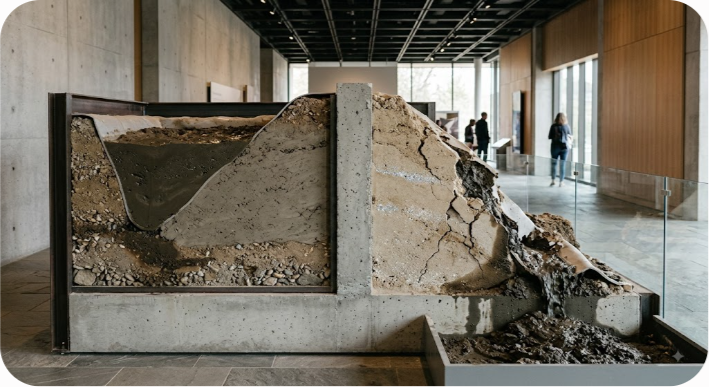
Evaluating the true cost of a tailings seal requires looking beyond the initial product purchase price per metric ton. You must calculate total installed cost plus 30-to-50-year maintenance liabilities.
Polyacrylamide holds a strong initial freight advantage. Because it is applied at low dosage rates, shipping a few totes or drums of PAM to a remote mine site costs significantly less upfront than shipping hundreds of tons of bulk Sodium Bentonite.
However, bulk mineral availability from reliable global producers changes this math. When imported directly from large-scale mining operations with dedicated export infrastructure, Sodium Bentonite becomes highly cost-competitive per square meter of finished seal.
If a synthetic PAM seal degrades after seven years under a tailings stack, remediating the resulting groundwater leak requires expensive sub-surface grouting, interceptor trench installation, or regulatory fines that run into millions of dollars.
In contrast, Sodium Bentonite acts as an insurance policy. Its higher initial installation mass yields a permanent barrier that requires zero active chemical dosing, ongoing power input, or maintenance for the entire operational life and post-closure phase of the facility.
Engineers do not always have to choose one material to the absolute exclusion of the other. Many modern tailings storage designs utilize both materials in a layered, hybrid approach.
For base lining large impoundments, mixing high-purity Sodium Bentonite into native site soils offers the most robust structural containment.
To prevent lateral seepage through permeable foundation layers around a tailings perimeter, engineers excavate deep vertical trenches filled with a bentonite-water slurry.
The bentonite slurry exerts hydrostatic pressure against the trench walls while simultaneously forming a thin, impermeable filter cake along the soil faces. The trench is then backfilled with a soil-bentonite or concrete-bentonite mix, constructing a continuous vertical wall that blocks subsurface fluid migration.
The most effective modern mine waste strategy uses each material where it performs best:
Not all bentonite clays are created equal. Calcium Bentonite, for instance, exhibits low swelling capacity and will not create an effective tailings dam seal on its own unless chemically activated. When sourcing material for critical geotechnical applications, ensure your supplier meets strict quality standards:
Companies like Axewelledge leverage over 60 million tons of proven high-swell sodium bentonite reserves in India, supplying fully processed, API- and ASTM-compliant bentonite to major infrastructure and mining developments across the globe. Securing material directly from primary mine owners ensures consistent mineralogy across every shipment, avoiding the high failure risks associated with unrefined local clays.
If your priority is rapid solids separation, temporary fluid loss control, or dewatering fine slurry lines, Polyacrylamide is an excellent operational tool. It accelerates water recovery and helps consolidate wet tailings deposits quickly.
However, if your objective is permanent foundation sealing, regulatory environmental compliance, and lifelong seepage protection for a tailings dam, Sodium Bentonite is the superior, unassailable standard. Its natural self-healing swelling properties, chemical durability, and immunity to organic breakdown make it the safest choice for long-term containment.
By building your primary containment barriers on natural Sodium Bentonite and deploying polymers for process water clarification, you protect both your operating margins and the surrounding environment.













Have questions about our products? We're here to help!