Axewelledge, a leading exporter from India, specializes in high-quality Bentonite. With a commitment to excellence, we supply premium Bentonite to the Middle East and Southeast Asia markets.


North Angle Complex, 304,
150 Feet Ring Rd, Opposite Ambedkar Nagar BRTS Stop,
Madhav Park, Punit Nagar,
Mavdi, Rajkot, Gujarat 360004
© Axewelledge 2026, All Rights Reserved.
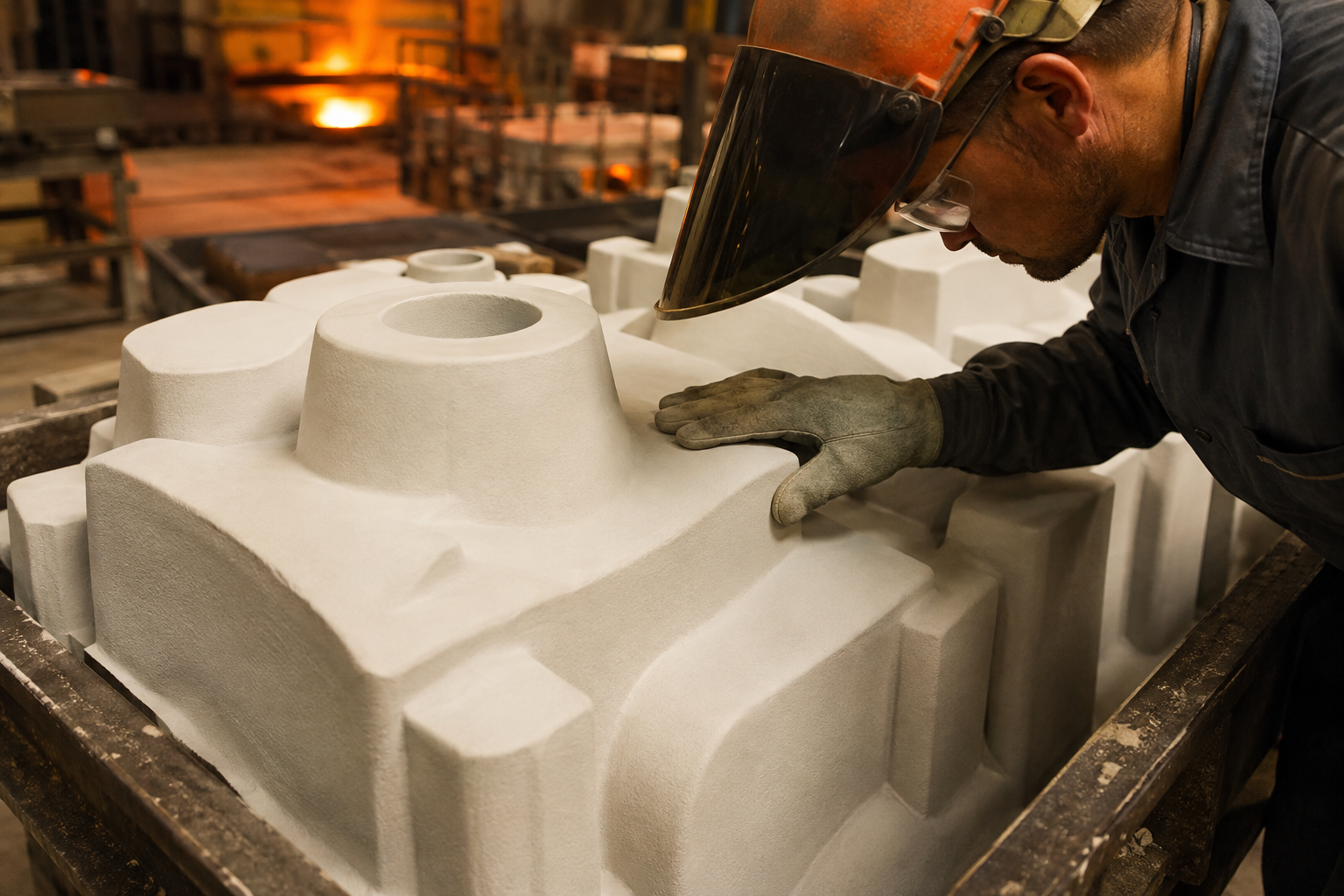
Yes. Adding high-grade bentonite clay to a refractory coating dramatically improves slurry suspension, prevents heavy refractory minerals from settling, and increases green bonding strength on mold surfaces. When properly processed, sodium bentonite creates a thixotropic gel network that stabilizes high-density minerals like zircon, chromite, and alumina in water-based washes, ensuring an even layer that resists thermal erosion during metal pouring.
In modern foundry operations, achieving an unblemished casting surface depends almost entirely on the integrity of your mold spray or wash. If your refractory coating separates in the tank, drips off core edges, or cracks under thermal shock, molten iron or steel will burn into the sand. This leads to costly hand-finishing, metal penetration, and scrapped castings.
This guide breaks down the chemical mechanisms, slurry formulation techniques, and real-world trade-offs of using bentonite as a functional rheology modifier and binder in refractory coatings.
To understand why bentonite works so effectively, you first have to look at what a refractory wash actually contains. A typical coating consists of four primary components:
Refractory minerals are dense. Zircon, for instance, has a specific gravity near 4.6 to 4.7. If left in a pure water slurry, zircon powder sinks to the bottom of a dip tank within minutes, creating a hard, unmixable layer known as compaction settling.
Bentonite solves this physical problem. Formed from weathered volcanic ash, bentonite is primarily composed of montmorillonite—a smectite clay featuring a unique 2:1 layer-lattice structure. When hydrated in water, individual bentonite platelets expand, delaminate, and build an interconnected visual grid or gel network throughout the slurry. This network suspends dense mineral grains indefinitely under static conditions.
Thixotropy is the property of becoming liquid when agitated or sheared, and returning to a gel-like state when allowed to rest. Refractory coatings require extreme thixotropy:
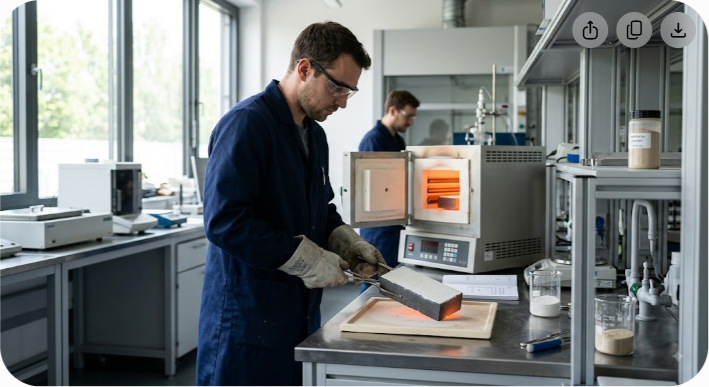
High-swelling sodium bentonite imparts excellent yield point and plastic viscosity ratios. It creates a temporary structural network that breaks down instantly under pump pressure, then rebuilds within seconds on the core surface to form a flat, uniform wet film.
Without a clay suspension agent, liquid washes suffer from liquid phase separation (syneresis), leaving clear water at the top and dense refractory sludge at the bottom. Re-dispersing compact zircon or chromite sediment requires massive mechanical energy and often leaves agglomerated lumps.
Bentonite maintains a stable yield stress throughout the tank volume. Even during overnight shutdowns, a slurry stabilized with 1.0% to 2.5% high-grade sodium bentonite will resist hard settling, allowing quick re-homogenization upon stirring.
Beyond rheology, bentonite acts as an inorganic binder. As the carrier liquid evaporates during the drying cycle, bentonite platelets lock around the fine refractory powder grains, binding them directly to the quartz or chromite sand grains of the mold.
This high dry bond strength prevents dusting and erosion when dry molds are handled, assembled, or blown clean with high-pressure air before closing.
When molten steel at 1,550 degrees Celsius enters a mold cavity, the underlying silica sand expands rapidly. This sharp phase transition causes the sand surface to buckle, creating casting defects known as scabs, rat tails, and veining.
Bentonite retains structural water within its crystal lattice up to high temperatures. As heat transfers into the coating, the bentonite layer absorbs thermal stress, cushioning mechanical expansion between sand grains and preventing hot liquid metal from penetrating core fissures.
Not all bentonites act the same way in liquid suspension. The dominant exchangeable cation within the clay lattice fundamentally changes its swelling volume, hydration rate, and viscosity profile.
| Property | Sodium Bentonite (Natural / Activated) | Calcium Bentonite | Benefit to Refractory Coating |
|---|---|---|---|
| Free Swelling Index | High (20 to 30+ mL/2g) | Low (4 to 8 mL/2g) | Higher liquid phase yield stress at lower dosage |
| Viscosity Building | High thixotropic viscosity | Low to moderate viscosity | Prevents sagging on vertical mold walls |
| Thermal Stability | Maintains structure up to ~750°C | Dehydrates earlier (~500°C) | Prevents hot cracking during metal pour |
| Settling Prevention | Outstanding long-term suspension | Moderate; requires higher dose | Eliminates hard cake at tank bottom |
| Dry Film Durability | Flexible, hard surface film | Brittle film, prone to dusting | Protects core edges during core handling |
For water-based refractory coatings, high-swelling natural sodium bentonite is the industry standard. Its ability to absorb several times its weight in water creates an elastic gel lattice at low addition rates, minimizing the total organic and volatile load in the mold.
While calcium bentonite can be chemically treated with soda ash (sodium carbonate) to create activated sodium bentonite, naturally occurring sodium bentonites with high montmorillonite content exhibit far greater thermal durability under high thermal loads.
Achieving peak coating performance requires balancing clay volume with refractory solids. Adding too little bentonite leads to settling and run marks; adding too much leads to high slurry viscosity, entrapment of air bubbles, and cracking during drying.
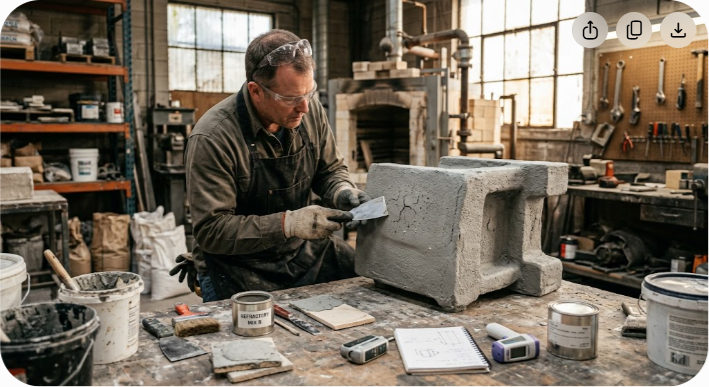
Bentonite cannot simply be dumped into a tank with refractory powders and stirred by hand. Montmorillonite platelets must fully delaminate to build their three-dimensional gel structure.
pH significantly impacts bentonite suspension. Sodium bentonite achieves maximum hydration and viscosity in slightly alkaline water, ideally at a pH between 8.5 and 10.0. If your process water is acidic or contains hard mineral ions (like calcium or magnesium), bentonite platelets flocculate prematurely, reducing suspension power.
Adding small amounts of pH stabilizers (such as sodium carbonate or tetra-sodium pyrophosphate) keeps the clay slurry fully deflocculated, yielding maximum fluidity during pumping and high gel strength at rest.
When casting surfaces show imperfections, the coating rheology is often to blame. Here is how bentonite adjustment can resolve frequent foundry defects:
For consistent foundry coating results, raw mineral purity is critical. Variations in montmorillonite content, grit levels, or exchangeable ion ratios will cause unpredictable changes in slurry Baumé and flow behavior.
Working with an experienced global mineral producer ensures your coatings remain stable batch after batch. Axewelledge, one of India's premier bentonite mine owners and exporters, supplies high-montmorillonite Sodium Bentonite engineered specifically for high-temperature industrial uses. With extensive reserves, modern grinding technology, and strict quality controls, Axewelledge delivers refractory-grade bentonite tailored to global foundry and industrial standards.













Have questions about our products? We're here to help!