Axewelledge, a leading exporter from India, specializes in high-quality Bentonite. With a commitment to excellence, we supply premium Bentonite to the Middle East and Southeast Asia markets.


North Angle Complex, 304,
150 Feet Ring Rd, Opposite Ambedkar Nagar BRTS Stop,
Madhav Park, Punit Nagar,
Mavdi, Rajkot, Gujarat 360004
© Axewelledge 2026, All Rights Reserved.
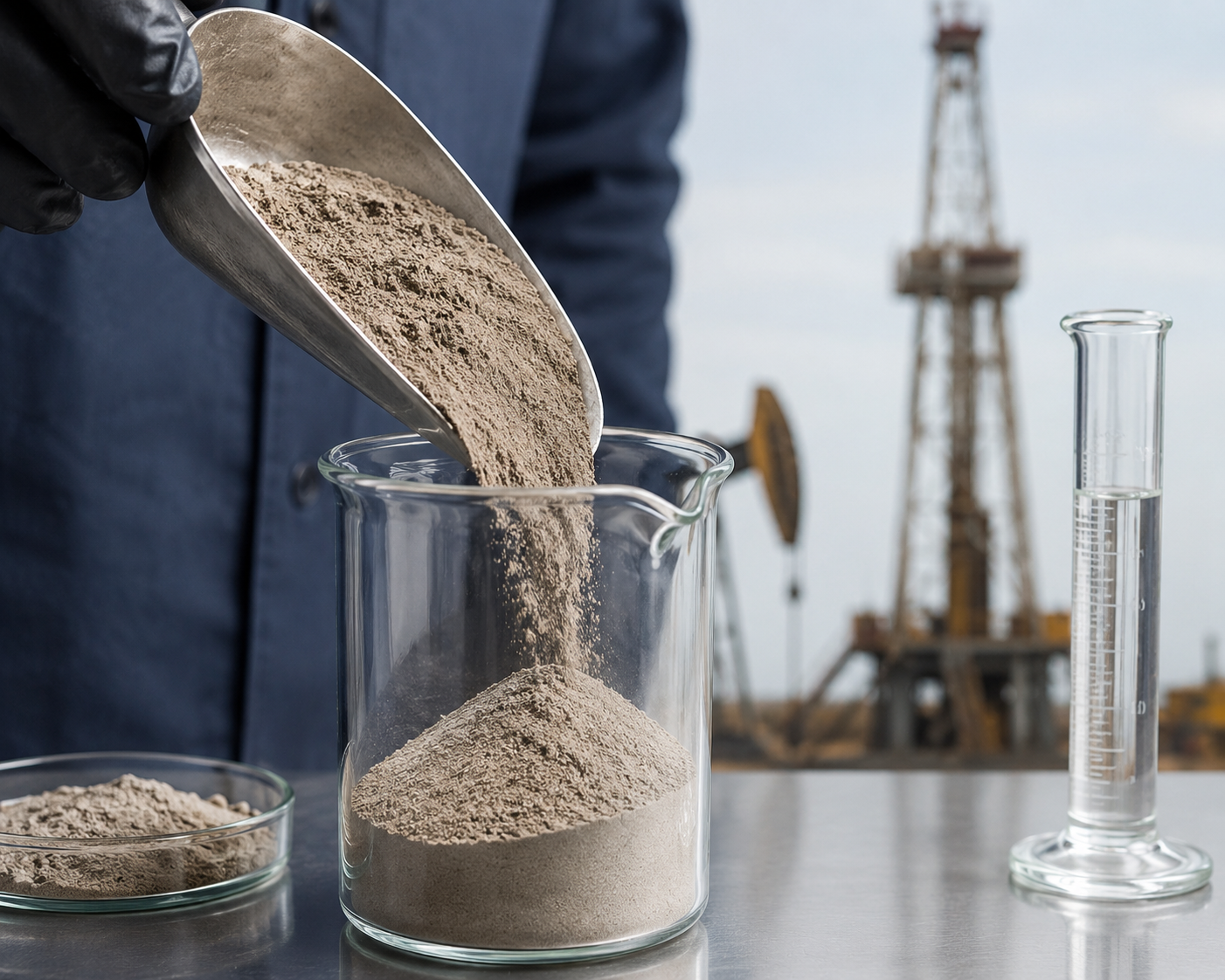
Deep underground, miles beneath the surface where pressures mount and temperatures soar, oil drilling turns into an intense game of chemistry and physics. You're fighting friction, managing intense pressures, and trying to keep a borehole open while lifting heavy rock cuttings up to the surface. Your main ally in this fight is your drilling fluid, or mud. Get the mud mix wrong, and you risk stuck pipe, lost circulation, or worse, a total well collapse. At the heart of these drilling mud formulas sits a humble clay mineral: bentonite. But not all bentonite is created equal. For engineers and procurement managers looking at specifications, the choice usually boils down to two distinct types: sodium bentonite and calcium bentonite. Picking between them isn't a minor detail; it completely dictates how your fluid handles the brutal conditions downhole. Let's break down how these two clays behave under pressure, why their atomic structures cause them to act so differently, and how to choose the right one for your drilling program.
To understand why these two clays perform differently in a mud pit, we have to look at them on a microscopic level. Bentonite is primarily made of montmorillonite, a smectite group clay. Imagine a microscopic sandwich. The bread consists of two layers of silica tetrahedra, and the filling is a single layer of alumina octahedra. This three-layer sheet structure repeats thousands of times to form a clay particle.
Here is the catch: these sheets carry a net negative charge. To stay balanced, the clay structure traps positive ions (cations) in the spaces between the layers. This is where sodium and calcium come into play. In sodium bentonite, small single-charged sodium ions (Na + ) sit between the layers. In calcium bentonite, double-charged calcium ions (Ca 2+ ) hold the sheets together.
This difference in electrical charge changes everything. Because a calcium ion has a +2 charge, it holds adjacent clay sheets tightly together like a strong microscopic magnet. Water molecules find it incredibly difficult to wedge themselves between these tightly bound sheets. Sodium ions, with their weaker +1 charge, hold the sheets loosely. When you expose sodium bentonite to water, hydration occurs rapidly. Water rushes into the interlayer spaces, pushing the sheets wide apart. This atomic structural difference explains why sodium bentonite expands up to fifteen or twenty times its dry volume in water, while calcium bentonite barely manages a twofold increase. For an oilfield engineer, this swelling capacity is the holy grail of fluid management.
When you pump drilling mud down a hole, you need it to do two contradictory things. It must flow smoothly like water while being pumped under high pressure so it doesn't burn out your equipment. Yet, the moment the pumps stop for a pipe connection, that same liquid needs to turn into a thick, structured gel to keep heavy rock cuttings from sinking back down to the bottom of the well. This behavior is called thixotropy.
Sodium bentonite excels at creating this thixotropic structure. When the clay sheets fully hydrate and separate into individual platelets, they scatter throughout the water. The negatively charged faces and positively charged edges of these loose platelets interact, building a complex, house-of-cards network. This network provides high yield point and plastic viscosity, giving the mud excellent hole-cleaning capacity. It suspends drill cuttings effortlessly during static periods, then breaks down cleanly when pumping resumes.
Calcium bentonite, because it refuses to separate into individual platelets, stays clumped together in large aggregates. Think of it like throwing handfuls of fine sand into a bucket of water versus throwing in hard pebbles. The sand disperses and thickens the liquid; the pebbles just sink to the bottom. If you attempt to use untreated calcium bentonite to build a drilling mud, you'll end up with a low-viscosity slurry that allows cuttings to drop straight back down onto your drill bit, causing expensive mechanical issues.
As you drill through porous rock formations, the liquid portion of your drilling mud wants to escape into the surrounding stone. If too much water filters out into the formation, two bad things happen. First, the mud left in the hole gets dangerously thick and dry. Second, the water invading the rock formation can cause surrounding shale to swell and slough off into your wellbore.
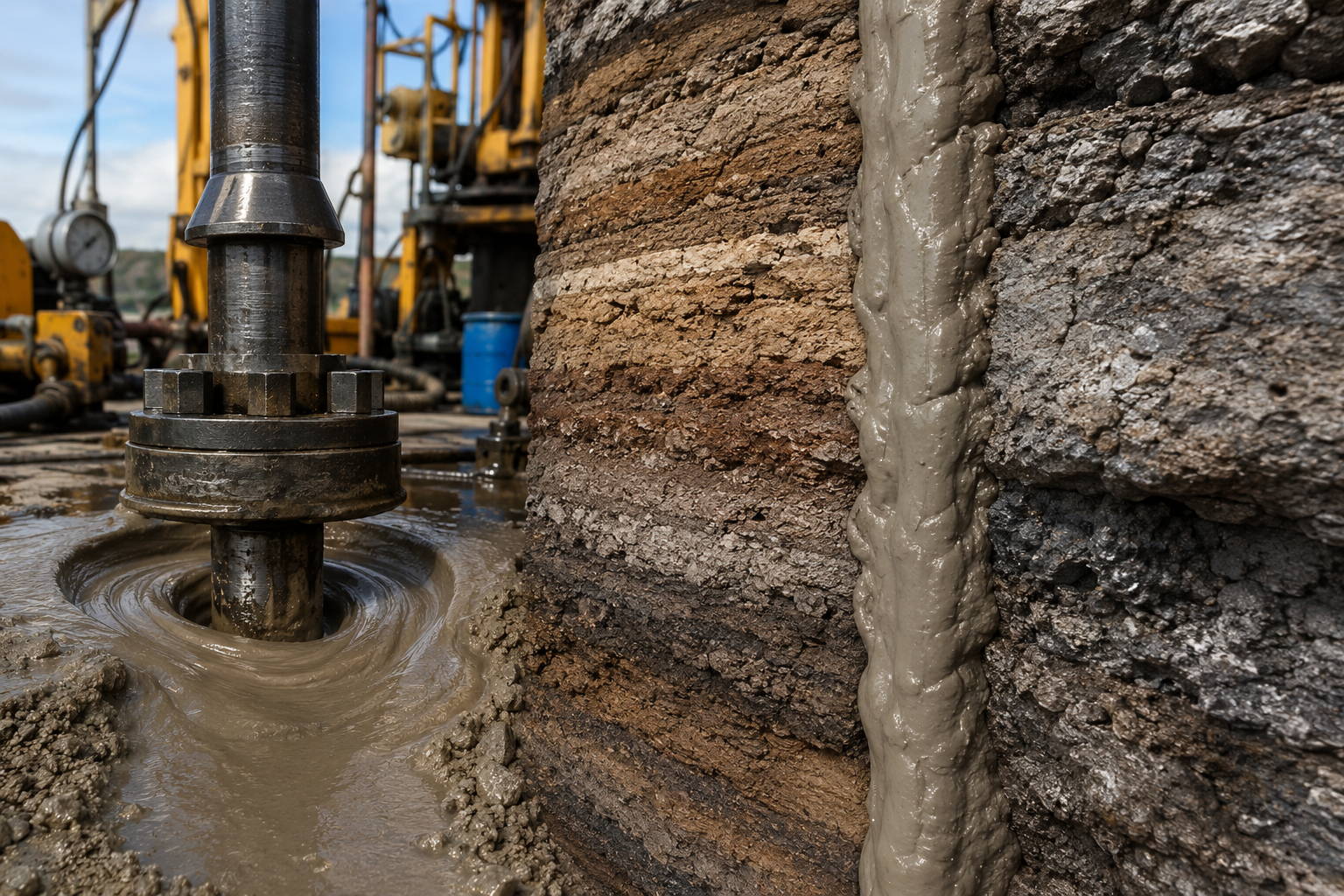
To prevent this, you need a filter cake. This is a thin, tough, impermeable layer of clay that plates out against the walls of the hole, sealing off the porous rock like plaster on a wall. Sodium bentonite forms an exceptional filter cake. Because its platelets separate completely, they lay flat against the borehole wall, overlapping like shingles on a roof. This creates a tight, microscopic barrier that keeps fluid loss to a bare minimum.
Because calcium bentonite stays clumped, its filter cake looks more like a pile of gravel than a shingled roof. Large gaps remain between the aggregated clay particles, allowing water to leak through easily into the formation. In high-pressure zones, relying on untreated calcium clay can lead to differential sticking, a nightmare scenario where your drill string gets sucked flat against the porous wall because of uneven pressure distributions.
Because drilling mud performance is so critical, the American Petroleum Institute established strict guidelines under API Specification 13A. This standard defines the exact physical and chemical properties required for a bentonite clay to be classified as 'Drilling Grade.'
To meet API 13A specs, a bentonite must deliver specific performance metrics when mixed with water. For instance, the suspension must show a minimum dial reading at 600 rpm on a standard Fann viscometer, and its fluid loss (filtrate volume) must remain below a strict threshold (typically 15 cubic centimeters max).
Premium sodium bentonite naturally meets or exceeds these rigorous metrics without heavy chemical intervention. Its inherent high yield and low fluid loss make it the industrial baseline for global drilling operations. Producers like Axewelledge tap into vast, high-quality natural reserves to ensure their raw clay meets these rigid international requirements straight out of the ground, giving operators predictable downhole performance.
Looking at the raw specs, you might wonder why anyone bothers mining calcium bentonite for industrial use. The reality is that natural sodium bentonite deposits are less common globally than calcium bentonite. Many geographical regions have massive reserves of calcium clay but very little natural sodium clay. This has led the industry to develop modification techniques.
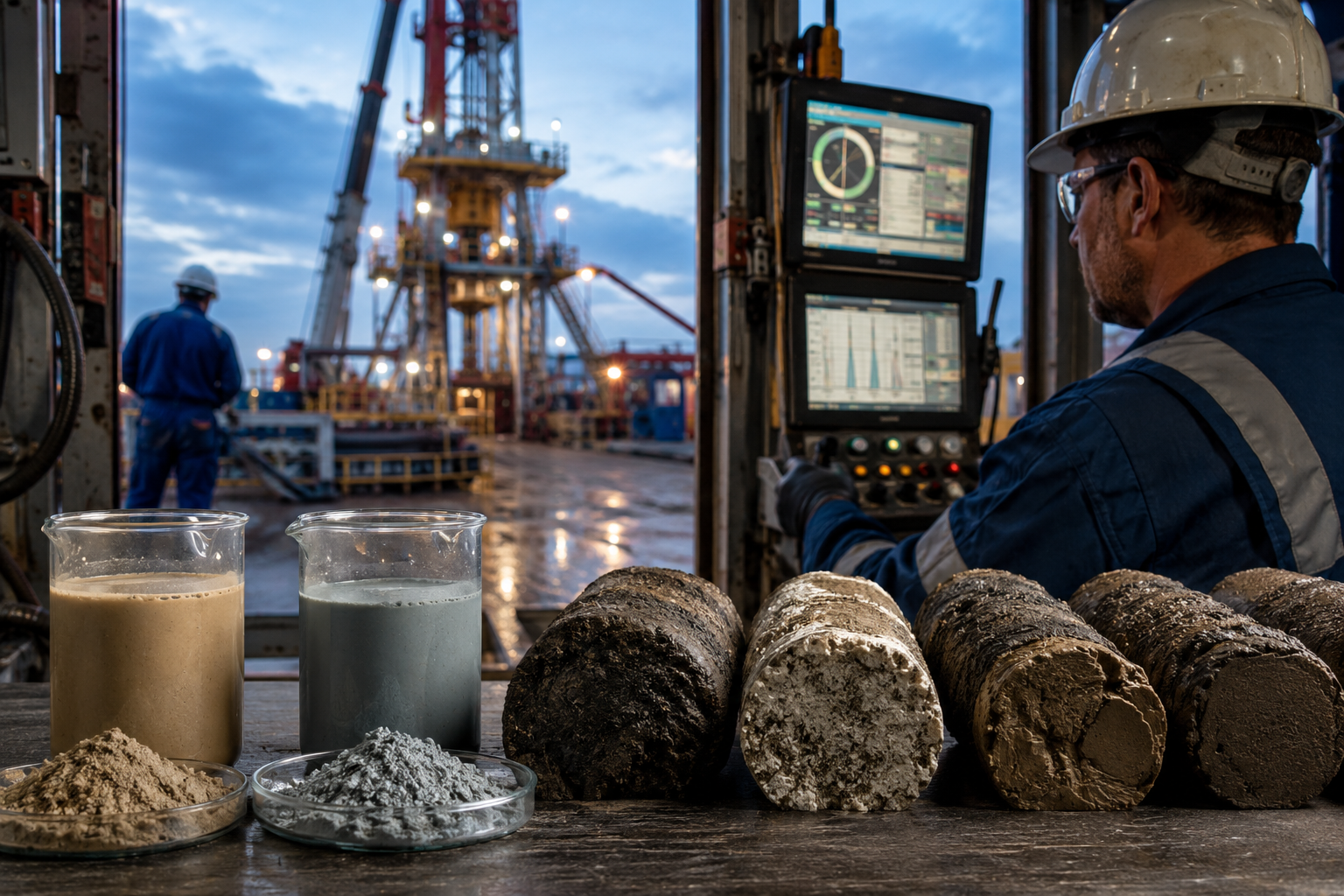
Through a process called 'activation' or 'peptization,' producers mix calcium bentonite with sodium salts, usually sodium carbonate (soda ash). During processing, a chemical exchange takes place: the sodium ions displace the calcium ions within the clay lattice, forcing the calcium out. This artificially boosts the clay's swelling and viscosity characteristics, turning it into what the industry calls 'sodium-activated bentonite.'
While activated calcium bentonite can work well for shallow water wells, civil engineering projects, or less demanding drilling environments, it has distinct vulnerabilities in deep oil and gas applications. The primary issue is chemical stability. The sodium ions are only loosely held in place by artificial activation. When the mud encounters harsh downhole environments, like high temperatures, saltwater influxes, or calcium contamination from drilling through cement or gypsum, the activation process can reverse. The clay flocculates, clumps back together, and its viscosity and fluid loss control properties rapidly deteriorate.
Deep wells are hostile chemical environments. As you drill deeper, temperatures climb significantly, often exceeding 250 degrees Fahrenheit. At these elevated thermal zones, the chemical bonds and polymer additives within your drilling mud begin to break down. Natural sodium bentonite handles this thermal stress remarkably well. Its simple, mineralogical structure remains intact at temperatures where organic polymers simply dissolve or char, maintaining baseline viscosity when you need it most.
Contamination is another hurdle altogether. If you hit an underground saltwater zone, the sudden rush of salt ions (NaCl) into your mud system can overwhelm your clay. The high concentration of ions in the water shields the negative charges on the sodium bentonite platelets, causing the house-of-cards structure to collapse. This process, known as flocculation, causes the clay to clump together, dropping its viscosity and causing fluid loss to skyrocket.
To handle these contaminated environments, mud engineers have to modify the system with specialized polymers and deflocculants. However, starting with a high-purity, naturally occurring sodium bentonite gives you a far more stable baseline. It requires fewer expensive chemical additives to maintain its properties under stress compared to an activated calcium clay, which is already chemically fragile to begin with.
In modern drilling operations, supply chain reliability is just as vital as downhole chemistry. If you run out of bentonite at the rig site, drilling grinds to a halt at a cost of tens of thousands of dollars per hour. Large-scale global producers manage this risk by controlling the entire process from the mine to the port. For example, Axewelledge leverages its massive reserve base of over 60 million tons of high-grade clay alongside advanced processing plants in India to guarantee supply continuity to major drilling hubs across the USA, Middle East, and Southeast Asia.
Furthermore, the oil and gas sector faces growing pressure to adopt eco-friendly practices. Bentonite is a naturally occurring, non-toxic volcanic ash product, making it one of the cleanest components of a drilling fluid system. Unlike synthetic polymers that can persist in the environment or present disposal challenges, high-quality natural clay breaks down safely without leaving a toxic footprint behind. Choosing a premium natural sodium clay reduces your reliance on complex synthetic chemical additives, ticking both the performance and environmental compliance boxes.
How do you weigh these factors when designing a drilling fluid program? Think about the specific demands of your target asset. For shallow, low-temperature vertical wells with minimal chemical hazards, a cost-effective sodium-activated calcium clay might get the job done. It keeps your upfront mud costs low while providing enough lift to clean the hole.
But if you are tackling complex horizontal wells, deep high-pressure high-temperature (HPHT) reservoirs, or drilling through highly reactive shale formations, natural sodium bentonite is non-negotiable. Its reliable swelling power, superior fluid loss control, and raw thermal endurance protect your bottom line by preventing wellbore collapse and reducing non-productive time on the rig. By understanding the atomic chemistry of your mud additives, you ensure your drilling operation runs smoothly, safely, and efficiently from surface to total depth.













Have questions about our products? We're here to help!