Axewelledge, a leading exporter from India, specializes in high-quality Bentonite. With a commitment to excellence, we supply premium Bentonite to the Middle East and Southeast Asia markets.


North Angle Complex, 304,
150 Feet Ring Rd, Opposite Ambedkar Nagar BRTS Stop,
Madhav Park, Punit Nagar,
Mavdi, Rajkot, Gujarat 360004
© Axewelledge 2026, All Rights Reserved.
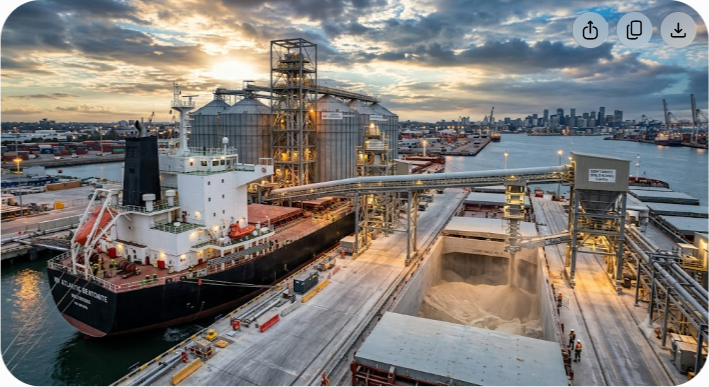
Imagine a multi-million dollar drilling rig sitting idle in the Permian Basin. The crew is assembled, the weather is clear, and the target depth is locked in. Yet, nothing is moving. The culprit isn't a mechanical failure or a regulatory hurdle. It's a simple logistics delay: a critical shipment of high-yield sodium bentonite is stuck at a port thousands of miles away, or worse, the latest batch delivered to the site failed to meet API standards, leaving the mud system thin, unstable, and incapable of carrying cuttings to the surface.
In high-stakes drilling operations—whether you are tapping oil and gas reserves, executing complex horizontal directional drilling (HDD) for utility corridors, or anchoring major civil infrastructure—the success of the entire project rests on what you pump down the hole. Drilling fluids are the lifeblood of the wellbore. They cool the bit, stabilize the formation, control formation pressures, and transport solids. At the core of these fluids are premium-grade industrial minerals.
For too long, procurement teams viewed these minerals as basic commodities. They bought on the spot market, chased the lowest per-ton price, and assumed that a bag of bentonite from one supplier was identical to a bag from another. That era of complacency is over. Today's global supply chains are volatile, fractured, and unpredictable. Relying on transactional, short-term mineral sourcing is a direct threat to operational continuity. Overcoming these bottlenecks requires a shift toward strategic mineral sourcing: establishing direct, transparent relationships with integrated global mine owners who control their reserves, processing, and distribution networks.
To fix a problem, you have to understand its root causes. The industrial mineral supply chain for the drilling sector is uniquely vulnerable to a specific cocktail of geopolitical, macroeconomic, and geological pressures. When these factors collide, they create severe bottlenecks that ripple across drilling programs.
Global shipping lanes are more volatile than ever. From regional conflicts disrupting vital maritime passages to labor disputes at major commercial ports, oceanic freight can shift from smooth sailing to a logistical nightmare overnight. Because high-volume minerals like bentonite travel in large bulk format or dense container loads, they are highly sensitive to freight rate spikes and container shortages. When container availability drops, industrial minerals are often bumped in favor of higher-margin consumer goods, leaving industrial buyers stranded.
The traditional mineral supply chain relies heavily on layers of brokers, traders, and independent blenders. A broker in the United States might buy raw clay from one source, have it processed by a third party, and package it under a private label. This multi-tiered approach creates blind spots. Without direct oversight of the mining asset, the quality of the raw material fluctuates. One shipment might exhibit excellent thermal stability and swelling capacity, while the next suffers from high sand content or poor low-shear yield point values. In the drilling world, inconsistent mineralogy leads to immediate performance failures downhole.
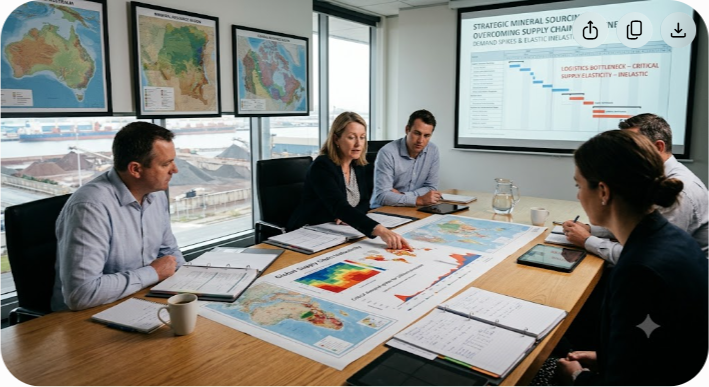
Drilling activity doesn't follow a perfectly linear path. It reacts sharply to energy pricing shifts, infrastructure legislation, and seasonal work windows. When drilling activity surges simultaneously across the US, domestic mineral producers face extreme capacity constraints. If a domestic mine hits its production ceiling or encounters an unexpected geological fault line that degrades output quality, it cannot scale up instantly. Without a global, asset-backed sourcing strategy, procurement teams find themselves bidding against competitors for limited domestic stockpiles, driving costs up and pushing delivery timelines out.
When supply chains tighten, the temptation to cut corners grows. Procurement departments might look at alternative, lower-grade minerals or unverified local suppliers to fill the gap. From an engineering standpoint, this is playing Russian roulette with your wellbore.
Let's focus on sodium bentonite, the foundational component of water-based drilling muds. High-quality sodium bentonite relies on a specific mineralogical structure: a three-layer clay mineral composed of two tetrahedral sheets sandwiching a central octahedral sheet. This montmorillonite structure gives the clay its incredible ability to absorb water into its interlayer spaces, swelling up to several times its dry volume.
| Parameter | Target Operational Impact |
|---|---|
| Swelling Capacity | Excellent hole cleaning & suspension |
| Viscosity (600 rpm reading) | Optimized hydraulic horsepower |
| Fluid Loss Control (API Spec 13A) | Thin, impermeable filter cake |
| Low Sand Content | Reduced equipment & pump wear |
When you pump a properly hydrated sodium bentonite slurry downhole, it creates a thixotropic fluid. It flows easily under the shear stress of the mud pump but gels up when circulation stops, keeping heavy cuttings from settling around the bit. Furthermore, it plates out on the porous walls of the formation, forming a thin, tough, impermeable filter cake. This cake prevents water from leaking into the formation (fluid loss control), which preserves wellbore stability and prevents cave-ins.
If you substitute this with inferior clay, or a batch contaminated with high calcium levels or excessive non-swelling minerals, the fluid mechanics collapse. The filter cake becomes thick and permeable, allowing fluid to invade sensitive shale formations, which leads to sloughing, swelling, and stuck pipe incidents. You are forced to compensate by dumping expensive chemical polymers, synthetic viscosifiers, and fluid-loss additives into the mud pit. What started as a cost-saving measure or a quick supply-chain patch ends up inflating your chemical mud bill by 300% to 400%.
In modern drilling operations, time is measured in dollars per minute. When a rig stops drilling due to fluid failure or lack of materials, you enter the danger zone of Non-Productive Time (NPT). Understanding the exact financial impact of NPT reveals why reliable, strategic mineral sourcing is a core insurance policy for your operational bottom line.
Consider the direct expenses of an active drilling operation in the United States. A standard onshore rig can carry a daily spread rate ranging from $40,000 to over $100,000 when you factor in the rig lease, fuel, directional drilling crews, mud logging services, and on-site engineering support. For offshore or complex deepwater wells, that figure easily climbs past $500,000 per day.
If a crew is forced to halt operations because they are waiting on a bentonite shipment, that spread rate ticks away relentlessly. If a poor-quality batch of bentonite causes a stuck pipe incident, the losses escalate exponentially. You face the cost of:
When procurement decisions are made solely on upfront material costs, they ignore the asymmetric risk profile of drilling. Saving $20 a ton on a shipment of bulk bentonite means nothing if it introduces even a 5% risk of causing a single day of NPT. Strategic sourcing shifts the focus from minimizing the purchase price of the mineral to minimizing the total cost of ownership across the well construction life cycle.

To break free from supply chain bottlenecks, operators and major service companies must move away from reactive purchasing and adopt a proactive, strategic mineral sourcing framework. This transformation relies on three core pillars.
The closer you are to the earth, the lower your supply chain risk. By partnering directly with tier-one mine owners and integrated processors, you eliminate multiple points of failure. Direct sourcing gives you unmatched transparency. You know exactly which reserve your mineral comes from, the remaining lifespan of that asset, and the precise quality control protocols enforced during processing.
For example, global leaders like Axewelledge possess over 60 million tons of high-quality bentonite reserves, making them India’s largest mine owner and exporter, ranking among the top five producers globally. When an operator secures a direct supply line from an asset-backed producer of this scale, they are no longer vulnerable to localized market shortages or broker speculation. They are backed by massive, physical geological reserves.
Strategic sourcing means demanding more than a standard certificate of analysis (CoA). It involves aligning the supplier's technical capabilities with your specific downhole environments. Different drilling challenges require tailored mineral characteristics. A deep, high-temperature, high-pressure (HTHP) gas well requires bentonite with exceptional thermal stability and low contaminant levels. An HDD project cutting through loose sand and gravel requires a rapid-hydrating, high-yield product that establishes immediate gel strength.
An integrated producer doesn't just dig clay out of the ground and throw it into a sack. They leverage advanced R&D and precision processing technology to adjust milling sizes, dryness levels, and activation steps. This ensures that every metric—from the moisture profile to mesh retention—is optimized for maximum field performance.
True supply chain resilience means expecting disruptions and building infrastructure to absorb them. A strategic mineral partner balances localized mining power with a global logistical footprint. This includes maintaining strategically located processing facilities, regional offices across key trade hubs like India and the UAE, and a sophisticated network of shipping assets.
For US operators, this looks like establishing predictable transit lanes, utilizing reliable bulk vessel contracts, and maintaining strategic buffer stocks at regional distribution centers close to major drilling basins. By decoupling the immediate operational need from the extraction schedule via strategic inventory management, you insulate the drilling site from shipping hiccups and port delays.
If you are looking to overhaul your mineral supply chain and transition to a resilient strategic sourcing model, you need a strict, objective framework to evaluate potential global supply partners. Use this checklist during your qualification process:
The drilling industry is entering an era defined by tighter margins, deeper and more technically demanding wells, and intense regulatory scrutiny. In this environment, operational errors are incredibly costly. You cannot afford to let your fluid program be undermined by low-grade minerals or unreliable supply networks.
Investing in strategic mineral sourcing is about securing predictability. When you build deep partnerships with globally integrated producers like Axewelledge, you gain access to massive reserves, cutting-edge processing, and robust international distribution networks. You insulate your drilling projects from market volatility, eliminate low-grade material risks, and drive down NPT.
It is time to look beyond the price tag of the next delivery truck and view industrial minerals as the strategic assets they truly are. By locking in a reliable, high-yield mineral supply chain, you ensure that when the bit meets the formation, your fluid program performs exactly as engineered, keeping your projects on time, on budget, and moving forward.













Have questions about our products? We're here to help!