Axewelledge, a leading exporter from India, specializes in high-quality Bentonite. With a commitment to excellence, we supply premium Bentonite to the Middle East and Southeast Asia markets.


North Angle Complex, 304,
150 Feet Ring Rd, Opposite Ambedkar Nagar BRTS Stop,
Madhav Park, Punit Nagar,
Mavdi, Rajkot, Gujarat 360004
© Axewelledge 2026, All Rights Reserved.
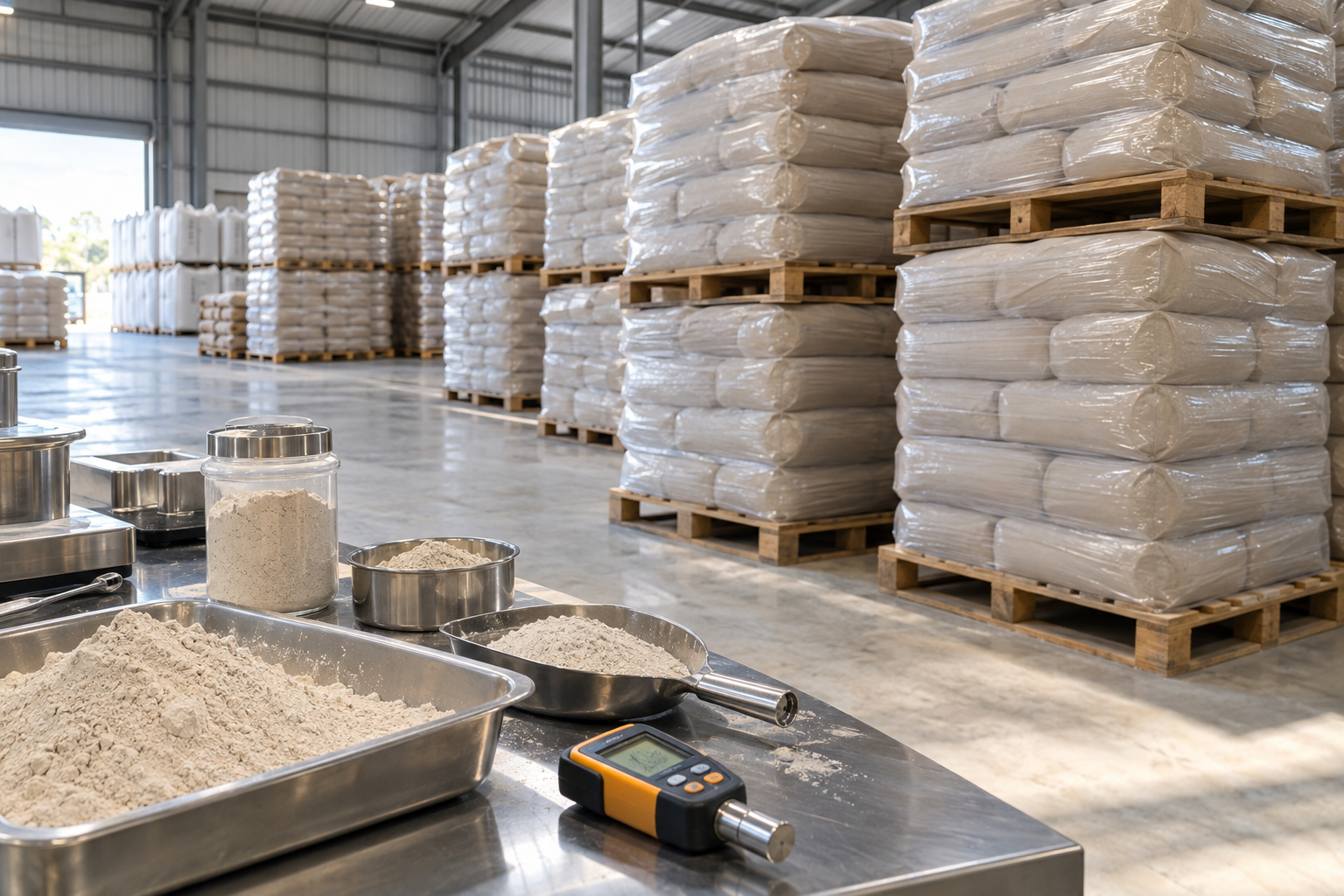
Bentonite doesn't usually have an expiration date in the same sense as food, medicine, or other perishable products. Dry bentonite is an inorganic clay mineral, so it can remain usable for a long time when it is properly processed, packaged, and kept dry. The bigger concern is performance, not a sudden expiry date.
Moisture is the main storage problem. When dry bentonite absorbs water before it is needed, it can cake, form hard lumps, lose some of its free-flowing behavior, and behave differently during mixing or hydration. Damaged packaging, contamination, condensation, and unsuitable warehouse conditions can create similar problems.
So, does bentonite expire? Usually, there is no universal chemical expiration point for dry mineral bentonite. Its practical shelf life depends on the grade, formulation, packaging, storage environment, moisture exposure, and the requirements of the application.
That distinction matters for buyers using bentonite in drilling fluids, foundry molding, civil construction, sealing, wastewater treatment, agriculture, or other industrial processes. An older bag that has stayed dry and sealed may still perform well. A newer bag that has been exposed to rain or humidity may need testing before use.
If you have old bentonite in storage, don't judge it by age alone. Check the packaging, inspect the material, review its storage history, and, when performance is important, verify the properties that matter to your process.
Pure, dry bentonite does not normally spoil in the conventional sense. It is a mineral rather than a food or biological product, so it doesn't rot, ferment, or become unusable simply because a certain date has passed.
Bentonite is valued for properties such as water absorption, swelling, viscosity development, binding, thixotropy, and sealing. Those properties can remain stable during extended dry storage when the product is protected from moisture and contamination.
The important word is dry.
Bentonite's ability to interact with water is central to many of its uses. The same characteristic that makes bentonite useful in drilling fluids, sealing systems, foundry work, and other applications also makes moisture control important during storage.
If powdered bentonite absorbs moisture before use, some particles can partially hydrate and stick together. The result may be caking, reduced flowability, slower dispersion, or less predictable hydration.
For practical purposes, there are two separate questions:
For most industrial users, the second question matters more.
A properly stored batch can remain useful long after it was manufactured. A poorly stored batch can develop problems much sooner. This is why storage history should be considered alongside the manufacturing or delivery date.
There is no single shelf-life period that applies to every bentonite product.
Bentonite is sold in different grades and physical forms for different applications. Sodium bentonite, calcium bentonite, drilling-grade bentonite, foundry-grade bentonite, granular bentonite, powdered bentonite, and formulated products can have different specifications and storage requirements.
Some manufacturers assign a recommended shelf life to a particular product. When a supplier provides a shelf-life statement, technical data sheet, product specification, or storage instruction, that information should take priority over a general rule.
For dry mineral bentonite without a special formulation, however, storage conditions often have a greater practical effect than calendar age.
A useful way to assess storage conditions is to look at the environment rather than relying on an arbitrary number of years.
| Storage condition | Likely effect on dry bentonite | Recommended action |
|---|---|---|
| Cool, dry, sealed warehouse | Low risk of storage-related change | Suitable for long-term storage |
| Dry warehouse with intact bags | Generally stable | Keep bags elevated and protected |
| High-humidity warehouse | Greater risk of moisture pickup | Improve moisture protection and ventilation where appropriate |
| Bags exposed to rain | High risk of wetting and contamination | Isolate and inspect before use |
| Open bags in humid air | Caking and moisture pickup may occur | Reseal promptly |
| Torn or damaged packaging | Greater risk of moisture and contamination | Isolate and evaluate the material |
| Repeated water exposure | Performance may change substantially | Test before critical use |
The safest approach is to combine the supplier's recommendations with a practical inspection and testing procedure. That gives you a more useful answer than simply asking how many years bentonite lasts.
Bentonite is a naturally occurring clay mineral. Its useful properties come from its mineral composition, structure, surface characteristics, and interaction with water rather than from a biological process.
That makes it different from products whose shelf life is driven mainly by microbial growth, oxidation, hydrolysis, or other chemical or biological changes.
Dry bentonite can still change physically during storage. Consider a sealed bag sitting in a dry warehouse. If the packaging remains intact, the material has limited exposure to its surroundings. If that same bag is opened and left in humid air, moisture can gradually enter the powder.
Over time, that exposure may lead to:
None of these automatically means that the bentonite mineral has chemically expired. They indicate that the material may no longer behave exactly as expected.
That distinction is important in industrial purchasing. A material can still clearly be bentonite while failing to meet the specification required for a particular process.
Moisture is usually the first storage concern, but several other factors can affect the condition of dry bentonite.
Moisture is the biggest concern for most dry bentonite products.
Bentonite interacts readily with water, so prolonged exposure to humid air can increase its moisture content. As moisture enters the material, particles can begin to adhere to one another and form agglomerates.
That can change how the powder behaves when it is eventually introduced into a process. A product that once flowed easily through a dosing system may become less free-flowing after prolonged exposure to humid conditions. Larger lumps may also require additional handling or screening.
The degree of change depends on the grade, particle size, packaging, humidity, exposure time, and amount of moisture involved. Brief exposure to humid air is not the same as direct contact with water.
Even a well-managed warehouse cannot protect bentonite if its packaging has been compromised.
Small tears, punctures, broken seals, and damaged pallet wrapping can allow moisture, rainwater, dust, or other contaminants to enter.
Inspect packaging before moving older stock into production. A damaged bag does not automatically mean that the entire batch is unusable, but it is a clear reason to isolate the material and investigate its condition.
A warehouse doesn't need to be perfectly climate-controlled to store bentonite successfully. The main priorities are preventing direct water exposure, limiting moisture pickup, and keeping the material protected from contamination.
Storing bags directly on a damp floor is an avoidable mistake. Concrete can retain moisture, and floors may become damp through cleaning, leaks, condensation, or humid conditions.
Use pallets or another suitable raised storage system. This keeps bags away from the floor and makes routine inspection easier.
Industrial bentonite can have strict requirements for purity and consistency. Dust, oils, chemicals, foreign minerals, packaging debris, and waste materials can make a batch unsuitable for a particular application.
Keep bentonite away from fuels, lubricants, chemical containers, waste, and other materials that could contaminate the product. Open bags should receive particular attention.
Every time a bag or bulk container is opened, the material is exposed to the surrounding environment.
If you use small quantities over an extended period, keep the main stock sealed whenever possible. Transfer only the quantity needed for immediate use instead of repeatedly exposing the entire supply.
This simple practice reduces unnecessary exposure to humidity and airborne contamination.
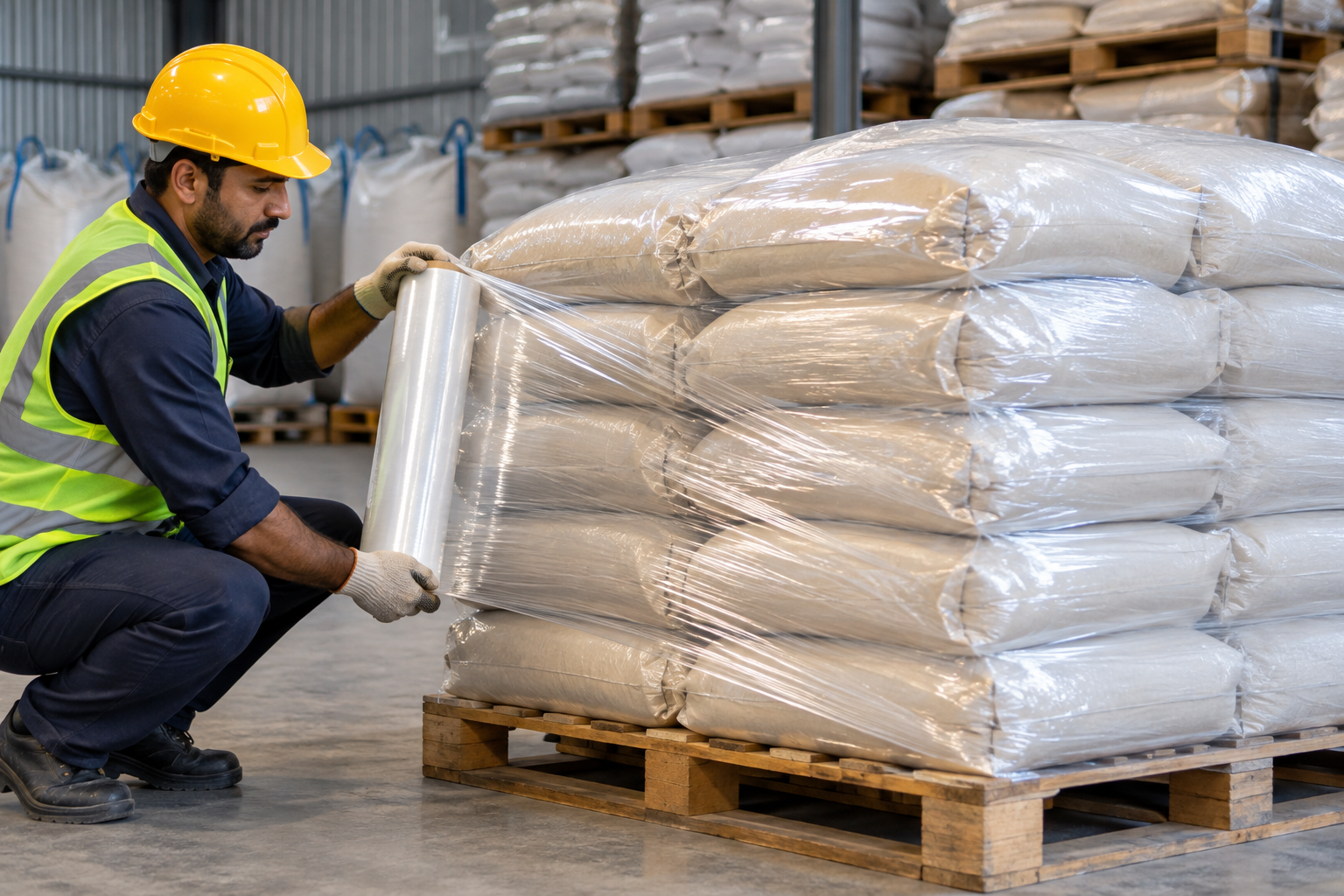
Under suitable dry storage conditions, bentonite can remain usable for a long time. There is no universal point at which every bentonite product suddenly becomes unusable.
The answer depends on the product and what you need it to do.
For a relatively forgiving application, an older dry batch may be acceptable after a physical inspection. For a tightly controlled industrial process, the same batch may need laboratory testing before release.
A useful assessment should consider the following:
If the answers are favorable, age alone isn't necessarily a reason to discard dry bentonite.
This is also why good inventory control matters. Knowing when a batch arrived, where it was stored, and whether its packaging was opened gives you useful information when deciding whether an older lot should be released.
Sodium bentonite also does not normally expire like a perishable product. Its useful properties can remain stable during dry storage, but moisture exposure can change how the material behaves.
Sodium bentonite is widely valued for its swelling and water-retention characteristics. These properties are important in applications such as drilling fluids, sealing, civil engineering, and containment systems.
If sodium bentonite becomes wet before use, some particles can hydrate prematurely and form aggregates. If the material is later dried, that does not necessarily restore it to the same physical condition it had before wetting.
For this reason, keeping sodium bentonite dry before application is more important than trying to assign a universal expiration date.
If the product is being used in a specification-sensitive process, check the relevant performance properties rather than assuming an old batch is automatically acceptable or unusable.
Opening a bag does not immediately make bentonite unusable. The risk comes from how the material is handled afterward.
If you open a bag, remove the required quantity, and reseal the remaining material in a dry environment, it may stay in good condition. If the bag remains open for weeks or months in a humid warehouse, moisture can gradually affect the powder.
The change may not always be obvious at first. A bag can still look like ordinary beige or gray powder while containing enough additional moisture to affect mixing, flow, or hydration behavior.
For opened bags, use a few straightforward practices:
Good bentonite storage isn't complicated, but it needs to be consistent.
The storage area should protect the product from rain, roof leaks, condensation, standing water, and excessive humidity.
Don't assume an indoor warehouse is automatically dry. Check for damp floors, leaking roofs, wet walls, condensation, and areas where water collects.
Store packaged bentonite on clean pallets or another suitable raised surface.
Keeping bags elevated reduces contact with floor moisture and makes it easier to inspect packaging. It also improves access for stock rotation and cleaning.
Keep bags sealed until the material is needed.
If packaging is damaged, don't simply cover the bag and return it to storage without checking the contents. Inspect the material and, where appropriate, move it into suitable moisture-resistant packaging according to the product's handling requirements.
Outdoor storage is generally less suitable for dry powdered bentonite, particularly where rain, humidity, condensation, or large environmental changes are common.
If temporary outdoor storage is unavoidable, keep the material raised from the ground and adequately protected from water. Always follow the supplier's instructions for the specific product and packaging system.
A first-in, first-out system is practical for many warehouses.
This doesn't mean older bentonite automatically expires. It simply reduces unnecessary storage time and helps prevent forgotten stock from remaining in the warehouse indefinitely.
Dust, dirt, oils, chemicals, and waste should be kept away from mineral products.
Clean storage is particularly important when bentonite is used in an application with strict quality requirements.
For ordinary dry bentonite, moisture control is generally more important than maintaining a narrow temperature range.
A clean, dry warehouse protected from severe environmental conditions is preferable to a location exposed to direct sun, rain, condensation, or repeated environmental swings.
High temperature alone does not mean bentonite has expired. However, temperature changes can interact with humidity and packaging conditions. When warm, humid air contacts a cooler surface, condensation can occur, creating a moisture risk even when no rain has entered the building.
For long-term storage, aim for a stable, dry environment and follow the supplier's product-specific storage instructions.
Yes. Humidity can affect dry bentonite, especially after packaging is opened or when packaging isn't sufficiently protective.
The effect depends on the grade, particle size, packaging, exposure time, and environmental conditions. Not every product will respond in exactly the same way.
Moisture pickup can eventually lead to caking and reduced flowability. Depending on the application, that may affect dispersion, hydration, dosing, mixing, or other performance characteristics.
This matters in humid climates and during wet seasons. A storage procedure that works well in a dry inland warehouse may need stronger moisture controls in a humid coastal or tropical environment.
The practical solution is straightforward: keep the product sealed, raised from the floor, protected from water, and inspected regularly.
If you find an old batch in storage, don't make the decision based on its age alone.
Start with the packaging and physical condition. If the storage history is uncertain or the application is performance-critical, move from visual inspection to appropriate testing.
Look for:
Packaging damage is often the first clue that moisture or foreign material may have reached the product.
Open a representative package and examine the bentonite.
Look for unusual hard lumps, visible contamination, unexpected discoloration, or obvious signs of substantial moisture exposure.
Color alone shouldn't be treated as a pass-or-fail test. Natural mineral variation and differences between grades can produce normal color differences.
Dry bentonite should generally have a powdery or granular appearance appropriate to its grade. Excessive caking can indicate moisture pickup or other storage problems.
A small amount of agglomeration does not automatically prove that the material has lost its functional properties. It does, however, justify a closer look.
For important industrial applications, testing provides a stronger basis for a release decision than appearance alone.
Depending on the application, relevant checks may include moisture content, swelling behavior, viscosity, filtration characteristics, particle-size distribution, gel strength, or other product-specific parameters.
The correct test depends on what the bentonite is expected to do. A drilling-grade product and a sealing product, for example, may require different performance checks.
A visual inspection is useful for screening, but it cannot measure every performance property.
| Evaluation method | What it can tell you | Main limitation |
|---|---|---|
| Packaging inspection | Whether moisture or physical damage may have occurred | Doesn't confirm product performance |
| Visual inspection | Lumps, contamination, and obvious physical changes | Can't precisely measure functional properties |
| Flowability check | Whether material remains reasonably free-flowing | Not a substitute for specification testing |
| Moisture test | Whether water pickup has occurred | Doesn't directly measure application performance |
| Swelling test | Useful for swelling-related applications | Requires an appropriate test method |
| Viscosity testing | Useful for drilling and rheology-sensitive applications | Applies mainly to relevant grades and formulations |
| Full specification testing | Gives the strongest basis for release | Requires suitable equipment and validated methods |
For a low-risk application, physical inspection may be enough to determine whether further testing is worthwhile. For drilling fluids, engineered sealing systems, foundry processes, or other performance-sensitive uses, testing against the applicable specification provides a much stronger basis for a decision.
This is one of the most important storage questions because bentonite is specifically valued for its interaction with water.
When dry bentonite gets wet before use, particles can hydrate and form aggregates. Depending on how much water enters the material and how it is subsequently handled, the product may no longer disperse or perform like the original dry powder.
The severity of exposure matters. A bag exposed briefly to humid air is very different from a pallet that has been sitting in standing water after a warehouse leak.

Minor moisture exposure may result mainly in caking or reduced flowability. More severe wetting can substantially alter the physical condition of the material and introduce contamination risks.
If bentonite has been saturated, contaminated, or physically altered, don't assume that drying it again restores the original specification. Test the material or consult the supplier before using it in an application where performance matters.
Sometimes, but caking should be investigated rather than ignored.
Minor soft agglomerates may sometimes break apart during normal handling or processing, depending on the grade and application. Hard, persistent lumps can indicate significant moisture exposure.
The key question isn't simply whether the lumps can be broken. The important question is whether the material will still meet the requirements of the process.
A product used in a relatively forgiving application may tolerate some physical agglomeration. A tightly controlled drilling-fluid formulation may require more consistent dispersion and rheological behavior.
If you're uncertain, take a representative sample and compare its relevant properties with the original product specification. Don't rely solely on whether the powder looks normal after the lumps have been broken apart.
Absolutely. Packaging is part of the storage system.
A good-quality bentonite product can lose practical usability faster when its packaging allows moisture to enter or when bags are repeatedly damaged during handling.
Common packaging formats include multiwall bags, woven sacks, lined bags, bulk bags, and other industrial packaging systems. The appropriate format depends on the product, transport method, climate, handling requirements, and expected storage period.
International shipments require particular attention because material can experience long transit times, container conditions, loading and unloading, temperature changes, and several warehouse environments before reaching the final user.
Buyers should therefore consider more than the word "bentonite" on a quotation. Ask about the grade, packaging, moisture protection, storage instructions, technical specification, and expected handling conditions.
For larger orders, it is also useful to confirm how the supplier identifies lots and whether a certificate of analysis is available for the shipment.
Most bentonite storage problems don't require complicated equipment to prevent. They often come from basic handling practices being overlooked.
A concrete floor can look dry while still creating moisture problems, particularly in humid environments. Use pallets or another suitable raised storage system.
Opening more material than you need increases exposure to humidity and contamination. Keep unopened stock sealed for as long as practical.
Leaks, condensation, steam, wet floors, and high humidity can affect material even inside a closed building. Inspect the storage environment, not just the bags.
A small puncture can become a much larger storage problem over time. Include packaging checks in routine inventory inspections.
A properly stored older batch may be in better condition than a newer batch that has been exposed to moisture or contamination.
Visual inspection can identify obvious problems, but it cannot confirm every functional property. Use application-specific testing when performance is critical.
Different grades and batches can have different specifications. Keep lots identifiable and don't mix materials simply because they look similar.
For commercial and industrial users, batch identification is extremely useful.
Keep the product name, grade, supplier, lot or batch number, delivery date, and storage location where possible. These records make it easier to trace material if a process problem appears later.
Good inventory records also answer a basic but important question: how long has this specific batch actually been stored?
A warehouse may contain several shipments purchased at different times. Without lot tracking, an operator may use an older opened bag while assuming it belongs to a recent delivery.
For larger operations, a simple stock-rotation system can prevent this confusion. It also makes it easier to isolate a particular lot if testing identifies a quality issue.
If you know a batch will remain in storage for an extended period, a few additional controls are worth putting in place.
These controls are relatively simple compared with the cost of discovering a storage-related quality problem after material has already entered production.
The importance of storage age depends heavily on how the material will be used. There is no single inspection standard that works equally well for every application.
Drilling applications can be sensitive to viscosity, filtration behavior, hydration, and other rheological properties. Older or moisture-affected bentonite should therefore be checked against the requirements of the drilling-fluid formulation.
A bag that looks acceptable may still produce different behavior during hydration or mixing. For specification-sensitive drilling work, application-relevant testing is more informative than age alone.
Bentonite is used as a binder in molding systems. Consistency matters because changes in moisture and binder behavior can affect molding performance and sand properties.
If stored material has developed significant caking or has been exposed to water, verify that it still meets the requirements of the foundry process before returning it to production.
Bentonite used for sealing may depend heavily on swelling, water absorption, and permeability-related performance. Product-specific requirements should be followed rather than relying on a general shelf-life assumption.
For engineered systems, the product specification and installation requirements should take precedence over a simple visual assessment.
Performance can depend on adsorption, binding, particle characteristics, and the specific treatment process. If bentonite has been stored under questionable conditions, testing may be appropriate before it is introduced into the treatment process.
The relevant quality checks should be selected according to the intended treatment application rather than using a generic bentonite test.
The required properties depend on how bentonite is being used, whether as a soil amendment, carrier, binder, or another agricultural input. Follow the relevant product and regulatory specifications.
Don't assume that a bentonite product supplied for an industrial application is automatically suitable for agricultural use.
Only use a bentonite product specifically supplied and approved for the intended feed application. Industrial-grade bentonite should not automatically be treated as suitable for animal feed simply because it belongs to the same mineral family.
Product identity, intended use, applicable specifications, and regulatory requirements all matter.
Storage quality starts before the material reaches the warehouse.
When purchasing bentonite, ask the supplier for the technical data sheet and recommended storage conditions. Confirm the grade and intended application rather than buying only by the generic term "bentonite."
For larger orders, consider discussing:
This is particularly useful for international procurement, where material may pass through several logistics and storage stages before reaching the end user.
A supplier familiar with the intended application can also help identify which quality parameters are worth monitoring during storage. That conversation is more useful than asking for a generic expiration date that may not apply to the specific grade.
Testing becomes more important when the storage history is uncertain or the application has tight performance requirements.
Consider testing when:
The test should match the application. There is little value in measuring a property that has no meaningful relationship to how the bentonite is actually being used.
For example, a swelling-related test may be important for one application, while viscosity or filtration behavior may be more relevant for another. Use the product specification and process requirements to determine what should be checked.
The simplest answer is that bentonite has a practical storage life, but dry mineral bentonite does not necessarily have a universal expiration date.
Its useful life depends on a combination of mineral characteristics, processing, packaging, storage conditions, moisture exposure, contamination risk, and intended application.
That is why two bags of the same bentonite can have very different histories.
One may have spent months in a dry warehouse with intact packaging and remain in good condition. Another may be newer but have been exposed to rain, condensation, or high humidity and require testing before use.
Storage history can therefore tell you more than the calendar alone.
For buyers and warehouse managers, the practical goal isn't to keep bentonite forever. It's to maintain the material in the condition required by the application and to have enough information to identify when testing is necessary.
Does bentonite expire? Not usually in the conventional sense. Dry, properly stored bentonite can remain usable for a long period because it is a mineral rather than a perishable product.
The real storage risks are moisture, damaged packaging, contamination, caking, and unsuitable environmental conditions. These factors can change the way bentonite flows, disperses, hydrates, swells, or performs in a particular process.
If you're holding bentonite for future use, keep it sealed, dry, elevated from the floor, protected from weather, and clearly identified by batch. Before using an older or questionable lot, inspect the material and test the properties that matter for your application.
For industrial buyers, consistency matters as much as age. If you need a specific bentonite grade for drilling, construction, sealing, foundry work, wastewater treatment, agriculture, or another application, Axewelledge can help you evaluate the relevant product requirements and supply conditions rather than treating all bentonite as the same material.













Have questions about our products? We're here to help!