Axewelledge, a leading exporter from India, specializes in high-quality Bentonite. With a commitment to excellence, we supply premium Bentonite to the Middle East and Southeast Asia markets.


North Angle Complex, 304,
150 Feet Ring Rd, Opposite Ambedkar Nagar BRTS Stop,
Madhav Park, Punit Nagar,
Mavdi, Rajkot, Gujarat 360004
© Axewelledge 2026, All Rights Reserved.
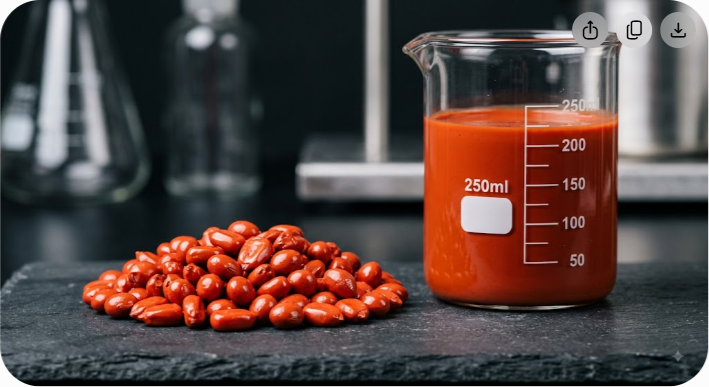
Adding bentonite clay to a seed coating slurry increases binder strength by up to 40 percent while drastically reducing dust-off during mechanical planting, provided you manage hydration viscosity correctly. When formulated poorly, however, bentonite transforms a liquid slurry into an unpumpable gel within minutes, clogging spray nozzles and ruining commercial seed batches.
Formulating an effective agricultural seed coating slurry using bentonite requires balancing three physical factors: rheology, particle size distribution, and binder-polymer interactions. Bentonite is not merely an inert filler; it is an active smectite clay whose crystalline structure absorbs water, builds yield stress, and forms a durable matrix around the seed coat upon drying.
Whether you are pelleting small vegetable seeds to standardize their shape or applying crop protection actives to row crops like corn, soybean, and wheat, this guide breaks down the exact chemistry, ratio calculations, and processing steps required to master bentonite-based slurries.
Seed coatings range from ultra-thin film coats (typically 1% to 10% weight gain) to heavy seed pellets (where coating weight increases original seed mass by 100% to 500% or more). Across all coating tiers, bentonite clay serves four essential primary functions.
Bentonite consists predominantly of montmorillonite, a 2:1 expandable layer silicate. When hydrated, individual clay platelets separate into ultra-thin, high-aspect-ratio sheets. As the slurry dries on the seed surface, these platelets overlap and stack like microscopic bricks. This ceramic-like interlock provides high compressive strength and abrasion resistance, ensuring seeds do not crack or shed dust during processing, bagging, or pneumatic planting.
Sodium bentonite can absorb several times its dry weight in water, swelling into a hydrous gel network. In the soil, this bentonite-rich coating acts as a localized moisture reservoir around the seed coat. During periods of marginal soil moisture, the clay draws in environmental water and maintains a micro-hydrated zone around the pericarp, accelerating radical emergence and improving germination uniformity.
Fungicides, insecticides, biological inoculants (such as Rhizobium or Bacillus species), and micronutrients require stable suspension in the slurry. Bentonite provides a high cation exchange capacity (CEC) and vast surface area (often exceeding 700 to 800 square meters per gram). This active surface adsorbs chemical molecules, protecting sensitive bio-actives from UV degradation and reducing chemical leaching into the surrounding soil before root uptake occurs.
Light, irregular, or chaffy seeds (such as native grasses, lettuce, or carrot seeds) are difficult to plant with precision air seeders. Bentonite acts as a high-density bulking agent that smooths surface contours, fills irregular crevices, and increases individual seed mass, permitting single-seed selection in mechanical planters.
Selecting the wrong bentonite grade is the single most common cause of slurry failure. The primary exchangeable cation held within the clay lattice dictates how the mineral behaves in water.
| Property | Natural Sodium Bentonite | Calcium Bentonite |
|---|---|---|
| Primary Cation | Sodium ($Na^+$) | Calcium ($Ca^{2+}$) |
| Swelling Index | High (15 - 30 mL/g) | Low (2 - 5 mL/g) |
| Hydration Viscosity | Very High (Builds yield stress) | Low to Moderate |
| Coating Application | Seed Pelleting & Heavy Build | Thin Film Coating & High-Solids |
| Dust-Off Resistance | Exceptional | Moderate |
| Water Sensitivity | High water absorption | Rapid water dispersion |
Sodium bentonite contains single-charged sodium ions ($Na^+$) between its silicate layers. These ions allow water molecules to penetrate deep between individual platelets, expanding the lattice up to 15 to 30 times its dry volume.
Calcium bentonite holds double-charged calcium ions ($Ca^{2+}$), which strongly bind neighboring silicate layers together. Consequently, calcium bentonite swells significantly less in water and develops a much lower viscosity at equivalent solids loading.
Some industrial processors treat calcium bentonite with sodium carbonate (soda ash) to convert it into activated sodium bentonite. While cost-effective, activated bentonite can leave free carbonate or hydroxyl ions in solution, raising slurry pH to 9.5 or higher. High pH levels can degrade sensitive biological seed treatments or organophosphate fungicides. Always verify the pH profile of your clay source before large-scale blending.
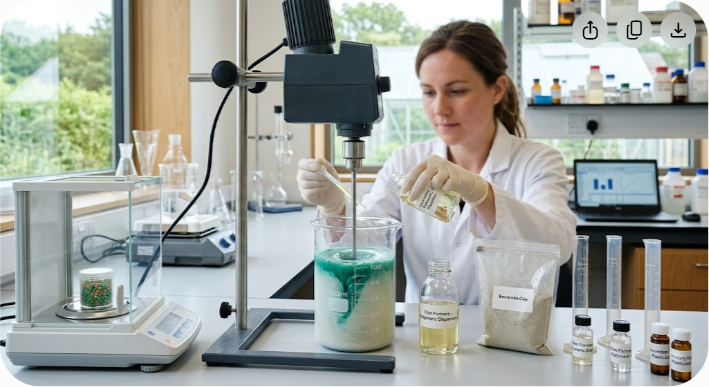
A robust commercial seed slurry is a balanced suspension consisting of liquids, functional minerals, film formers, and active protection chemicals.
Water serves as the continuous phase that hydrates the bentonite and dissolves liquid polymers. The water-to-solids ratio directly governs final slurry viscosity. Always use clean, low-salinity water. High levels of dissolved hardness ($Ca^{2+}$ or $Mg^{2+}$) in hard water will suppress sodium bentonite swelling through ion-exchange reactions.
Bentonite provides the bulk matrix and structural strength. Micronized bentonite (particle size $D_{90} < 45 \text{ \mu m}$ or 325 mesh) is mandatory. Coarse bentonite particles create rough coat surfaces, cause nozzle clogging, and suffer from poor inter-particle cohesion.
While bentonite acts as an inorganic binder, adding 1% to 5% water-soluble polymer prevents the dry coating from becoming brittle under mechanical stress. Recommended polymers include:
To balance density and improve flowability of finished seeds, bentonite is often blended with complementary minerals:
Creating a stable, pumpable slurry requires precise batching sequences. Simply dumping all ingredients into a mixing vessel simultaneously results in un-dispersed clay agglomerates (known as "fish eyes") and inconsistent coat weights.
Do not add dry bentonite directly to a solution containing polymers or chemical actives. Polymers compete for available water, preventing the bentonite platelets from fully exfoliating.
Once the bentonite phase is completely hydrated and smooth:
Depending on your processing equipment and target crop, use the following tested baseline formulas as starting points for lab scale adjustments.
Ideal for soybean, wheat, and corn seed application where high throughput, fast drying, and zero dust-off are required.
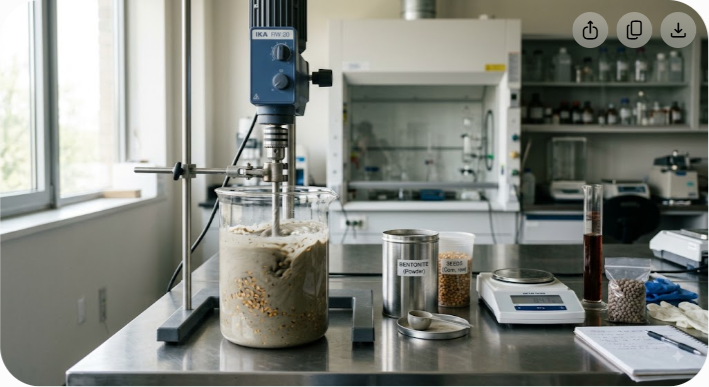
Designed for rotary pan or drum pelleting of small, irregular seeds like lettuce, onion, carrot, or tobacco.
Bentonite slurries exhibit non-Newtonian, pseudoplastic (shear-thinning) rheology with a distinct yield stress. Understanding this behavior is critical for smooth mechanical operation.
Where $\tau$ is shear stress, $\tau_0$ is yield stress, $\dot{\gamma}$ is shear rate, $K$ is the consistency index, and $n < 1$ represents shear-thinning behavior.
In practical terms, when the slurry rests inside the batch tank, it maintains high viscosity and yield stress ($\tau_0$), preventing dense mineral particles and fungicides from settling out over time. However, when the slurry moves through positive-displacement pumps and spray nozzles, the high shear rate drops the effective viscosity rapidly, enabling uniform atomization over the tumbling seed bed.
If your slurry becomes excessively thick or develops thixotropic gelation (where it hardens in liquid lines during short process pauses):
How your slurry behaves depends directly on the mechanical coating machinery used in your seed processing facility.
| Parameter | Batch Rotary Atomizer Coater | Fluidized Bed Air Coater |
|---|---|---|
| Primary Mechanism | Tumbling seed bed with spinning centrifugal atomizing disk | Suspension of seeds in an upward warm air stream |
| Target Slurry Viscosity | Moderate to High (200-800 cP) | Low to Moderate (50-250 cP) |
| Max Solids Content | Up to 45% - 50% | Up to 25% - 35% |
| Drying Mode | Post-application warm air drum | Real-time in-chamber drying |
| Seed Types | Field crops, large grains, heavy seed pelleting | Delicate seeds, fragile coats, precise micro-layering |
In a batch rotary coater, seeds tumble along the walls of a bowl while a rapidly spinning disk atomizes the incoming bentonite slurry into fine droplets.
Fluidized bed coaters suspend seeds on a column of heated air, spraying slurry through top-mounted or bottom-mounted pneumatic nozzles.
During commercial production runs, unexpected physical defects can arise. Here is how to diagnose and resolve them in real time.
The ultimate performance of any seed coating slurry hinges on the chemical purity, particle consistency, and swelling stability of the raw bentonite supplier.
Axewelledge is India’s largest mine owner and exporter of high-purity Bentonite, maintaining over 60 million tons of high-grade reserves and ranking among the top global producers. With over 15 years of mineral processing expertise, advanced R&D, and strategically located refinement facilities, Axewelledge processes customized, micronized sodium and calcium bentonite grades specifically engineered for agricultural seed treatments and pelleting formulations.
Whether you need ultra-fine 325-mesh sodium bentonite with controlled swelling indices for high-strength seed pelleting, or low-viscosity calcium bentonite for smooth film-coating systems, Axewelledge ensures consistent lot-to-lot purity, low heavy-metal profiles, and international delivery reliability across global agricultural markets.













Have questions about our products? We're here to help!