Axewelledge, a leading exporter from India, specializes in high-quality Bentonite. With a commitment to excellence, we supply premium Bentonite to the Middle East and Southeast Asia markets.


North Angle Complex, 304,
150 Feet Ring Rd, Opposite Ambedkar Nagar BRTS Stop,
Madhav Park, Punit Nagar,
Mavdi, Rajkot, Gujarat 360004
© Axewelledge 2026, All Rights Reserved.
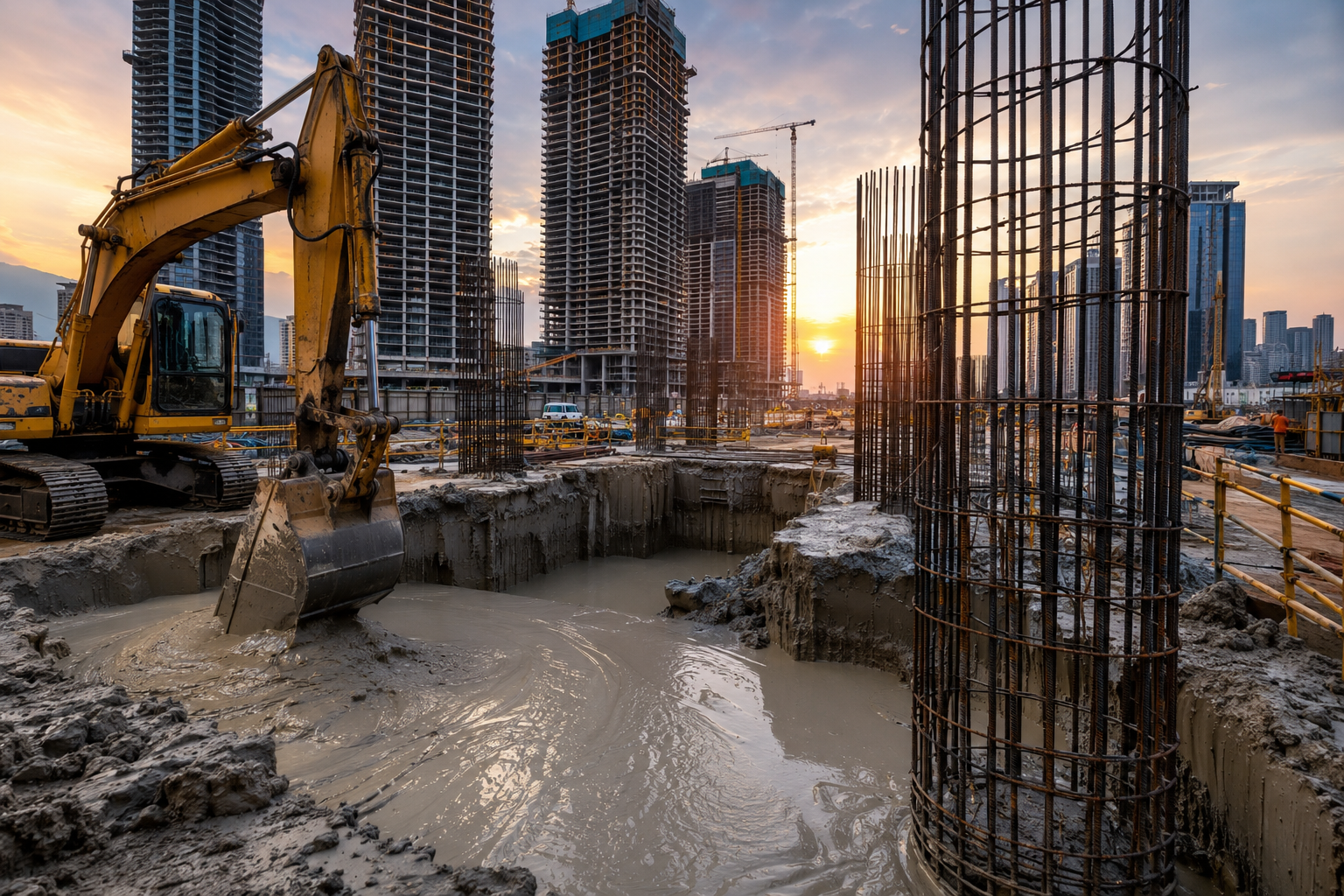
Walk through any major American metro area and you are looking at an engineering marvel. Skyscrapers pierce the clouds, subterranean subway systems snake beneath rivers, and massive highway networks span across shifting landscapes. We naturally marvel at the glass, the steel, and the thousands of tons of poured concrete. But if you strip away the top layers of earth and look at the absolute foundation of these structures, you will find something else keeping them upright and dry: clay.
Not just any dirt from the backyard, though. Modern civil engineering relies on a highly specific, naturally gifted mineral known as sodium bentonite. This volcanic ash-derived clay handles the dirty work that keeps high-rises from sinking, tunnels from flooding, and toxic waste from seeping into precious groundwater tables.
As infrastructure demands scale up across the USA, engineering firms are moving away from cheap, unpredictable fillers. Instead, they are looking to global market veterans like Axewelledge, a global producer backed by over 60 million tons of high-quality mineral reserves, to supply the premium sodium bentonite required for high-stakes projects. To understand why this humble mineral has become an irreplaceable asset from the initial foundry casting to the final structural finishes, we have to look closely at the unique science behind its behavior.
To appreciate why bentonite is so vital on a chaotic construction site, we have to scale down to the molecular level. Bentonite is primarily composed of montmorillonite, a layered silicate mineral structure. Think of it as a microscopic deck of cards loosely held together.
When sodium bentonite comes into contact with water, magic happens. The water molecules are drawn into the spaces between these microscopic layers, forcing them apart. Because it is highly charged with sodium ions, it can absorb many times its dry mass in water. This triggers an expansion that causes the clay to swell up to 15 to 20 times its original dry volume.
What happens when you confine this swelling clay inside a tight space, like a foundation gap or between two sheets of geotextile fabric? It cannot expand freely. Instead, it exerts immense pressure outward, compressing itself into a dense, gelatinous, and completely impermeable paste.
This paste fills every microscopic pore, crack, and fissure in the surrounding soil or concrete. If a building shifts slightly over time and a new hairline crack develops, the exposed dry bentonite simply absorbs moisture, swells again, and automatically seals the breach. It is a living, self-healing waterproofing system that never expires, outlasting synthetic chemical membranes that crack, rot, or degrade after a couple of decades under the soil.
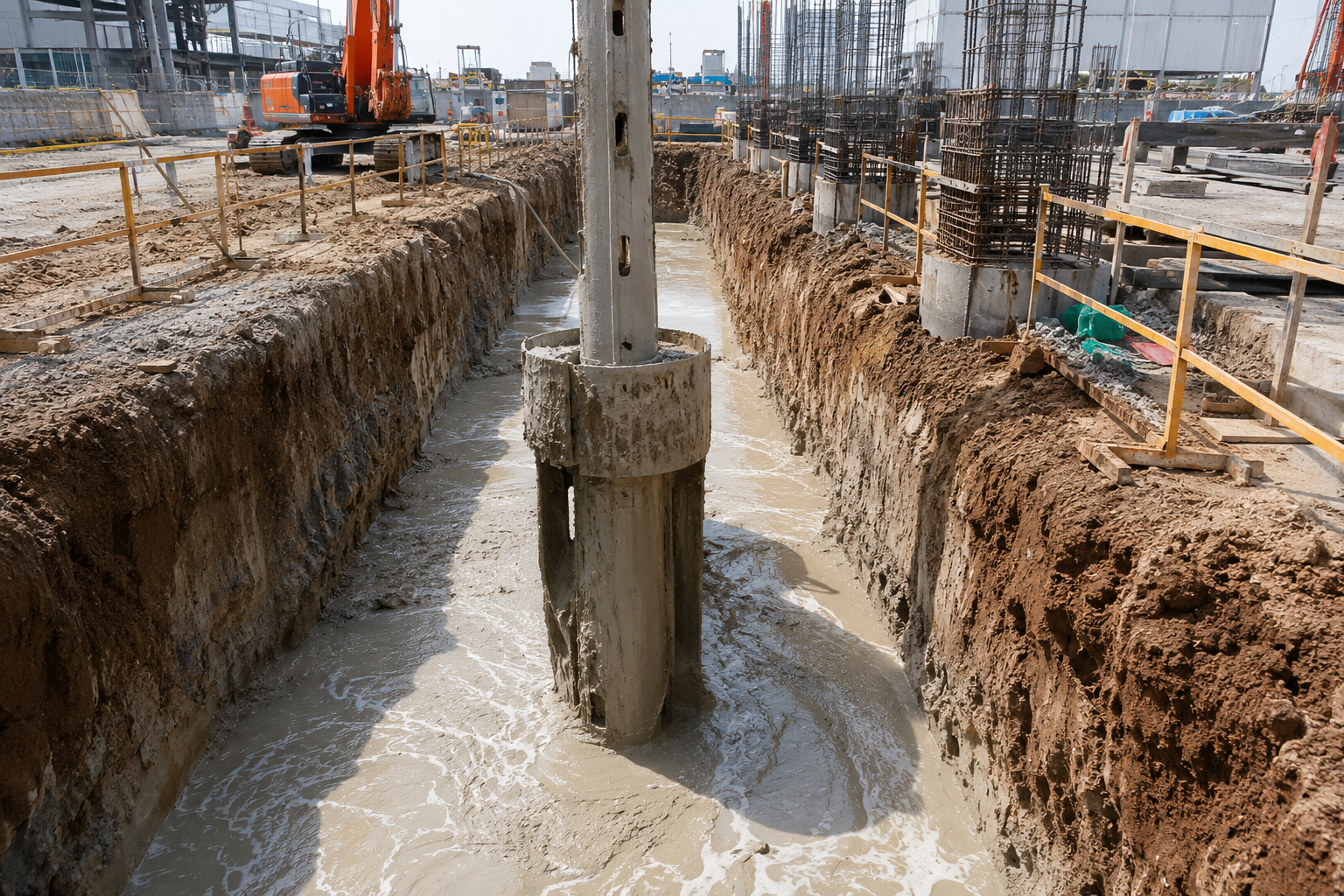
Before a skyscraper can climb into the sky, engineers must dig deep into the earth. In places like New York, Chicago, or San Francisco, digging down means dealing with high water tables, unstable sandy soils, and neighboring buildings that could collapse if the surrounding earth shifts even a fraction of an inch.
This is where slurry wall construction and diaphragm walls come into play, and premium bentonite is the primary ingredient that makes them possible.
[Excavation Trench Open] ? [Pump in Bentonite Slurry] ? Forms "Filter Cake" hydrostatic barrier on trench walls ? [Lower Rebar Cage Into Slurry] ? [Pump Concrete from Bottom Up] ? Displaces lighter bentonite slurry for clean recycling
When excavating a deep, narrow trench for a foundation wall, contractors cannot easily install traditional wooden or metal formwork to hold back the earth. Instead, they fill the open trench with a dense mixture of water and sodium bentonite, known as drilling mud or slurry.
This slurry does two critical things:
Once the excavation reaches the desired depth, workers lower a heavy steel rebar cage directly into the liquid bentonite mud. Next, they pump wet concrete into the trench through a long pipe extending all the way to the bottom. Because concrete is much denser than the clay slurry, it fills the trench from the bottom up, displacing the lighter bentonite mud, which is pumped off the top, cleaned, and reused for the next section of the wall. The result is a perfect, solid concrete retaining wall built deep underground without a single worker ever having to step foot inside an open, dangerous trench.
Infrastructure isn't just about going straight down; it is also about pushing straight through. Tunnelling under cities or water bodies requires managing massive amounts of underground friction and water pressure.
Modern Tunnel Boring Machines (TBMs) are massive, multimillion-dollar mechanical beasts that cut through solid rock and soft clay alike. As they grind forward, the friction against the surrounding earth is immense.
To keep these machines moving smoothly and prevent them from getting stuck, engineers inject a specialized bentonite slurry around the outside of the machine's cutter head and shield. This fluid acts as a high-performance lubricant, reducing mechanical wear and lowering the energy required to push the machine forward. Additionally, the slurry stabilizes the freshly cut soil face before the permanent concrete tunnel segments can be bolted into place.
Once the tunnel segments are installed, a small gap inevitably remains between the outer edge of the concrete rings and the raw, excavated earth. Leaving this void empty is dangerous; the ground above could sag, damaging surface streets, pipes, and buildings.
To prevent this, engineers mix sodium bentonite with cement and water to create a stable, low-shrinkage grouting compound. This mix is pumped directly into the empty spaces. The bentonite keeps the cement particles suspended evenly in the liquid mix, preventing the grout from separating or bleeding water before it sets. The result is a completely solid, watertight ring of protection that locks the tunnel permanently into place.
Once the heavy structural concrete is poured and cured, the focus shifts to long-term preservation. Water is the ultimate enemy of any building. Over time, moisture penetration corrodes internal steel reinforcement bars, degrades concrete matrix strength, and fuels toxic black mold growth inside inhabited spaces.
Traditional waterproofing methods often rely on liquid-applied tar coatings or glued synthetic rubber sheets. While effective initially, these materials have a critical flaw: they don't handle structural settling well. When a building settles, these sheets stretch, tear, and leak.
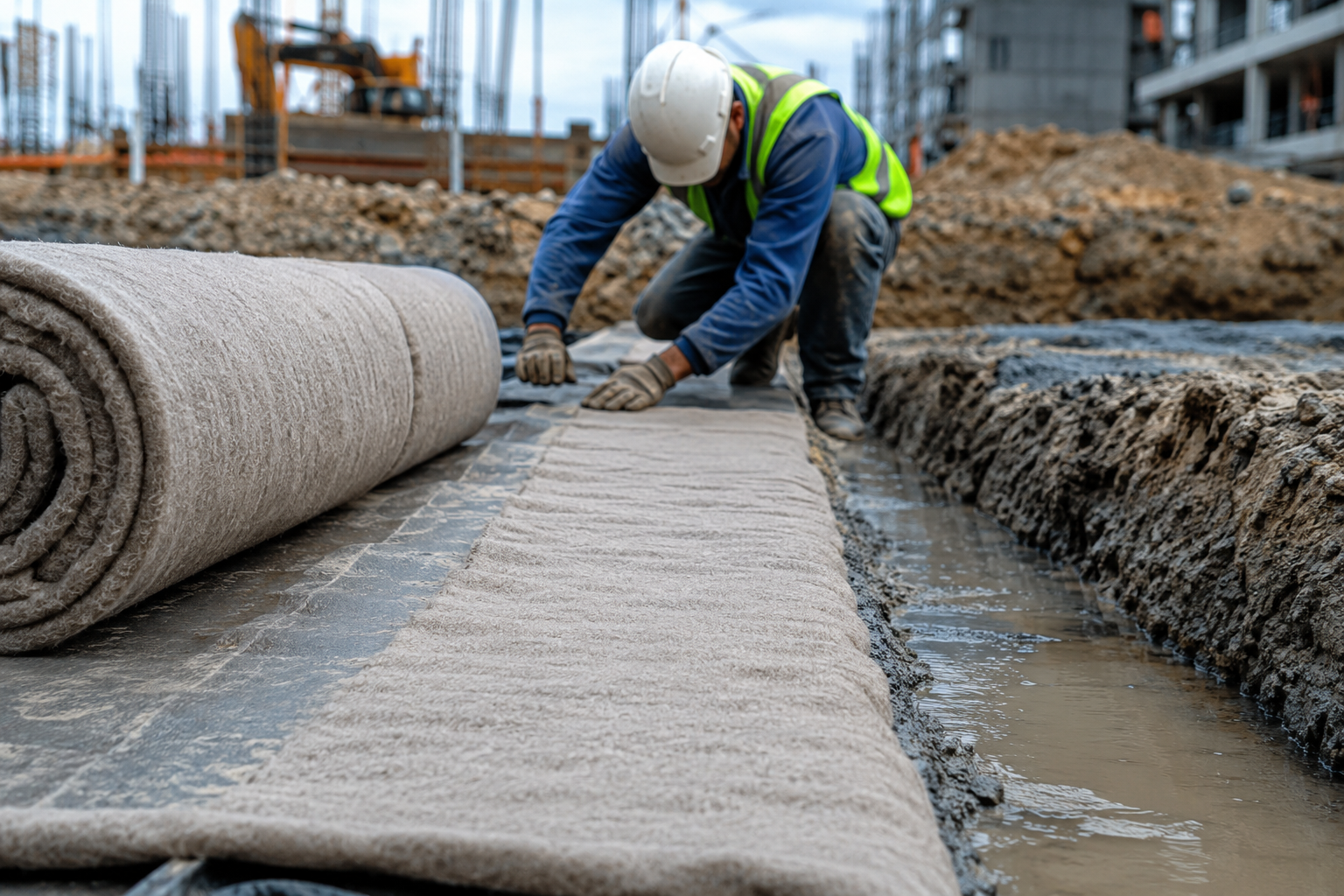
To avoid these issues, modern architects routinely specify bentonite waterproofing systems. These systems consist of premium sodium bentonite clay particles needle-punched or sandwiched between two heavy-duty layers of durable geotextile fabric.
| Property | Traditional Synthetic Membranes | Premium Sodium Bentonite Sheets |
|---|---|---|
| Longevity | Degrades, cracks, or rots over 20-30 years | Mineral-based; lasts for the life of the structure |
| Self-Healing | No. Any puncture causes immediate leaking | Yes. Swells up to 20x to plug tears and holes |
| Installation Ease | Requires perfect, dry surfaces and toxic glues | Can be nailed directly to damp, green concrete |
| Eco-Friendliness | High chemical VOC emissions during install | Natural, non-toxic volcanic mineral product |
When these bentonite sheets are fastened to an underground concrete wall, they look simple enough. But as soon as backfill soil is piled against them and moisture enters from the earth, the clay swells up, transforming into a dense, continuous, monolithic waterproofing gel layer. If an earthquake or ground shift causes a crack in the concrete, the swelling clay pressure forces the gel directly into the crack, sealing it instantly from the outside.
Construction isn't just about high-rises and tunnels; it also includes critical environmental management facilities like municipal landfills, industrial waste ponds, and wastewater treatment plants.
When designing a modern landfill, engineers must ensure that rainwater filtering through the trash—a highly toxic chemical soup called leachate—never reaches the underground aquifers supplying drinking water to nearby towns.
To build a fail-safe barrier, developers use Geosynthetic Clay Liners (GCLs). These liners utilize the highly specialized swelling properties of premium sodium bentonite. A thin layer of bentonite provides a more effective hydraulic barrier than a thick layer of tightly compacted local clay soil, saving project managers thousands of dollars in earthmoving costs while providing superior environmental safety.
It is easy to assume that all clay is created equal, but out in the field, low-grade materials can lead to catastrophic failures. If a batch of bentonite contains high levels of calcium rather than sodium, its swelling capacity drops drastically. Calcium bentonite only expands a fraction of what sodium bentonite can, making it completely unsuitable for high-stakes slurry walls or waterproofing membranes.
This reality is why sourcing matters immensely. Companies like Axewelledge have built their reputations on total quality control. By owning their own massive mining reserves and using advanced mineral processing technology, they guarantee that every shipment sent to construction sites across the globe meets exact international standards for swelling index, purity, and particle size distribution. When you are pouring millions of dollars of concrete into a deep trench, you need to know your slurry will hold up.
From the deep, dark trenches of foundational slurry walls to the protective waterproofing wraps covering modern basements, premium sodium bentonite clay remains a quiet hero of the modern built environment. It is a striking reminder that sometimes the most cutting-edge solutions don't come from a chemical synthesis lab—they come straight from the earth, refined by decades of processing expertise.
As American infrastructure continues to evolve, facing tougher environmental demands and more challenging building sites, the reliance on high-performance minerals will only grow. Partnering with proven global suppliers like Axewelledge ensures that tomorrow's iconic structures are built on a rock-solid, completely dry, and resilient foundation.













Have questions about our products? We're here to help!