Axewelledge, a leading exporter from India, specializes in high-quality Bentonite. With a commitment to excellence, we supply premium Bentonite to the Middle East and Southeast Asia markets.


North Angle Complex, 304,
150 Feet Ring Rd, Opposite Ambedkar Nagar BRTS Stop,
Madhav Park, Punit Nagar,
Mavdi, Rajkot, Gujarat 360004
© Axewelledge 2026, All Rights Reserved.
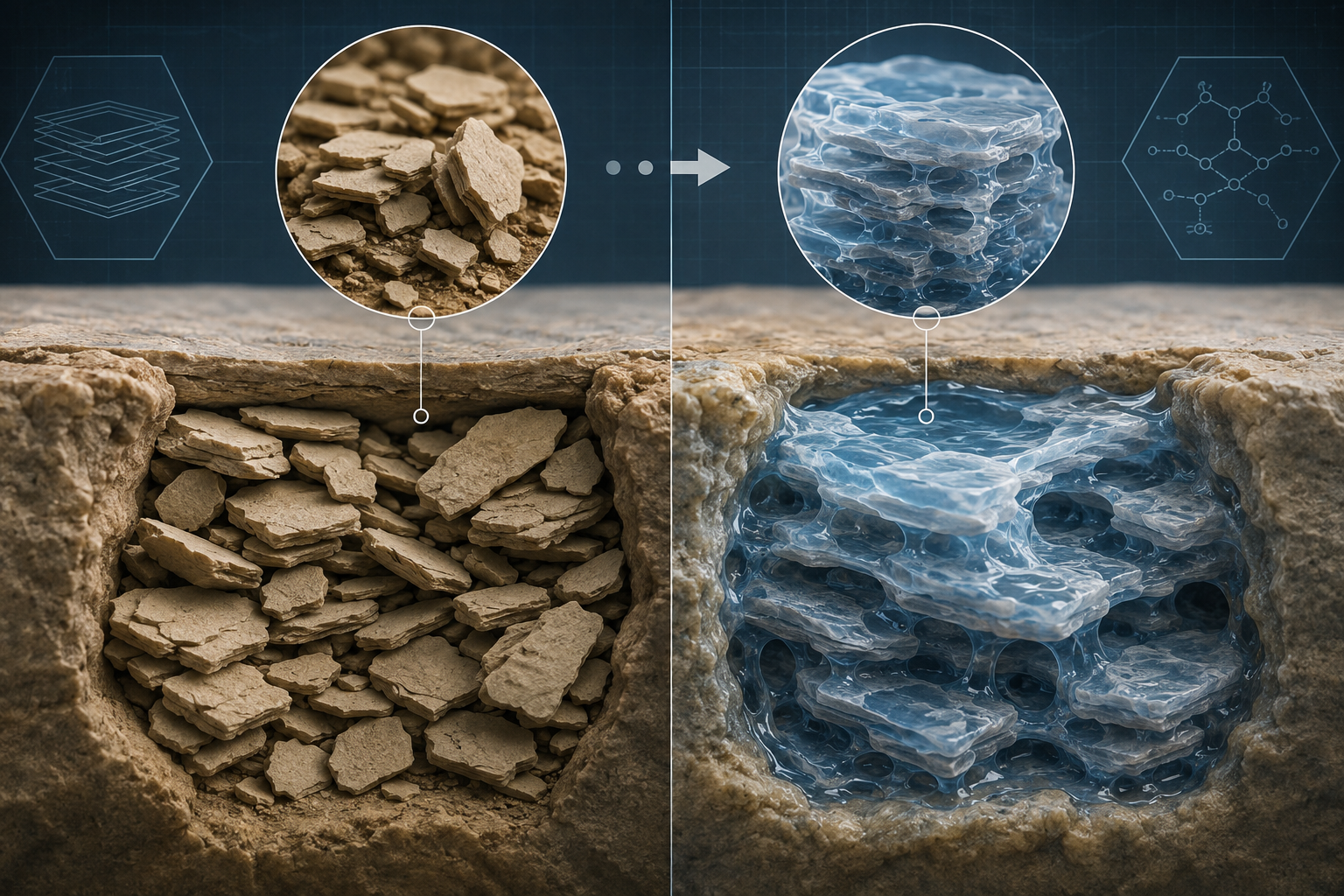
Imagine a natural mineral that expands up to fifteen times its original dry volume when exposed to water, transforming from a powdery clay into a dense, impermeable gel. That mineral is high swelling sodium bentonite. This expansion property isn't just an interesting laboratory demonstration—it stabilizes multi-million-dollar geotechnical excavations, prevents hazardous contaminants from leaking into local aquifers, and clarifies millions of gallons of industrial wastewater every day.
At its core, high swelling bentonite acts as nature's ultimate hydraulic seal and molecular filter. Whether you are excavating a fifty-meter deep diaphragm wall in downtown London, constructing a secure municipal landfill in Texas, or removing emulsified oils from industrial effluent in Vietnam, high swelling sodium bentonite provides an eco-friendly, cost-effective barrier that synthetic alternatives struggle to match.
In this guide, we will examine the crystalline chemistry behind sodium bentonite's expansion, explore its real-world applications across civil engineering and environmental purification, and review critical field testing standards that keep your project operating within specification.
Not all clay minerals perform the same under hydrologic pressure. To understand why high swelling bentonite performs so effectively as a hydraulic seal, we have to look down at its sub-micron molecular scale.
Bentonite belongs to the smectite clay group, formed primarily from weathered volcanic ash. Its active mineral component is montmorillonite, a 2:1 layer aluminosilicate. Each individual clay platelet consists of an octahedral sheet of alumina sandwiched between two tetrahedral sheets of silica.
+-------------------------------------------------+ <- Silica Layer
| Alumina Octahedral Layer | +-------------------------------------------------+ <- Silica Layer [ Interlayer Zone: Na+ ions & H2O molecules ] +-------------------------------------------------+ <- Silica Layer
| Alumina Octahedral Layer | +-------------------------------------------------+ <- Silica Layer
Inside the crystalline lattice, magnesium or iron frequently substitutes for aluminum in the octahedral sheet. This substitution leaves the clay platelet with a net negative structural charge. To balance this charge, hydrated cations attach to the interlayer surfaces between adjacent platelets.
The difference between sodium bentonite and calcium bentonite comes down to cation valence and hydration energy:
+ ) ions have a relatively large hydrated ionic radius and a weak positive charge density. When water enters the interlayer space, hydrated sodium ions draw water molecules deep into the crystalline structure through osmotic pressure. The platelets push apart, enabling extensive osmotic swelling that expands the dry powder 10 to 15 times (1000% to 1500%) in overall volume.
2+ ) ions carry a stronger positive charge density that holds adjacent clay sheets tightly together. Water enters the interlayer space, but the strong electrostatic attraction limits hydration. Calcium bentonite typically expands by only 1 to 3 times (100% to 300%) its dry volume.
| Property / Feature | High Swelling Sodium Bentonite | Low Swelling Calcium Bentonite |
|---|
| Primary Interlayer Cation | Sodium (Na + ) | Calcium (Ca 2+ ) |
| Free Swell Index | ?24 mL/2g | 4 to 10 mL/2g | | Hydraulic Conductivity | <1×10 ?9 cm/s | 1×10 ?6 to 1×10 ?7 cm/s |
| Gel Formation | High thixotropic yield point | Low thixotropic yield point |
| Key Applications | Slurry walls, GCLs, pond sealing, drilling | Cat litter, metal casting foundries, dry absorbents |
| Re-hydration Behavior | Self-sealing under confined pressure | Prone to slaking without continuous expansion |
When hydrated inside a confined space—such as under several meters of compacted soil or concrete—sodium bentonite cannot expand outward. Instead, it expands inward into the tiny pore voids of the surrounding soil matrix, creating a flexible barrier with hydraulic conductivity ratings lower than 1×10 ?9 cm/s.
Geotechnical engineers specify high swelling sodium bentonite to control soil permeability, stabilize unlined excavations, and protect subsurface structures against groundwater ingress.
When excavating deep foundations, basement perimeter walls, or subway tunnels, contractors face two persistent risks: collapsing trench walls and groundwater influx. High swelling bentonite slurries resolve both issues simultaneously.
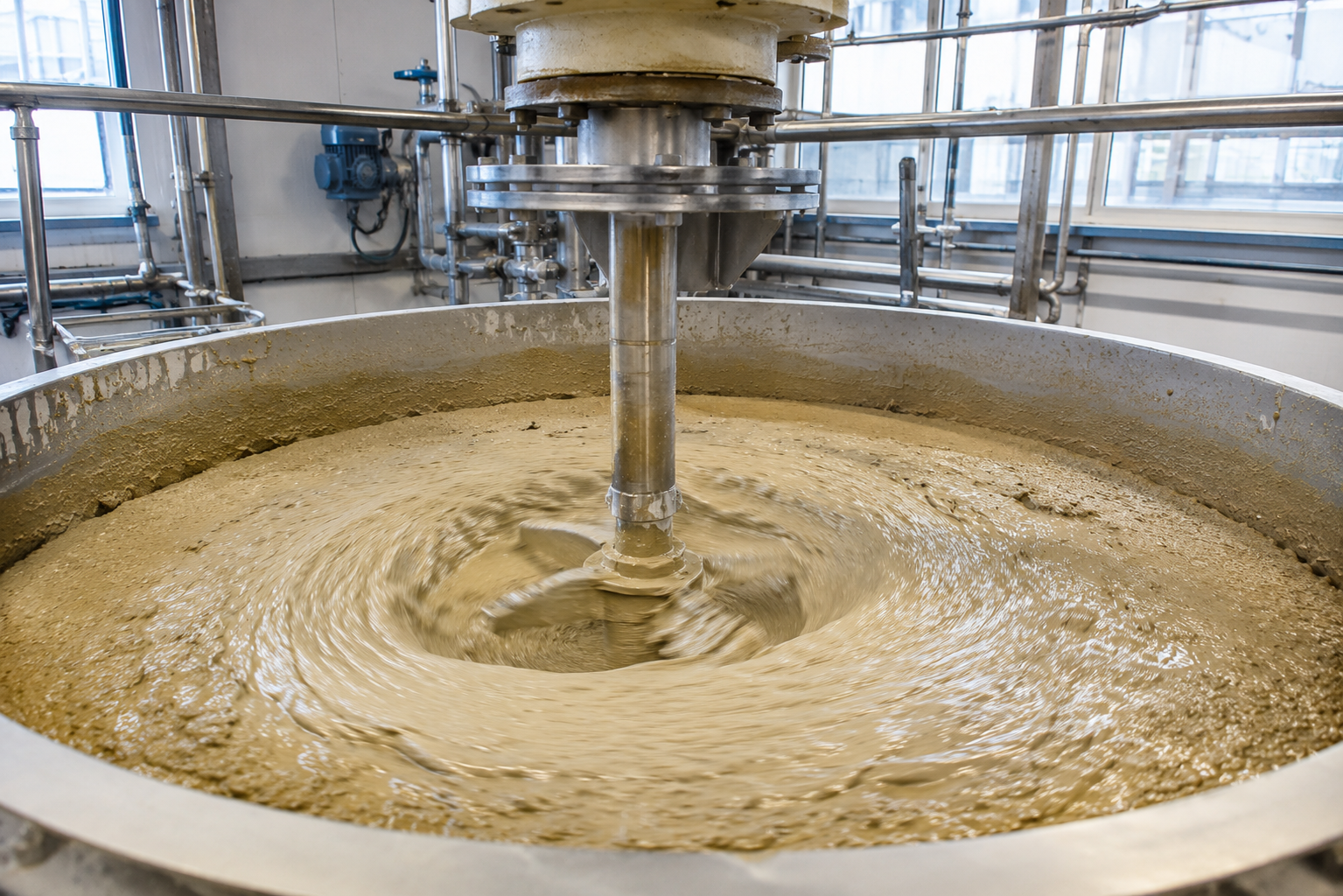
Mixing dry sodium bentonite with water at concentrations between 4% and 7% by weight creates a thixotropic slurry. Thixotropy means the liquid flows like a fluid when agitated by a cutter or digger bucket, but sets into a gel when left standing.
Waste containment facilities require low-permeability liners to stop contaminated leachate from reaching underground aquifers. While early landfill designs relied on thick compacted clay layers, modern engineering designs frequently incorporate Geosynthetic Clay Liners (GCLs).
A GCL consists of a uniform layer of dry sodium bentonite granules (typically 4 to 5 kg/m² or 0.8 to 1.0 lb/ft²) held between two geotextile fabrics that are needle-punched together for shear strength.
?9 cm/s) in a sheet only 7 to 10 millimeters thick, saving significant landfill storage volume.
[ Puncture Occurs ] --> [ Water Hydrates Bentonite ] --> [ Clay Gel Expands ] --> [ Hydraulic Seal Restored ] Top Geotextile High Swelling Clay Inward Expansion Zero Seepage
In horizontal directional drilling (HDD) and microtunneling, a subterranean cutting head bores through soil and rock. High-yield sodium bentonite slurries fulfill three vital functions during drive operations:
Beyond heavy structural foundations, high swelling bentonite serves as a reliable containment medium for water conservation and soil containment.
Farming operations, golf courses, and municipal parks often sit on sandy or gravelly soils that leach water rapidly. Lining large storage ponds with synthetic membranes can prove costly and remains susceptible to mechanical tears, UV weathering, or livestock hoof damage.
Sodium bentonite offers a permanent, natural sealing mechanism through two primary field techniques:
For industrial brownfield remediation and chemical storage sites, cut-off walls filled with soil-bentonite (SB) or cement-bentonite (CB) backfill prevent underground migration of heavy metals, volatile organic compounds (VOCs), and industrial runoff.
Because aggressive chemical leachates or high salinity can suppress standard clay swelling over time, selecting high-purity or polymer-modified sodium bentonite ensures the barrier maintains its structural integrity under challenging chemical conditions.
While civil engineers leverage bentonite's physical expansion and rheological viscosity, process engineers utilize its surface chemistry for water purification.
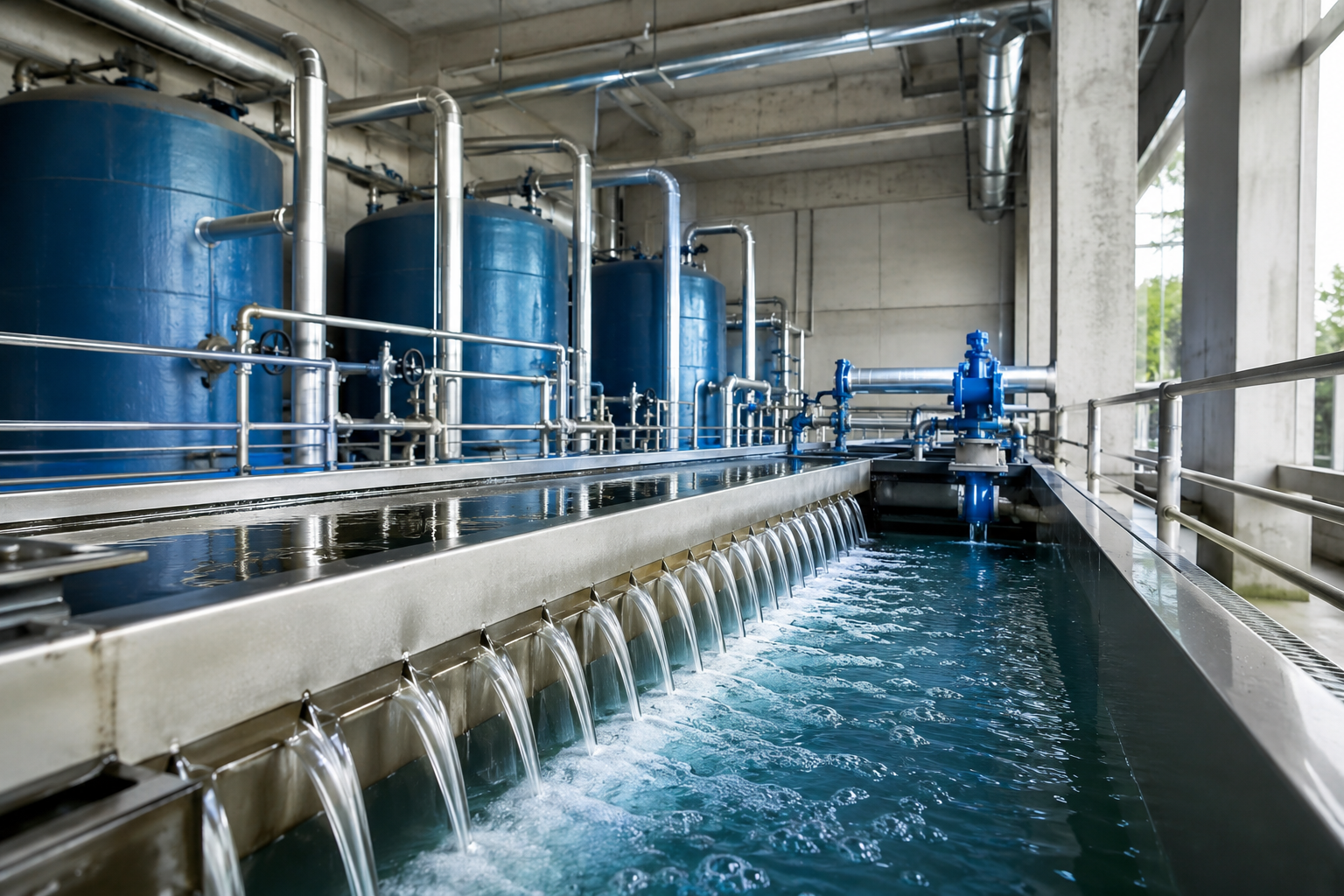
Industrial wastewater often carries a mix of suspended solids, emulsified fats, oils, grease, heavy metal ions, and organic dyes. Sodium bentonite treats these pollutants through three main chemical mechanisms:
Due to its thin, plate-like crystalline structure, one gram of fully hydrated sodium bentonite features an effective surface area approaching 800 square meters. A small hand-held sample of bentonite clay contains an active surface area equivalent to several standard athletic fields.
Because montmorillonite surfaces carry permanent negative charges, they exhibit a high Cation Exchange Capacity (CEC), typically between 80 and 100 meq/100g. Dissolved heavy metal cations in wastewater—including Lead (Pb 2+ ), Cadmium (Cd 2+ ), Nickel (Ni 2+ ), and Copper (Cu 2+ )—are electrostatically drawn into the interlayer spaces, swapping places with sodium ions and becoming trapped within the mineral matrix.
Oils and fats in food processing or metalworking effluent often form stable, sub-micron emulsions in water due to biological or synthetic surfactants. Standard mechanical filtration media clog rapidly when processing oily streams.
When introduced to oily wastewater, sodium bentonite's amphiphilic surface characteristics disrupt the surfactant film holding oil droplets in suspension. The expanded clay platelets absorb oil droplets directly onto their planar surfaces, transforming liquid greases into manageable, non-sticky solids that are easily skimmed or filtered.
In industrial clarification systems, sodium bentonite serves as a coagulant aid and flocculating agent alongside inorganic salts (such as alum or polyaluminum chloride) and organic polymers.
Achieving predictable results with sodium bentonite in field applications requires clear procedural controls. Below are practical steps for two common field tasks.
2 ), while clay-blended soils need less (10 to 15 kg/m 2 ).
+-------------------------------------------------------+
| [Spreader] --> [Spreader] --> [Spreader] |
| Grid A1 Grid A2 Grid A3 |
| (15 kg/sq m) (15 kg/sq m) (15 kg/sq m) | +-------------------------------------------------------+
Geotechnical engineers verify bentonite compliance using testing standards established by ASTM International and the American Petroleum Institute (API). Specifying high swelling sodium bentonite requires tracking three key metrics:
Key Quality Metrics | +--------------------------+--------------------------+
| | | Free Swell Index Marsh Funnel Viscosity Fluid Loss Control (ASTM D5890) (API RP 13B-1) (API Spec 13A) ? 24 mL / 2g 35 – 50 seconds < 15 mL filter cake
This test measures the raw, unconfined swelling capacity of dry bentonite clay in distilled water.
This test evaluates how effectively a hydrated bentonite slurry forms an impermeable filter cake under pressure.
This test offers a quick field measurement of fluid thickness and flow resistance right at the job site.
Incorrect installation can compromise even top-grade sodium bentonite. Here is how to handle the four most frequent job-site errors:
Adding dry sodium bentonite to water containing elevated calcium, magnesium, or dissolved salts causes an immediate ion swap. Divalent calcium replaces monovalent sodium on the clay platelets during mixing, turning high swelling sodium clay into low swelling calcium clay inside the mixing tank.
Pumping freshly blended bentonite slurry into an excavation right after mixing results in lower fluid viscosity and higher filtrate loss. Montmorillonite platelets require time to hydrate fully.
During pond sealing projects, workers sometimes dump raw clay in clumps without thorough tilling, or attempt to compact lifts thicker than 15 cm (6 inches) in a single pass. Poor blending leaves unsealed channels, while thick lifts fail to achieve required compaction density.
If a hydrated bentonite liner or soil-bentonite layer remains exposed to hot sun and wind without a protective soil layer, it loses moisture, shrinks, and develops deep surface cracks.
As civil engineering projects focus increasingly on life-cycle sustainability, specifying natural mineral products offers a low-carbon, non-toxic alternative to petroleum-based synthetic sealants.
Because high-purity deposits of natural high swelling sodium bentonite are geographically concentrated in select volcanic sedimentary basins, supply chain logistics and processing consistency play a central role in project timelines.
Major international mineral suppliers, including Axewelledge, operate extensive mining reserves and processing plants to deliver bulk sodium bentonite that consistently meets API and ASTM standards. Whether supplying granular material for GCL production or fine API-grade powder for deep foundation slurries across North America, the Middle East, and Southeast Asia, reliable logistics keep major infrastructure projects moving forward on schedule.
?9 cm/s) ideal for slurry diaphragm walls, landfill liners, and microtunneling lubricants.
2 ? 26524 mL) and API fluid loss testing (<15 mL) prior to field installation.
Whether you are designing a deep foundation slurry wall, engineering a landfill containment cell, or upgrading an industrial wastewater plant, high swelling sodium bentonite provides reliable performance backed by proven mineral science. Explore technical specifications and bulk mineral sourcing options with the engineering team at Axewelledge to support your next project.













Have questions about our products? We're here to help!