Axewelledge, a leading exporter from India, specializes in high-quality Bentonite. With a commitment to excellence, we supply premium Bentonite to the Middle East and Southeast Asia markets.


North Angle Complex, 304,
150 Feet Ring Rd, Opposite Ambedkar Nagar BRTS Stop,
Madhav Park, Punit Nagar,
Mavdi, Rajkot, Gujarat 360004
© Axewelledge 2026, All Rights Reserved.
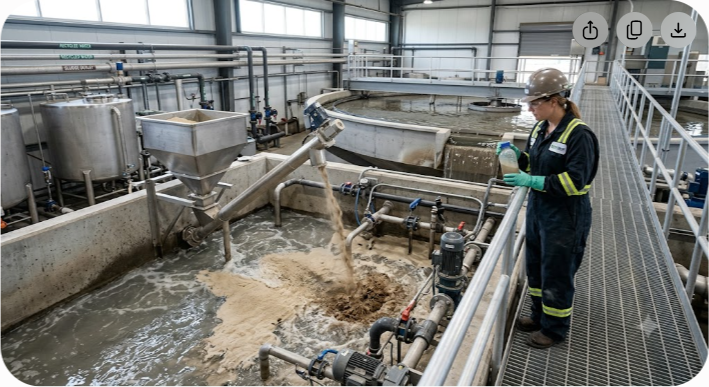
Water keeps our industries running, but the cleanup process afterward is a massive headache. Walk into any modern municipal or industrial treatment facility, and you will see a complex maze of filters, aeration tanks, and chemical dosing pumps. For decades, the standard playbook for cleaning industrial effluent relied heavily on synthetic polymers, harsh chemical coagulants, and energy-intensive mechanical systems. While these methods get the job done, they leave behind a trail of secondary environmental problems. They generate toxic chemical sludge that is incredibly difficult to dewater, strip the water of natural balance, and rack up massive operational invoices. Today, regulatory bodies across the United States are tightening the screws on discharge limits. Environmental protection agencies demand lower chemical footprints, and consumers expect companies to adopt genuinely sustainable practices. This shift has sent engineers and plant managers looking backward to look forward, rediscovering natural, earth-born minerals that can handle heavy-duty purification without the environmental baggage. That is where high-purity sodium bentonite comes into play. Far from being just simple dirt or common pond clay, this specialized mineral is proving to be a powerhouse for sustainable water management.
To understand why high-purity bentonite excels in water treatment, we have to look closely at its structure. Bentonite is a volcanic ash deposit that has aged over millions of years, transforming into a mineral rich in montmorillonite. It is this specific mineral structure that gives bentonite its incredible properties.
Source: Shutterstock Explore When you drop high-quality sodium bentonite into water, it does not just sit there or dissolve like sand. It hydrates, swelling up to several times its original dry volume. This swelling happens because water molecules slide directly into the spaces between the microscopic clay layers, pushing them apart and creating a massive, highly reactive surface area. A single gram of high-purity bentonite can feature a surface area of hundreds of square meters. This immense surface is packed with a naturally occurring negative electrical charge. Because many of the nastiest pollutants found in industrial wastewater—such as heavy metal ions, complex organic dyes, and emulsified oils—carry a positive charge, bentonite acts like a microscopic magnet. The clay particles actively attract, bind, and lock these contaminants within their structure, pulling them straight out of suspension.
When bentonite enters a wastewater tank, it initiates a multi-stage cleanup process that replaces several steps of traditional chemical treatment. First comes adsorption. Because of its vast internal and external surface area, dissolved contaminants stick to the clay surfaces instantly. This isn't a loose attachment; the ionic bond between the negatively charged clay platelets and positively charged pollutants is remarkably secure. Next is absorption. As the clay swells, it draws smaller molecules deep into its internal matrix, trapping them where they cannot leach back out. Finally, the bentonite drives flocculation.
In water treatment, flocculation means gathering tiny, scattered particles into larger clumps that are heavy enough to sink. As the hydrated bentonite sheets bind with contaminants, they lose their electrical charge and begin sticking to one another. They form heavy, dense, stable aggregates known as flocs. These flocs settle out of the water column quickly, leaving behind clear, clarified water. Instead of adding a cocktail of different chemicals—one to adjust pH, one to coagulate particles, and another to build flocs—operators can often use a single, natural mineral to accomplish the entire cycle.
Industrial facilities like electroplating shops, battery manufacturing plants, and mining operations produce wastewater laced with toxic heavy metals. We are talking about chromium, lead, cadmium, copper, and nickel. If these escape into the local water table, the ecological damage is severe. Traditional treatment usually involves raising the water's pH drastically with caustic chemicals to force the metals to precipitate out as hydroxides. This method requires precise control, uses hazardous materials, and creates a loose, watery sludge that is frustrating to manage. High-purity sodium bentonite streamlines this entire process. Through cation exchange, the sodium ions sitting between the clay layers swap places with the heavy metal ions floating in the wastewater. The dangerous metals become a physical part of the clay's crystal grid. Because the bond is incredibly strong, the resulting sludge is highly stable. It won't easily release those toxic metals back into the environment, even under changing pH conditions. This offers a massive safety advantage for industries trying to comply with strict federal and state disposal guidelines.
If you ask a wastewater engineer what keeps them up at night, emulsified oil is usually high on the list. Free-floating oil is easy enough to skim off the top of a tank, but when oil is emulsified—broken down into microscopic droplets suspended throughout the water by detergents or high-shear pumps—it becomes a nightmare to separate. Traditional filters plug up instantly, and standard skimming tools are useless. Bentonite clay tackles this problem through its unique affinity for organic compounds. As the clay platelets expand, they slice through the stabilizing electrical barriers that keep oil droplets suspended in water. The oil droplets coat the surface of the clay particles, a process often accelerated when the bentonite is organically modified or carefully blended. The dense clay-and-oil mixture then settles to the bottom of the clarifier or floats to the top as a tight, manageable blanket that can be removed mechanically. This makes it an invaluable tool for automotive wash bays, petrochemical processing sites, and food manufacturing plants dealing with heavy grease loads.
Textile processing and commercial printing operations generate massive amounts of deeply colored wastewater. Industrial dyes are explicitly designed to be tough; they resist breaking down when exposed to light, heat, and water. Consequently, when they end up in wastewater, traditional biological treatment plants struggle to degrade them. Discharging colored water, even if it is technically non-toxic, blocks sunlight from reaching aquatic plants, disrupting entire river ecosystems. It also looks terrible, drawing immediate scrutiny from community groups and regulators. High-purity bentonite is highly effective at removing these stubborn organic molecules. The large, complex structures of synthetic dyes fit snugly against the expansive surface of montmorillonite clay. The clay strips the color out of the water in minutes, achieving clarity levels that would otherwise require expensive ozone treatment or extensive activated carbon filtration. For international suppliers like Axewelledge, providing minerals that meet these intense purification standards is a core focus, helping industrial hubs across the globe manage their specific regional water challenges effectively.
Beyond simply cleaning the water, wastewater managers must always consider what happens to the waste they pull out. Traditional chemical coagulants, especially alum or iron-based salts, create a massive volume of gelatinous, watery sludge. This sludge holds onto water tightly, making it incredibly expensive to pump, filter, and haul away to landfills. You end up paying to transport a material that is mostly just trapped water. Bentonite changes the physical nature of the sludge. Because it forms dense, granular, and mineral-heavy flocs, the resulting sludge releases its water easily under mechanical pressure. When passed through a standard belt press or filter press, bentonite-treated sludge dewaters quickly, forming a dry, compact cake. This drastic reduction in total sludge volume translates directly into lower handling costs, fewer truck trips, and significantly cheaper landfill tipping fees. It turns an operational bottleneck into a predictable, streamlined step.
One of the most practical advantages of switching to high-purity sodium bentonite is that it doesn't require a multimillion-dollar plant overhaul. You don't need to rip out your existing tanks or install exotic new machinery. Bentonite can be introduced using standard chemical feed systems already present in most treatment facilities. It can be fed dry using a dry powder feeder directly into a high-shear mixing tank, or pre-mixed with water to form a stable slurry that is pumped into the treatment stream. Because it works efficiently across a wide pH range, operators spend far less time constantly adjusting water chemistry with acids and bases before and after treatment. This stability minimizes the risk of human error or system failures causing a compliance violation. Whether a plant operates a continuous-flow system or a batch-treatment setup, bentonite integrates smoothly into the workflow.
In an ideal world, every industrial choice would be guided purely by environmental impact, but business reality dictates that costs matter. Fortunately, high-purity bentonite provides a rare win-win scenario where the sustainable option is also financially smart. Synthetic polymers and specialized treatment chemicals are expensive commodities prone to volatile market pricing. Bentonite, as a naturally occurring, abundant mineral, offers long-term price stability and highly competitive per-ton costs. Furthermore, because it often serves multiple functions simultaneously—acting as an adsorbent, coagulant, and weighting agent for settling—it reduces the total number of individual products a facility needs to purchase, store, and manage. When you factor in the massive savings from reduced sludge disposal costs and fewer system maintenance shutdowns caused by chemical corrosion, the financial argument for bentonite becomes clear.
As water scarcity worsens globally and industrial regulations tighten further, the pressure on factories and utilities to optimize their water systems will only intensify. We can no longer afford to fix one environmental problem by creating another in the form of chemical pollution and unmanageable sludge. High-purity sodium bentonite represents a pragmatic, field-proven bridge to a truly sustainable future. By leveraging millions of years of natural geology, modern industries can clean their process water effectively, lower their overhead, and protect the vital watersheds we all rely on. It is a powerful reminder that sometimes the most sophisticated solutions aren't engineered in a synthetic laboratory; they are mined directly from the earth, waiting to be put to work.













Have questions about our products? We're here to help!