Axewelledge, a leading exporter from India, specializes in high-quality Bentonite. With a commitment to excellence, we supply premium Bentonite to the Middle East and Southeast Asia markets.


North Angle Complex, 304,
150 Feet Ring Rd, Opposite Ambedkar Nagar BRTS Stop,
Madhav Park, Punit Nagar,
Mavdi, Rajkot, Gujarat 360004
© Axewelledge 2026, All Rights Reserved.
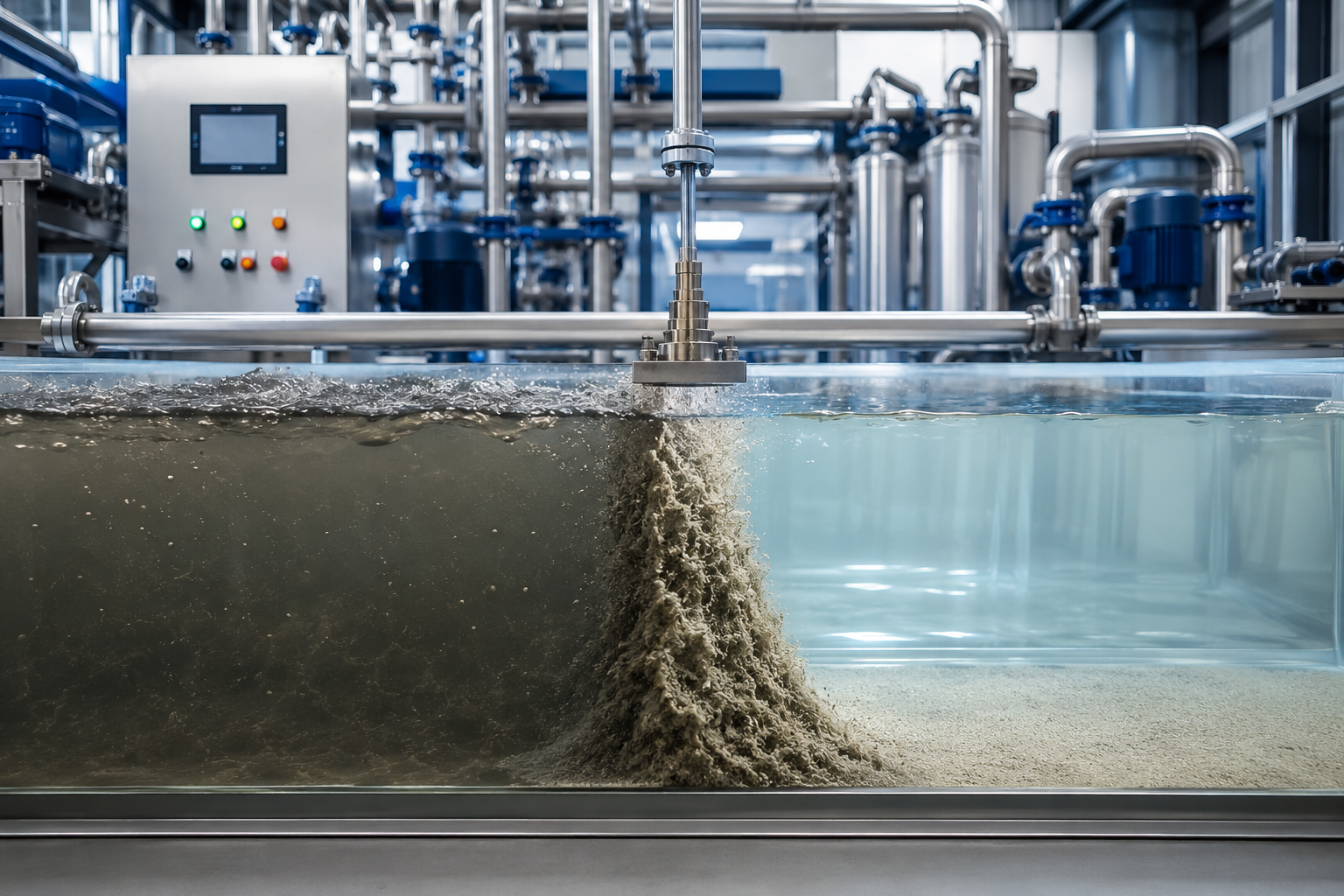
Water treatment facilities across the United States are facing a quiet crisis. Regulatory frameworks like the EPA's clean water standards are tightening. Industrial effluents are growing more complex with synthetic dyes, heavy metals, and stubborn chemical compounds. At the same time, municipal plants are under pressure to cut down on expensive synthetic polymers and hazardous chemical coagulants. If you run a treatment facility or manage industrial process water, you already know the balancing act: you have to achieve cleaner discharge numbers while keeping operating costs from skyrocketing.
Traditional chemical treatment trains often feel like a never-ending cycle of adding more additives just to fix the problems caused by the previous ones. Alum and ferric chloride create massive volumes of gelatinous, water-heavy sludge that costs a fortune to dry and haul to landfills. Synthetic polymers can be tricky to dose, potentially blinding filters if over-applied.
There is a better way, and it comes down to a mineral formed from ancient volcanic ash: high-purity sodium bentonite. By introducing high-swelling bentonite into your coagulation, flocculation, and filtration systems, you can radically improve contaminant removal rates while cutting down on synthetic chemicals. Here is a deep dive into how this remarkable clay mineral transforms water purification from a costly headache into a streamlined, sustainable operation.
To understand why bentonite works so well in messy wastewater, we have to look at its molecular architecture. Bentonite is primarily composed of montmorillonite, a layered silicate mineral. Each individual sheet of montmorillonite consists of a central octahedral layer of aluminum oxide sandwiched between two tetrahedral layers of silicon dioxide.
Because of natural geological variations, some of the aluminum ions in the crystal lattice are replaced by magnesium ions. This process, known as isomorphous substitution, leaves the clay surface with a permanent, strong negative charge. In its sodium form, the clay attracts sodium ions into the spaces between these layers to balance the charge.
When you introduce high-purity sodium bentonite to water, something amazing happens. Water molecules rush into the interlayer spaces, pushing the silicate sheets apart. A premium grade can swell up to 15 to 20 times its original dry volume. This swelling exposes an enormous surface area—often exceeding 800 square meters per gram of clay. Suddenly, you have a vast network of negatively charged microscopic traps ready to grab contaminants out of suspension.
Most water treatment specialists treat coagulation and flocculation as two distinct steps requiring different chemicals. Coagulation neutralizes the charges of suspended particles so they stop repelling each other. Flocculation bridges those neutralized particles together into larger, easily settleable clumps called flocs.
High-purity bentonite behaves like a multi-tool in this environment, performing both functions simultaneously through a unique mechanism.
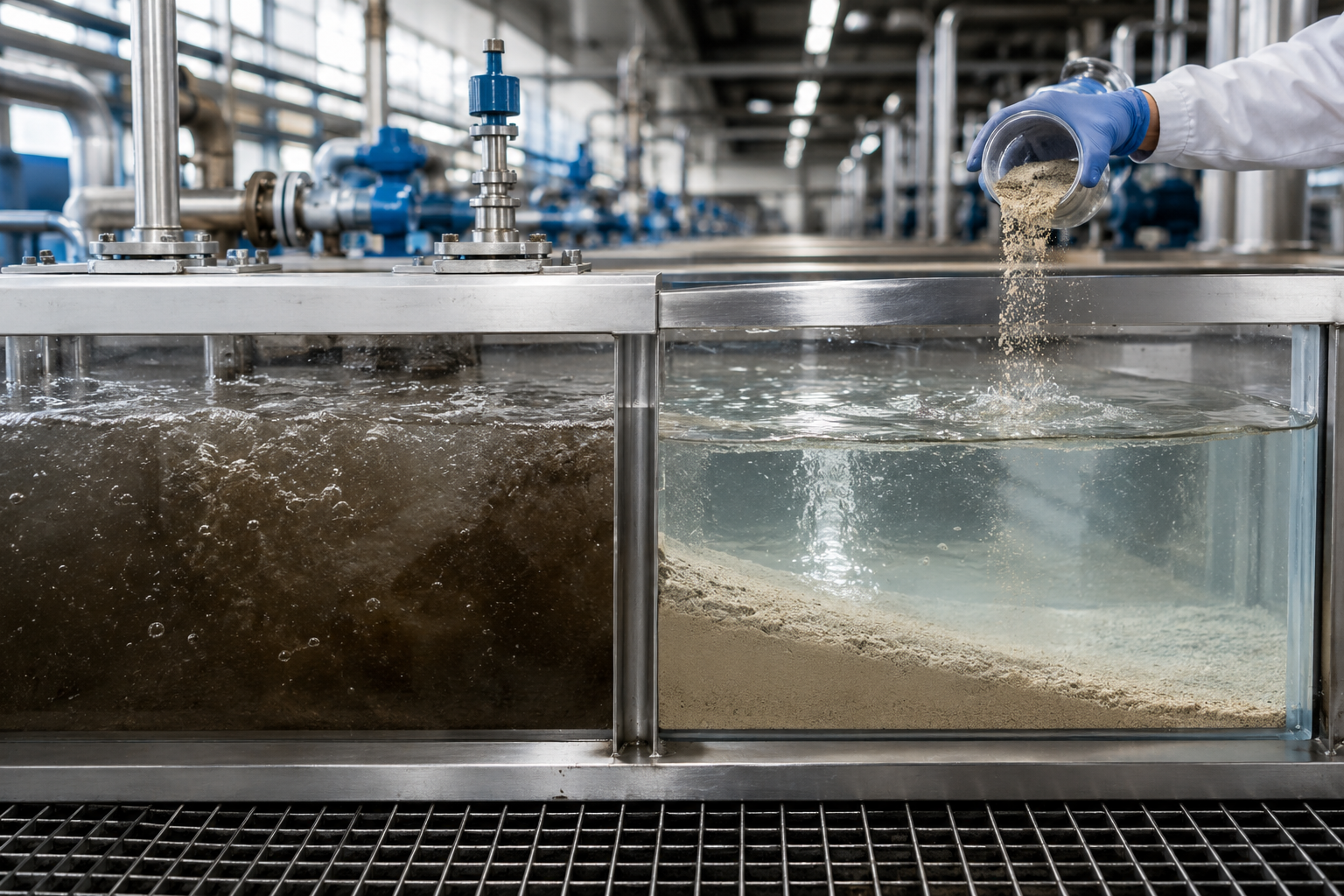
The large negative charge on the flat faces of the bentonite platelets attracts positively charged pollutants. This includes heavy metal ions, positively charged organic molecules, and colloidal suspension particles. Meanwhile, the edges of the bentonite platelets carry a slight positive charge, which can attract negatively charged organic matter and fine silt. This creates a powerful electrical trapping effect that pulls dispersed impurities out of solution instantly.
As the bentonite platelets interact with the contaminants and each other, they don't just clump into a dense, shapeless mass. Instead, they organize into a three-dimensional 'house of cards' structure. The negatively charged faces attract the positively charged edges.
This open, rigid structure acts as a microscopic net. As it settles through the water column, it sweeps up fine colloidal particles, bacteria, algae, and emulsified oil droplets that are too small to settle on their own. The result is a highly dense, stable floc that drops out of the water quickly, leaving behind remarkably clear supernatant fluid.
Industrial manufacturing facilities generate some of the toughest wastewater on earth. Standard municipal treatment methods fail when confronted with complex chemical matrices. High-purity bentonite excels right where traditional methods stumble.
Metals like lead, copper, cadmium, nickel, and zinc are highly toxic and strictly regulated. Bentonite removes these metals through a process called ion exchange. The heavy metal ions in the wastewater displace the naturally occurring sodium ions sitting between the clay layers. Because the clay has a higher affinity for these heavy metals, it locks them tightly into its crystal structure, preventing them from leaching back into the clean effluent stream.
The textile, printing, and paper industries struggle constantly with colored effluents. Many synthetic dyes, particularly cationic (positively charged) dyes, are incredibly resistant to light, heat, and biological breakdown. High-purity bentonite acts as an exceptional adsorbent for these colorants. The dye molecules fit perfectly into the interlayer spaces of the swelling clay, rapidly decolorizing the water without the need for aggressive oxidizing agents like ozone or chlorine dioxide.
In food processing plants, metalworking shops, and refineries, oil-in-water emulsions are a persistent nightmare. Free oil floats to the top, but emulsified oil remains suspended indefinitely, ruining filtration membranes and blowing past oil-water separators. When bentonite is added, it breaks the emulsion by adsorbing the stabilizing surfactants and binding directly to the tiny oil droplets. The oil-laden clay then settles out smoothly, turning a liquid separation nightmare into a simple solids-handling task.
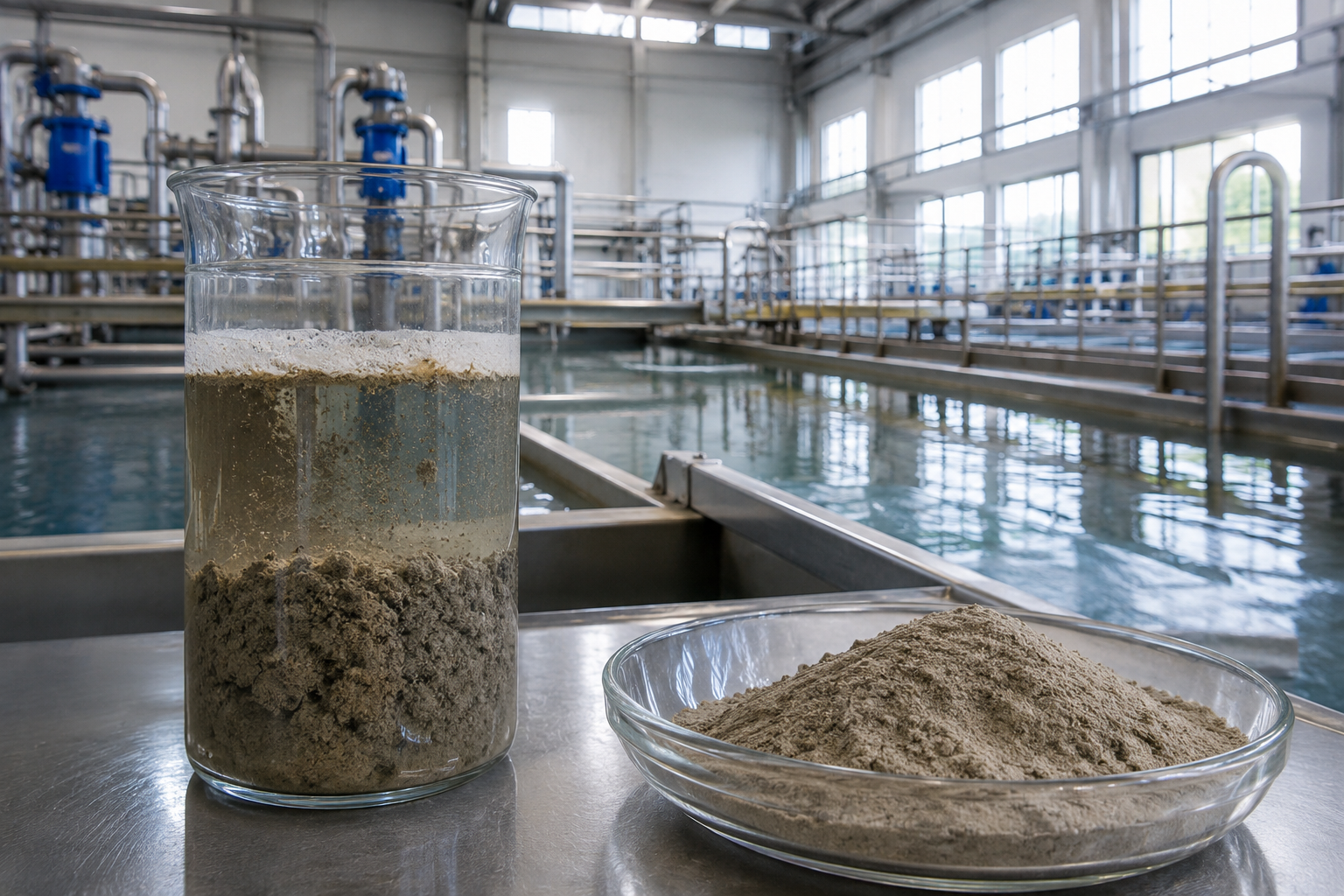
Ask any plant operator what their biggest line-item expense is, and they will likely point to chemical procurement and sludge disposal. Traditional metal salts like aluminum sulfate (alum) generate a massive volume of hydroxide sludge. This sludge is notorious for retaining water; it behaves like a sponge, refusing to dewater properly even under high pressure in a belt filter press or centrifuge.
When you substitute or supplement your treatment train with high-purity sodium bentonite, the entire dynamics of sludge handling changes.
Implementing a bentonite-driven purification strategy requires a reliable, consistent supply of the raw mineral. Not all bentonite is created equal; low-grade clays with high sand or quartz content will foul your pumps, abrade your piping, and fail to provide the necessary surface area for effective adsorption.
This is where partnering with a global leader makes all the difference. Axewelledge is one of the world's top five global producers and India's largest mine owner and exporter of high-quality bentonite, controlling over 60 million tons of premium reserves. With more than 15 years of deep industrial expertise, advanced R&D facilities, and sophisticated mineral processing plants, we ensure that every batch of sodium bentonite matches strict international quality standards.
For American water treatment facilities, sourcing from an integrated supplier like Axewelledge means eliminating the supply chain anxieties that plague industrial procurement. Our strategically located processing plants and highly efficient logistics infrastructure ensure seamless, timely deliveries right to your facility, keeping your operations running without interruption.
Ready to integrate high-purity bentonite into your system? It doesn't require tearing out your existing infrastructure. Bentonite can easily be introduced into your current flash-mix tanks or flocculation basins using standard dry chemical feeders or liquid slurry makeup systems.
Typically, the clay is prepared as a 2% to 5% pre-hydrated slurry. Pre-hydrating allows the sodium bentonite to reach its maximum swelling potential before it ever comes into contact with the wastewater, ensuring every single square meter of surface area is ready to work. Depending on your specific contaminant load, dosage rates can range anywhere from 20 mg/L for light municipal polishing to upwards of 500 mg/L for heavy industrial effluents.
Every wastewater stream is unique. By running simple jar tests, you can find the perfect synergy between your existing coagulants and high-purity bentonite, often discovering that you can cut your polymer usage by half while achieving superior water clarity.
Beyond the operational metrics and cost savings, there is a broader picture to consider. Environmental stewardship is no longer optional. Regulatory agencies are constantly lowering the allowable limits for chemical residuals in discharged water, and consumers favor businesses that prioritize sustainability.
Using high-purity bentonite aligns your operation with these green initiatives. It is a completely natural, non-toxic, and chemically inert mineral. It introduces zero synthetic toxins into the local water table, and the resulting clay-heavy sludge is often safe enough to be repurposed in agricultural applications or industrial brick making, moving your facility closer to a circular economy model.
When you upgrade your water treatment process with premium sodium bentonite, you aren't just buying a clarifying agent. You are investing in a smarter, cleaner, and highly predictable process that protects both your bottom line and the natural ecosystems downstream.













Have questions about our products? We're here to help!