Axewelledge, a leading exporter from India, specializes in high-quality Bentonite. With a commitment to excellence, we supply premium Bentonite to the Middle East and Southeast Asia markets.


North Angle Complex, 304,
150 Feet Ring Rd, Opposite Ambedkar Nagar BRTS Stop,
Madhav Park, Punit Nagar,
Mavdi, Rajkot, Gujarat 360004
© Axewelledge 2026, All Rights Reserved.
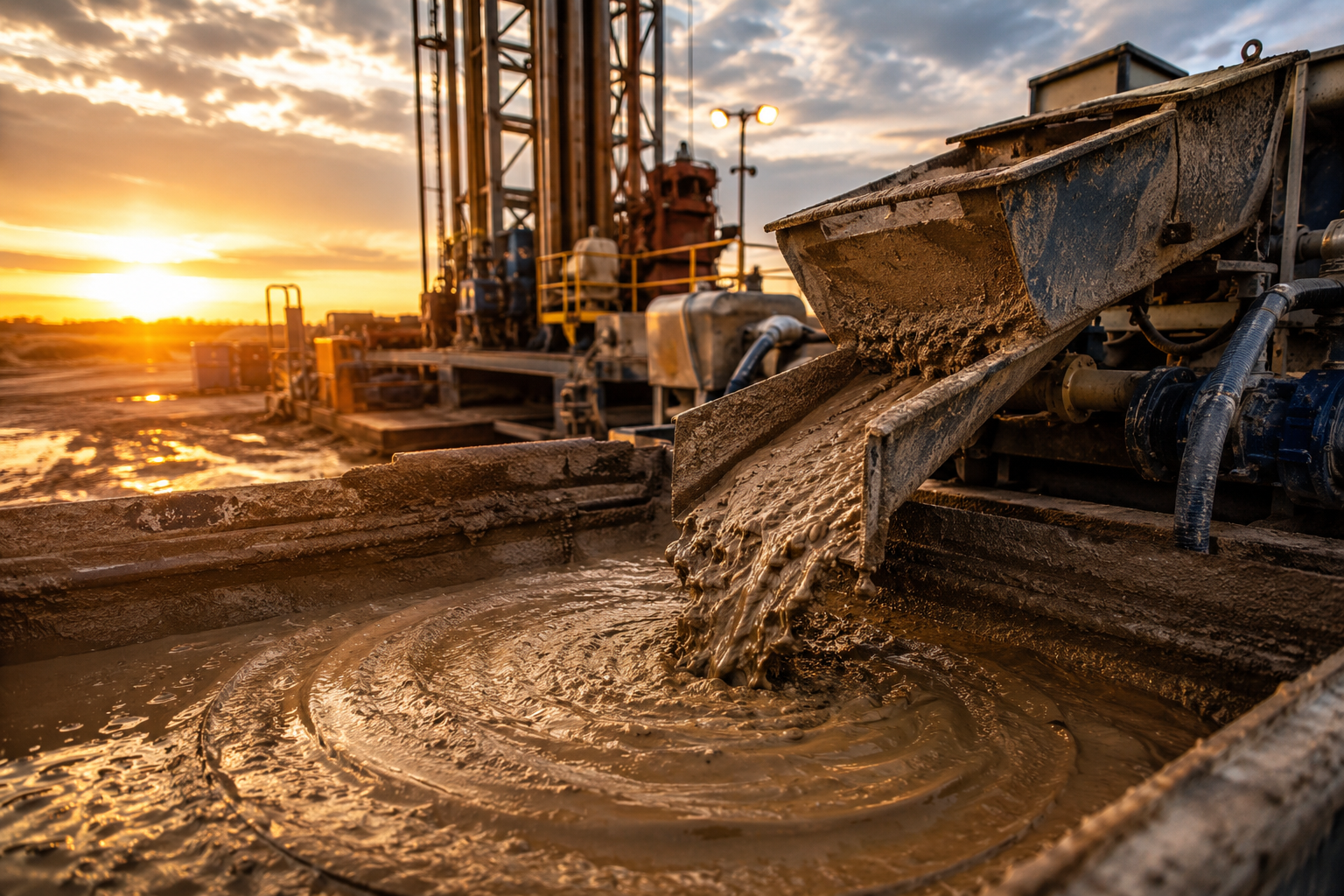
When you drop a drill bit thousands of feet into the earth, you are stepping into a high-stakes arena where absolute control separates a successful well from a catastrophic failure. Down in the dark, temperatures soar, pressures push back with immense force, and shifting geological formations threaten to trap your drill string. You cannot rely on muscle and steel alone to conquer these depths. You need an invisible, highly engineered shield circulating right alongside your bit. That shield is drilling mud.
At the heart of almost every high-performing water-based drilling fluid lies a remarkable, unassuming mineral: sodium bentonite. Not just any clay will do the job. You need high-swelling bentonite clay, a specialized material capable of transforming standard water into a robust, thixotropic fluid. If you want to optimize your mud program, reduce non-productive time, and protect your borehole from collapsing, understanding how this clay works is non-negotiable. Let us walk through the science, mechanics, and practical applications that make high-swelling bentonite the undisputed backbone of modern drilling.
To appreciate why drillers trust sodium bentonite, you have to look down at the molecular level. Bentonite is an absorbent aluminum phyllosilicate clay formed mostly from weathered volcanic ash. Within that category, sodium bentonite stands apart due to its dominant exchangeable cation: sodium.
When dry, sodium bentonite particles look like tiny, tightly packed stacks of microscopic sheets. But introduce water, and everything changes. Water molecules wedge themselves between the silicate layers through a process called hydration. Because sodium ions have a large hydration shell, they pull in massive amounts of water, forcing the individual crystal layers apart. This expansion can cause the clay to swell up to fifteen or twenty times its original dry volume.
This is not a casual expansion. It creates a colloidal suspension where the individual clay platelets carry negative charges on their flat surfaces and positive charges on their edges. In an aqueous environment, these opposite charges attract, forming what mud engineers call a house-of-cards structure. This structure gives the fluid its unique flow characteristics, allowing it to behave like a thick gel when the pump stops and a slick, pumpable liquid when shear stress is applied.
Drilling fluid does far more than simply lubricate the bit. It performs several critical duties simultaneously, and high-swelling bentonite is the primary driver behind most of them.
As your drill bit chews through sandstone, shale, or limestone, it creates rock fragments known as cuttings. If these cuttings settle to the bottom of the hole, they will pack around the drill collar and stick your pipe. High-swelling bentonite builds a robust yield point and gel strength. When mud pumps are running, the fluid thins out, racing up the annulus and carrying heavy rock debris to the surface. The moment the pumps shut down, the fluid builds internal structure, suspending those cuttings in place so they never drift back down to jam the bit.
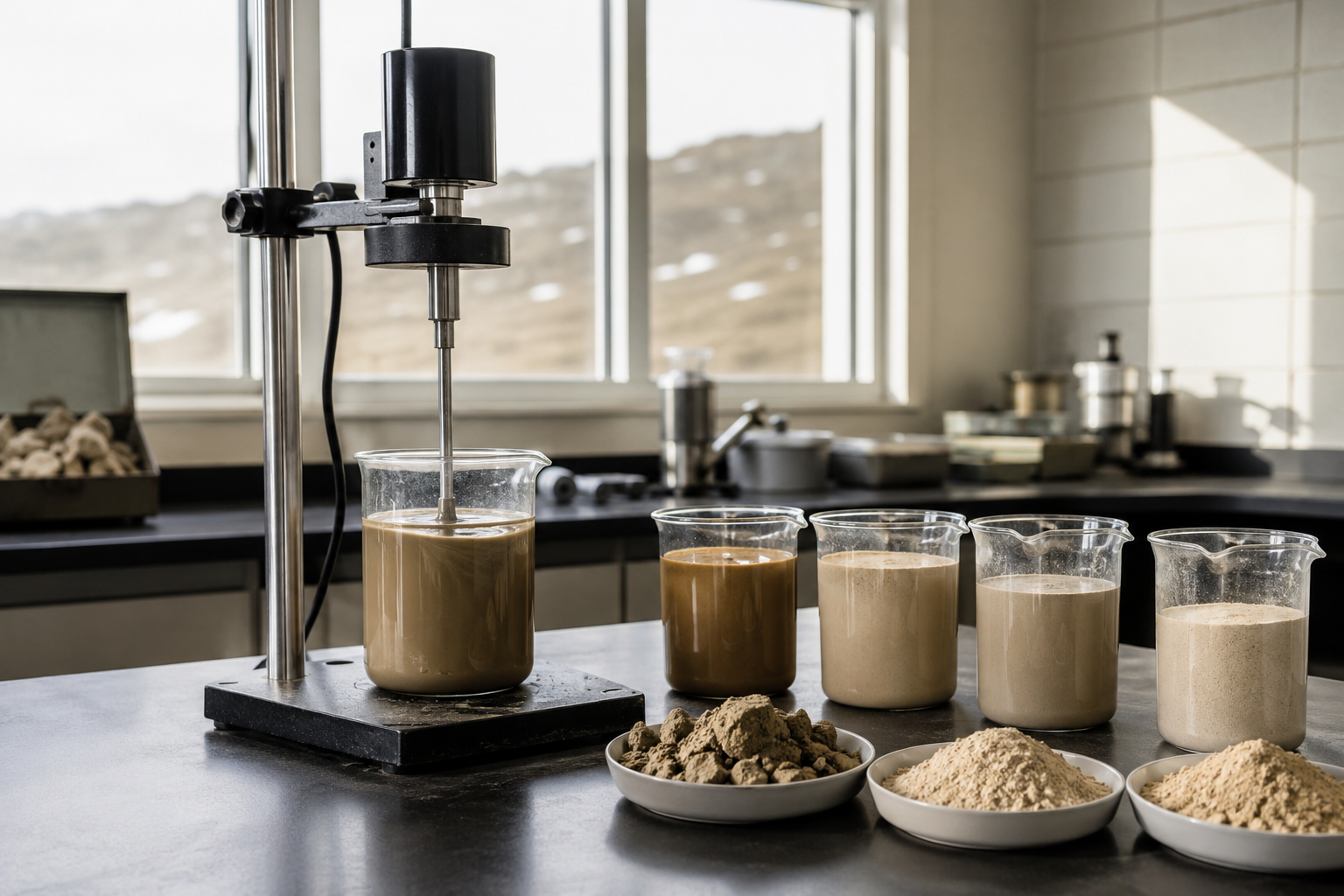
Unconsolidated formations love to cave in. Without adequate support, the walls of your wellbore will slough off, wasting time and risking equipment loss. High-swelling bentonite plays a dual role here. First, the hydrostatic pressure of the mud column pushes outward against the formation. Second, and more importantly, the bentonite forms a thin, low-permeability layer on the borehole wall known as a filter cake.
As drilling fluid presses against permeable rock, the liquid phase tries to escape into the formation. This fluid loss can dehydrate the mud and destabilize water-sensitive shales. High-swelling bentonite particles squeeze together at the formation interface, creating a slick, impermeable seal. This filter cake stops further fluid invasion, keeping the wellbore stable and preserving the integrity of your mud system.
Managing the rheology of your drilling fluid is an art form. If your mud is too thin, it won't clean the hole properly. If it is too thick, your pumps will strain, and equivalent circulating densities will spike, potentially fracturing the surrounding formation.
High-swelling bentonite gives mud engineers precise control over viscosity. By adjusting the concentration of sodium bentonite in fresh water, you alter the internal friction of the fluid. As the clay hydrates, the dispersed platelets create resistance to flow, yielding a predictable, manageable viscosity profile.
Furthermore, the thixotropic nature of bentonite muds is nothing short of brilliant. Thixotropy means the fluid becomes less viscous when agitated and more viscous when left undisturbed. You want a mud that flows easily through narrow drill pipe diameters under high pump pressure, yet thickens up instantly in the wider annular space to catch and hold rock cuttings. High-swelling bentonite delivers this dual personality naturally, reducing the need for expensive chemical synthetic polymers.
Throwing dry bentonite sacks directly into a mud pit is a rookie mistake that leads to wasted product, lumpy mixtures, and poorly performing fluid. To unlock the full swelling potential of high-grade bentonite, you need proper hydration.
Water chemistry matters immensely. Calcium and magnesium ions in hard water can prematurely flocculate bentonite, preventing the platelets from fully separating. If your makeup water has high hardness, you may need to treat it with soda ash first to precipitate out those divalent ions.
Once your water is conditioned, you must introduce the bentonite slowly through a high-shear hopper. Mechanical shear forces break apart the agglomerated clay clumps, exposing maximum surface area to the water molecules. The longer and more thoroughly the bentonite hydrates, the higher its apparent viscosity climbs. This characteristic is known as the yield of the bentonite, typically measured in barrels of mud per ton of clay that meet a specific viscosity standard, such as 15 centipoise.
Give your mud time to work. Freshly mixed bentonite slurry does not reach its peak viscosity immediately. Allowing the fluid to rest in a mud pit or shear through a circulation cycle for a few hours lets the hydration process finish completely, saving you from over-treating the system with unnecessary chemical additives later.
In modern operations, environmental compliance is just as critical as mechanical performance. Contractors and operators face strict regulations regarding fluid disposal and site restoration.
High-swelling sodium bentonite is a naturally occurring clay mineral. It is non-toxic, chemically inert under standard downhole conditions, and completely biodegradable in the broad geological sense. Unlike synthetic-based muds that require complex, expensive waste management protocols, water-based bentonite systems are far easier to treat and dispose of safely.
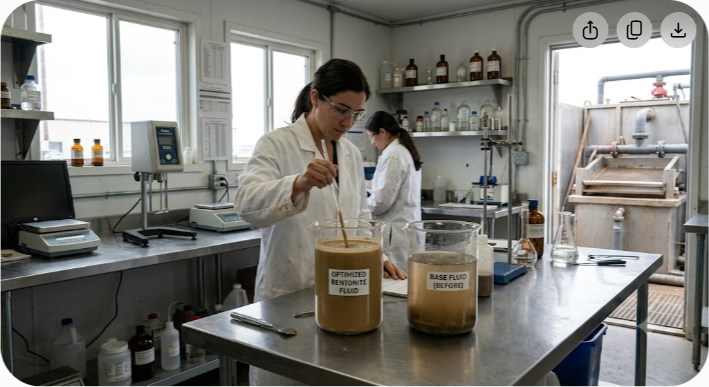
From an economic perspective, premium natural bentonite delivers unmatched value. Because of its exceptional swelling index, you need less raw material by weight to achieve the desired mud properties compared to lower-grade calcium bentonites or substitute fillers. This efficiency translates directly into lower transportation expenses, fewer truckloads to remote drilling sites, and reduced overall fluid maintenance costs.
Even with top-tier materials, drilling environments can throw unexpected challenges your way. Knowing how to diagnose and correct fluid problems keeps your rig running smoothly.
If your mud is failing to carry cuttings, your bentonite may not be fully yielding. Check your makeup water for calcium contamination or high pH. Adding a small amount of caustic soda can raise the pH, encouraging better dispersion and swelling of the clay platelets.
If your filter cake is too thick or fluid loss is spiking, your clay concentration might be too low, or contaminants like salt may have flocculated your suspension. Re-establishing proper filtration control often requires adding fresh bentonite or complementary polymers to tighten up the filter cake matrix.
Drilling through anhydrite or gypsum beds introduces soluble calcium sulfate into your mud system. Calcium ions cause sodium bentonite to clump and lose its viscosity—a condition known as calcium contamination. Treating the system with sodium carbonate converts the soluble calcium into insoluble calcium carbonate, protecting your bentonite's performance.
Not all bentonite is created equal. Variations in raw mineral composition, cation exchange capacity, and processing techniques can cause wild fluctuations in mud performance out in the field. When you are running a deep or complex well, you cannot afford inconsistent viscosity or unpredictable gel strengths.
Sourcing high-swelling sodium bentonite from established reserves with strict quality control ensures that every batch behaves predictably. Reliable suppliers utilize advanced processing, precise particle size grading, and rigorous laboratory testing to guarantee that their bentonite meets international standards for viscosity, moisture content, and swelling capacity.
At Axewelledge, we leverage extensive mining reserves and advanced refinement techniques to deliver premium sodium bentonite designed specifically for demanding industrial applications like oil drilling. Our rigorous processing ensures maximum purity, superior hydration rates, and consistent performance batch after batch, helping drilling operations maintain optimal borehole stability across diverse geographical conditions.
Drilling technology continues to evolve as operators push deeper into unconventional reservoirs and extended-reach horizontals. While synthetic and oil-based muds still find a place in extreme environments, environmental pressures and cost considerations are driving renewed focus on high-performance water-based systems.
Innovations in polymer-bentonite hybrids are pushing the boundaries of what water-based muds can achieve. By combining high-swelling sodium bentonite with specialized biopolymers, mud engineers can create ultra-stable fluids that withstand extreme temperatures and high salinity without sacrificing environmental safety. As these technologies advance, the role of foundational clay minerals remains as vital as ever.
Optimizing drilling fluid performance is not about chasing the latest chemical fad. It is about mastering the fundamentals of fluid dynamics, chemistry, and mineralogy. High-swelling bentonite clay remains the undisputed champion of water-based drilling muds because it solves multiple operational problems at once. It suspends cuttings, builds durable filter cakes, stabilizes borehole walls, and provides precise rheological control.
By understanding how to select, mix, and maintain your bentonite system, you can protect your equipment, cut non-productive time, and drive greater efficiency into every foot of hole you drill. Whether you are tackling standard vertical wells or complex subterranean pathways, investing in top-tier mineral engineering is the smartest way to keep your operations moving forward.













Have questions about our products? We're here to help!