Axewelledge, a leading exporter from India, specializes in high-quality Bentonite. With a commitment to excellence, we supply premium Bentonite to the Middle East and Southeast Asia markets.


North Angle Complex, 304,
150 Feet Ring Rd, Opposite Ambedkar Nagar BRTS Stop,
Madhav Park, Punit Nagar,
Mavdi, Rajkot, Gujarat 360004
© Axewelledge 2026, All Rights Reserved.
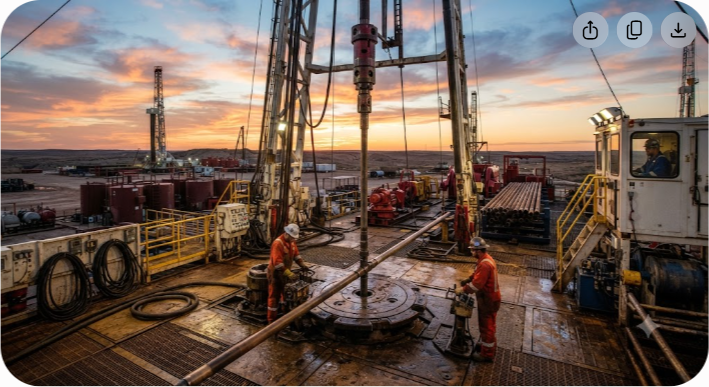
Drilling a successful well is a lot like threading a needle through shifting sand while running at full speed. You are dealing with immense underground pressures, shifting formations, and thousands of feet of drill pipe spinning at breakneck speeds. If your drilling fluid isn't up to the task, the entire operation grinds to an expensive, chaotic halt. That is why experienced drillers pay close attention to the mud they pump downhole. And at the heart of the most effective water-based drilling muds is a humble yet remarkable natural mineral: high-swelling sodium bentonite.
When you pull back the curtain on modern oil and gas operations, you quickly realize that engineering the right drilling fluid is just as important as the mechanical drill bit itself. The fluid has to cool the bit, haul heavy rock cuttings back to the surface, and hold those cuttings in suspension when the pumps shut off. Most importantly, it has to keep the borehole from caving in on itself. Sodium bentonite achieves this through a unique molecular structure that allows it to absorb water, swell to many times its original dry volume, and create a slick, protective gel. Let us take a close look at how this versatile clay transforms drilling efficiency, protects wellbores, and keeps projects on schedule.
Not all clay is created equal. If you grab a handful of ordinary clay from a backyard, you will get a sticky mess that does little for a multi-million-dollar oil rig. True high-swelling bentonite, specifically sodium bentonite, possesses a crystal lattice structure made of microscopic sheet-like layers. Between these layers sit sodium ions and water molecules.
When you mix sodium bentonite into fresh water, water molecules rush between the silicate layers. The clay particles hydrate and expand dramatically, sometimes swelling up to fifteen or twenty times their dry bulk volume. This process is known as hydration and dispersion. As the individual platelets separate, they form a vast network of colloidal particles.
This colloidal suspension creates non-Newtonian fluid behavior. In plain English, the fluid becomes thick and viscous when it is sitting still, which allows it to suspend heavy weight materials and rock cuttings without letting them settle to the bottom of the hole. But the moment you start pumping and shearing the fluid through the drill pipe, its viscosity drops, allowing it to flow smoothly and rapidly. This clever characteristic is called thixotropy. Without it, your mud pumps would burn out trying to move stagnant fluid, and your drill string would quickly become stuck in settled sediment.
One of the most persistent enemies in oil and gas drilling is unstable shale formations. Shales make up a massive percentage of drilled formations globally, and they are notoriously finicky. When standard water-based fluids touch reactive shales, the water absorbs into the clay layers of the rock, causing it to swell, slough off, and cave into the wellbore. This phenomenon leads to stuck pipe, washed-out holes, and millions of dollars in non-productive time.
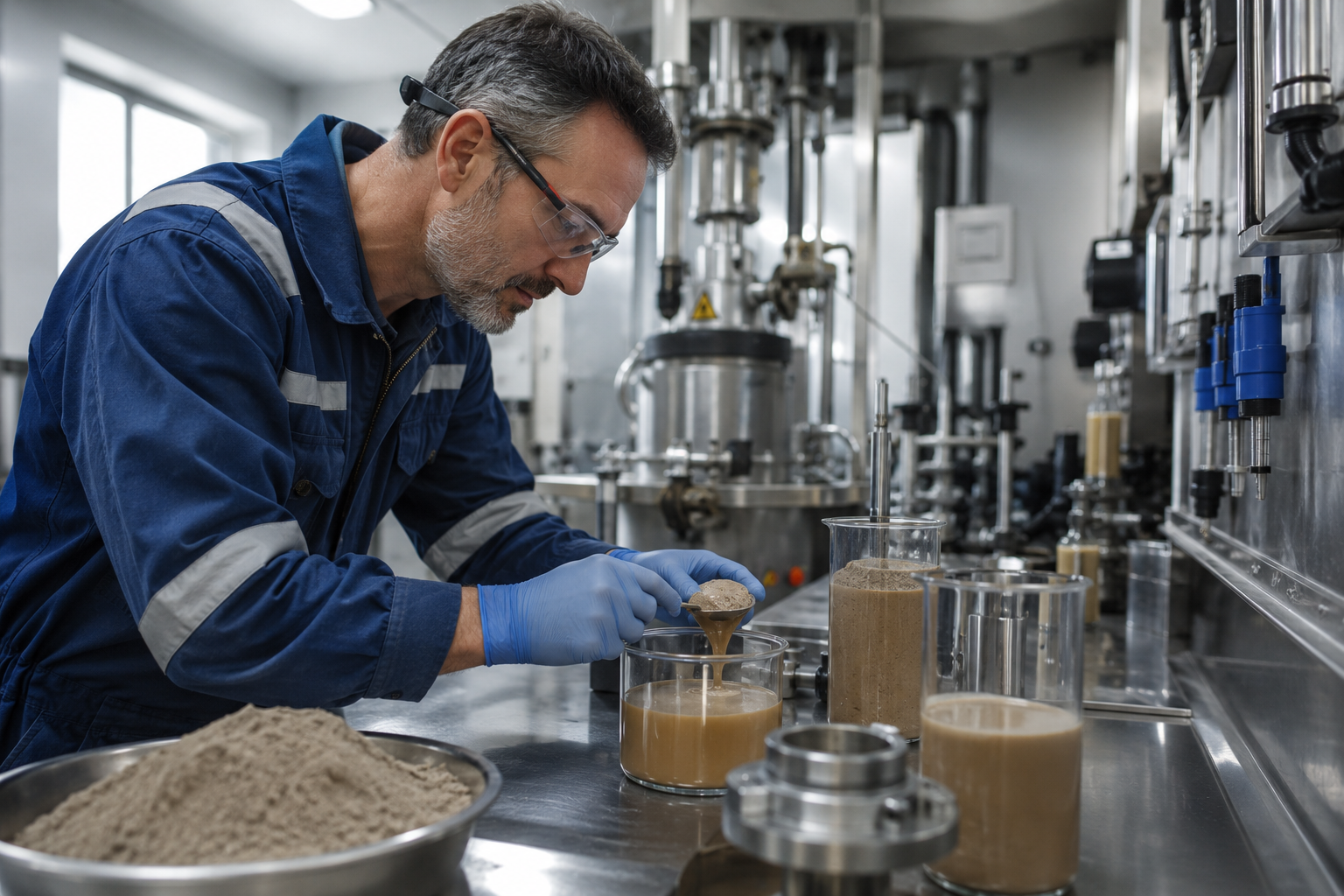
High-swelling bentonite tackles this challenge head-on by forming a thin, low-permeability filter cake along the borehole wall. As the drilling fluid presses against the porous rock, the liquid phase tries to leak into the formation. However, the swollen bentonite platelets are too large to enter the pore spaces. Instead, they trap against the face of the formation, laying down a slick, impermeable barrier.
This filter cake does two vital jobs. First, it prevents excess filtrate fluid from invading the shale, which keeps the rock from swelling and destabilizing. Second, it equalizes hydrostatic pressure against the formation wall, acting like an invisible shoring mechanism that holds loose earth in place. When you maintain a high-quality bentonite mud system, you drastically reduce the risk of borehole collapse, keeping your drill string moving freely from surface to total depth.
Drilling mud rheology is the study of how fluids flow and deform under stress. To keep an operation running efficiently, mud engineers must constantly monitor and adjust three main parameters: yield point, plastic viscosity, and gel strength. High-swelling bentonite gives engineers the precise control they need over these variables.
Yield point measures the electrochemical attraction between particles in the fluid under flowing conditions. A proper yield point ensures the mud has exceptional carrying capacity to sweep heavy drill cuttings out of the annulus. Because high-swelling bentonite carries a strong negative charge on its flat surfaces and a positive charge on its edges, the particles form a card-house structure. This structure boosts the yield point without unnecessarily driving up plastic viscosity, which would otherwise make the fluid too thick to pump efficiently.
Gel strength measures the ability of the fluid to suspend cuttings when circulation stops. Imagine tripping out of the hole to change a worn bit. The mud pumps go silent for hours. If your fluid lacks gel strength, all the heavy rock fragments suspended in the column will drop back down, packing off the bottom of the hole and trapping your drill assembly. High-swelling bentonite builds a delicate, temporary gel structure while stationary. This gel breaks down smoothly the second you resume circulation, protecting your equipment from massive pressure spikes and lost time.
Drilling through highly permeable sandstone or gravel beds presents a different headache: fluid loss. If your drilling fluid bleeds away into the formation faster than you can pump it down, you face severe fluid depletion, differential sticking, and formation damage that can hurt ultimate hydrocarbon production.
Controlling filtration is an art form, and high-swelling bentonite is the master brush. When mixed correctly, the microscopic clay platelets overlap like microscopic roof shingles, creating a tight, resilient seal across the formation face. This dramatically lowers the fluid loss volume measured in standard API filter press tests.
By keeping the fluid where it belongs—inside the wellbore—you avoid the high costs of constantly mixing fresh mud batches and lost circulation materials. You also protect the productive zones from water-blocking and clay-swelling damage, ensuring the well flows cleanly when it is finally completed and brought on production.
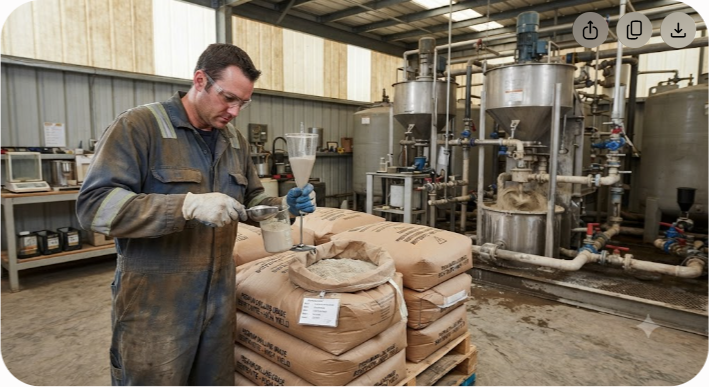
Time is money in the oil and gas sector. Every hour a rig spends circulating mud to clean a hole or fishing for stuck pipe eats directly into profit margins. Integrating high-swelling bentonite into your drilling fluid program yields tangible operational benefits that directly impact the bottom line.
Not all commercial bentonite performs equally on a high-stress rig. The degree of swelling, the absence of inert quartz grit, and the cation exchange capacity all depend heavily on the raw mineral source and the refinement process. Mines with rich, pure sodium reserves yield clays that hydrate faster, build stronger filter cakes, and maintain stability under high downhole temperatures.
When operations source premium-grade bentonite from established producers like Axewelledge, they secure a reliable, high-purity product that meets rigorous API (American Petroleum Institute) specifications. With extensive high-grade mineral reserves and advanced processing technology, suppliers ensure that every ton of bentonite delivered to a rig site has consistent viscosity, low moisture content, and optimal swelling capacity. This consistency eliminates guesswork for mud engineers, allowing them to dial in mud weights and viscosities with absolute confidence.
Even the highest quality bentonite will underperform if it is introduced to the mud system incorrectly. To get the absolute most out of your high-swelling clay, follow these essential field practices:
As oil and gas exploration pushes deeper, targets more complex horizontal unconventional plays, and operates in harsher environments, the demands on drilling fluids will only intensify. Advanced horizontal wells require mud systems that can maintain suspension over miles of lateral reach while exerting minimal equivalent circulating density (ECD) on fragile formations.
High-swelling sodium bentonite remains the cornerstone of water-based drilling engineering because it adapts brilliantly to these challenges. By understanding its unique colloidal properties, respecting the chemistry of hydration, and partnering with reliable global suppliers who prioritize strict quality control, operators can significantly boost efficiency, minimize downtime, and protect their investments downhole.
Drilling a well will never be entirely effortless, but with the right high-swelling bentonite working for you behind the scenes, you can keep your operation running smoothly, safely, and profitably from spud to completion.













Have questions about our products? We're here to help!