Axewelledge, a leading exporter from India, specializes in high-quality Bentonite. With a commitment to excellence, we supply premium Bentonite to the Middle East and Southeast Asia markets.


North Angle Complex, 304,
150 Feet Ring Rd, Opposite Ambedkar Nagar BRTS Stop,
Madhav Park, Punit Nagar,
Mavdi, Rajkot, Gujarat 360004
© Axewelledge 2026, All Rights Reserved.
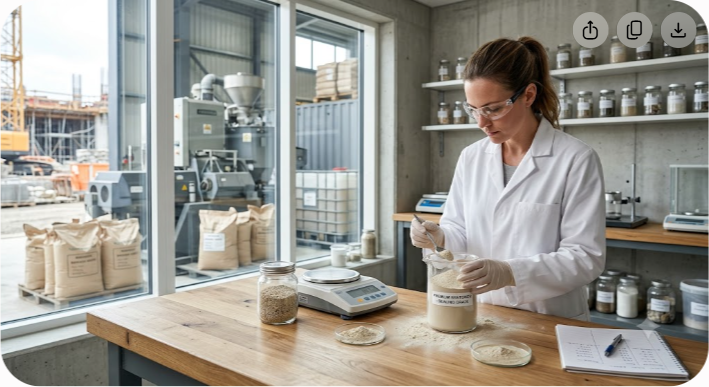
You’ve seen how one slight variation in raw material quality can throw off an entire production run. If your business relies on bentonite—whether for oil drilling, foundry molds, or water treatment—you know that 'bentonite' isn’t a one-size-fits-all commodity. It’s a dynamic, complex mineral. Getting the wrong grade doesn’t just cost you money; it costs you downtime, inefficient results, and headaches in the field.
Sourcing high-quality bentonite is about understanding what happens at the molecular level and how those characteristics translate into performance on your site. If you are looking to maximize your process efficiency, you have to look beyond the price tag and dig into the technical reality of the mineral.
At its heart, bentonite is mostly montmorillonite. It’s a clay mineral that loves water. But saying it 'loves water' is an understatement. High-quality sodium bentonite can swell to many times its dry volume. This swelling capacity is the 'secret sauce' for sealing, drilling, and binding applications.
When we talk about 'premium' quality, we aren't just talking about a clean look. We are talking about:
If you are sourcing for industrial sealing, you need a high swelling index. If you are using it in a foundry, you need thermal stability. Understanding which parameter matters most for your specific application is the first step toward smart procurement.
Nature provides the bentonite, but the processor provides the performance. You might have the best raw reserves in the world—like the massive deposits we manage at Axewelledge—but if the processing isn't dialed in, the product will fall short.
We’ve seen it happen time and again. Mining is just the start. The real work happens in the refining phase. Consistent particle size distribution, moisture control, and chemical activation are what turn raw, earthy clay into a high-performance industrial tool. When you are vetting a supplier, don't just ask about their volume; ask about their refining technology. Do they use advanced drying techniques? Is the milling process standardized? These are the factors that ensure that the bag of bentonite you open today behaves exactly like the one you opened six months ago.
It is helpful to look at how specific sectors demand different qualities.
In drilling, you need a mud that provides suspension and wall cake protection. Here, viscosity is king. You need a bentonite that creates a thixotropic gel—it should stay fluid while it’s moving through the pipe but thicken up the moment the pumps stop. This prevents cuttings from settling and sticking your drill string.
Think of landfill liners or trenching. Here, the priority is impermeability. You want the clay to swell aggressively to plug every pore in the surrounding soil. High-swelling sodium bentonite is the standard here because it creates a near-impenetrable barrier.
For metal casting, the bentonite acts as the binder for the sand molds. It needs to hold up to intense heat. If the mineral breaks down too quickly under thermal stress, your castings will show defects. You need high thermal stability and consistent bonding strength.
Sustainability and reliability are not just buzzwords; they are operational necessities. If your supplier runs into logistical delays, your project grinds to a halt. We have spent over 15 years building a logistics network that bridges the gap between deep-mine extraction and industrial site delivery.
When you are looking for a long-term partner, look for integrated operations. A supplier that owns the mines and handles the processing is always going to have better control over quality than a third-party trader. When the producer is also the one shipping the material, there is a direct line of accountability. If something is off with a shipment, you aren't stuck chasing down middlemen.
If you want to be certain about your bentonite, you need to demand transparency. Ask for a Certificate of Analysis (COA) for every batch. But don't just read the numbers—understand what they mean for your specific operation.
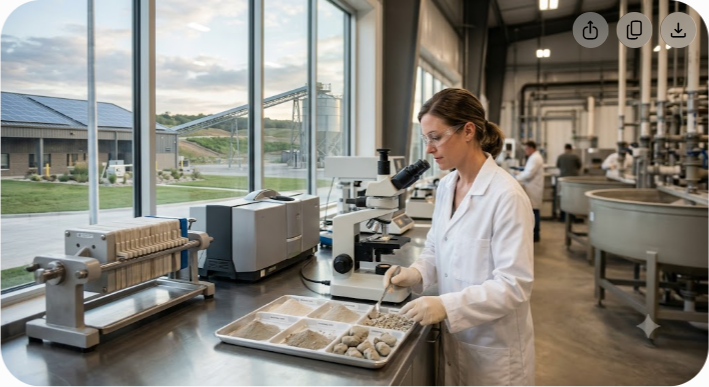
If a supplier can't give you a detailed COA or answer questions about their processing methodology, walk away. Premium bentonite isn't cheap, and it shouldn't be. Trying to save money on lower-grade material often results in higher overall costs because you end up needing to use more volume to get the same performance. It’s false economy.
We are seeing a shift toward more eco-friendly mineral sourcing. Because bentonite is a naturally occurring material, it has a lower environmental footprint than synthetic chemical binders. This is a huge win for industries looking to improve their environmental, social, and governance (ESG) scores.
Using natural sodium bentonite in water purification, for example, is a much cleaner way to handle wastewater than using heavy chemical polymers. As we move forward, companies that source high-quality, responsibly mined minerals will have an advantage. They aren't just buying a material; they are choosing a path that is both efficient and sustainable.
One mistake we see is ignoring the chemical composition of the water used in the application. Bentonite performance is heavily influenced by water quality. If you are mixing your bentonite with hard water or water containing specific contaminants, it might not swell as effectively as it would in a laboratory test. Always test your bentonite with the actual water you intend to use on-site.
Another pitfall is improper storage. Bentonite is a moisture magnet. If you store it in a humid environment, it will start to hydrate before it ever reaches your mixing tank. This degrades the performance of the mineral. Proper silos or dry, temperature-controlled storage are essential.
Communication is the final piece of the puzzle. Tell your supplier what your end goal is. Don't just order 'high-grade bentonite.' Tell them, 'We are doing horizontal directional drilling in sandy soil' or 'We need a binder for grey iron casting.' When we know the application, we can provide the specific blend or particle size that will save you time.
Think of your bentonite supplier as an extension of your own R&D team. If you are having issues with your process, ask for their input. With decades of experience working across different industries, a good supplier has likely seen your problem before and knows exactly how to fix it with the right mineral adjustment.
Quality in the mineral industry isn't accidental. It’s the result of rigorous mining standards, precise processing, and a deep understanding of how the material functions in the real world. Whether you are dealing with a small foundry or a massive infrastructure project, the bentonite you choose will either be a reliable foundation for your work or a constant source of friction.
By taking the time to understand your own requirements, vetting your suppliers' technical capabilities, and focusing on the consistency of the product rather than just the price, you can set your operation up for success. We are proud to play a part in this process, helping companies across the Middle East, Southeast Asia, and beyond find the right mineral solutions for their unique challenges.
Remember, your industrial process is only as strong as the materials you feed it. Don't leave it to chance. Invest in quality, understand your specs, and build a partnership with a supplier who knows the mineral from the ground up.
What is one specific challenge you are currently facing with your current bentonite supply that we might be able to help you resolve?













Have questions about our products? We're here to help!