Axewelledge, a leading exporter from India, specializes in high-quality Bentonite. With a commitment to excellence, we supply premium Bentonite to the Middle East and Southeast Asia markets.


North Angle Complex, 304,
150 Feet Ring Rd, Opposite Ambedkar Nagar BRTS Stop,
Madhav Park, Punit Nagar,
Mavdi, Rajkot, Gujarat 360004
© Axewelledge 2026, All Rights Reserved.
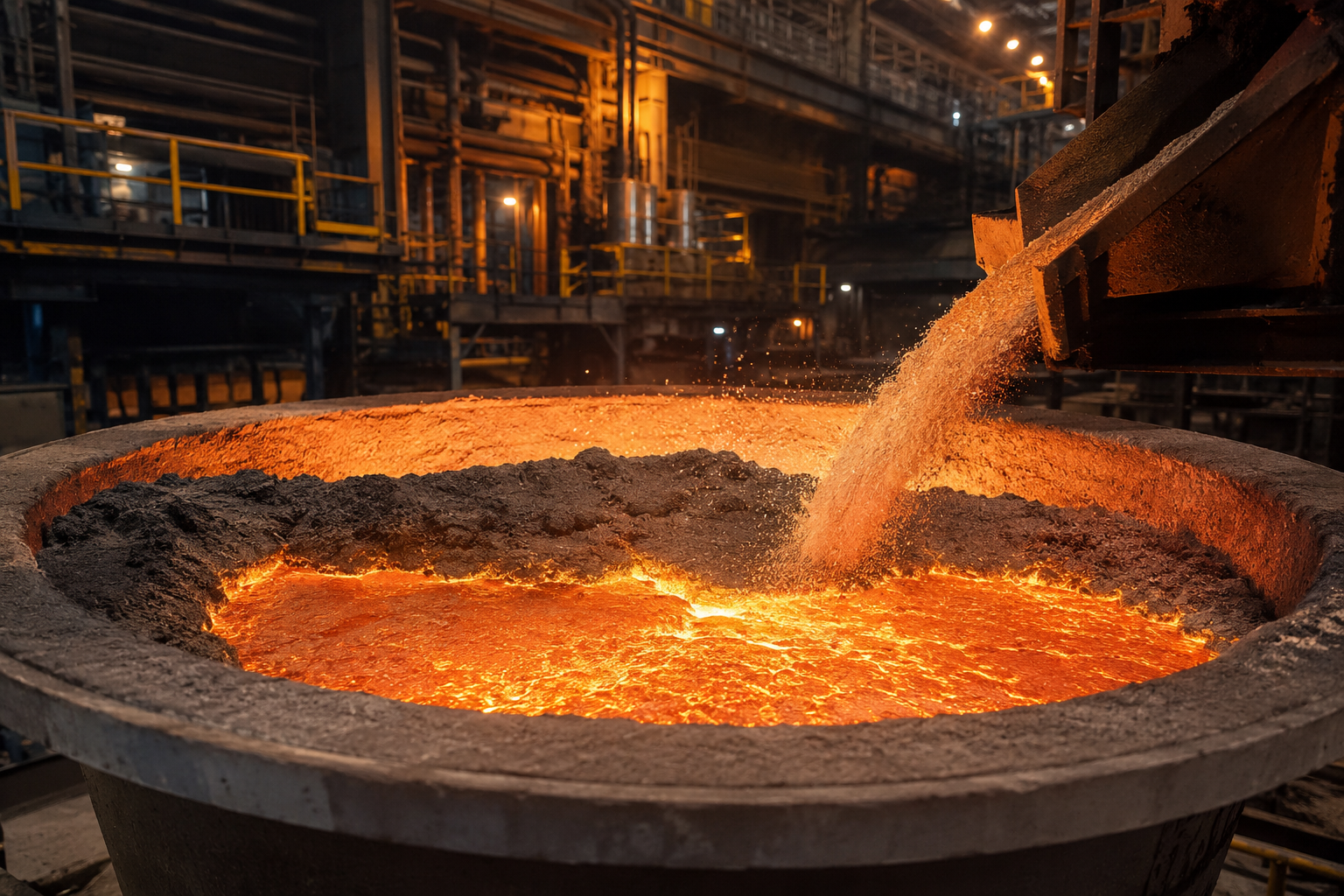
Unchecked slag carryover during tapping can cost a modern steel plant over $15 per ton in excessive alloy consumption, premature refractory wear, and quality rejections. Preventing slag carryover in steelmaking with bentonite provides a simple, cost-effective chemical solution: adding high-swelling sodium bentonite thickens oxide slag at high temperatures, turning fluid slag into a viscous mass that locks in impurities and stops carryover into the ladle.
Controlling slag carryover is essential for clean steel production. Whether you run a Basic Oxygen Furnace (BOF) or an Electric Arc Furnace (EAF), furnace slag contains oxidized impurities like iron oxide (FeO), silica (SiO2), and phosphorus pentoxide (P2O5). If this slag pours into the ladle alongside liquid steel, it causes rephosphorization, degrades alloy additions, and erodes ladle linings.
While mechanical dart systems and pneumatic slag stoppers reduce carryover, they cannot stop all liquid slag from entering the ladle. Adding bentonite-based slag conditioners provides a reliable chemical barrier that keeps steel clean and lowers operating costs.
Slag carryover occurs when liquid furnace slag flows into the transfer ladle during or immediately after tapping molten steel from a primary furnace (BOF or EAF). During primary refining, slag acts as a sponge, collecting oxides, sulfur, and phosphorus from the melt. However, once the metal transfers to the ladle for secondary metallurgy (Ladle Furnace processing), that same slag becomes a contaminant.
When carryover slag enters the ladle, high concentrations of FeO and MnO lower the oxygen activity of the melt. This causes critical secondary steelmaking problems:
Bentonite is an aluminum hydrosilicate clay primarily composed of montmorillonite. When added to high-temperature metallurgy systems, sodium bentonite exhibits unique physical and chemical behaviors that make it an ideal slag modifier and coagulant.
When introduced to liquid slag, bentonite absorbs ambient heat and undergoes rapid thermal expansion. As montmorillonite platelets expand, they alter the viscosity of the liquid slag. The high silica and alumina content integrates into the silicate network of the molten slag, transforming a runny, reactive liquid into a thick, cohesive crust.
When applied directly near the taphole or into the ladle prior to tapping, high-swelling bentonite instantly forms a semi-solid slag layer. This stiffened slag floats on top of the liquid metal, resisting vortex formation during tapping. This physical barrier prevents slag from being pulled through the taphole into the ladle.
Bentonite acts as a mild flux and viscosity modifier. Its controlled alumina (Al2O3) and silica (SiO2) ratio balances slag basicity (CaO/SiO2). By raising slag viscosity without requiring excess lime, bentonite immobilizes FeO and P2O5 molecules within the silicate matrix, preventing rephosphorization.
Using bentonite-based slag conditioners in EAF and BOF operations offers clear metallurgical and financial advantages:
To effectively prevent slag carryover in steelmaking with bentonite, follow these standardized plant procedures.
Not all bentonites perform equally at high temperatures. Calcium bentonite lacks the required thermal expansion and swelling capacity. Specify a high-purity natural sodium bentonite with:
Dosage depends on furnace size, tapping speed, and carryover volume. Typical additions range from 0.5 kg to 2.0 kg per ton of liquid steel.
For an 80-ton ladle, add 60 kg to 120 kg of processed bentonite granules or briquettes. Start at 1.0 kg/ton and adjust based on visual slag crusting and ladle FeO analysis.
Apply bentonite using one of two proven methods:
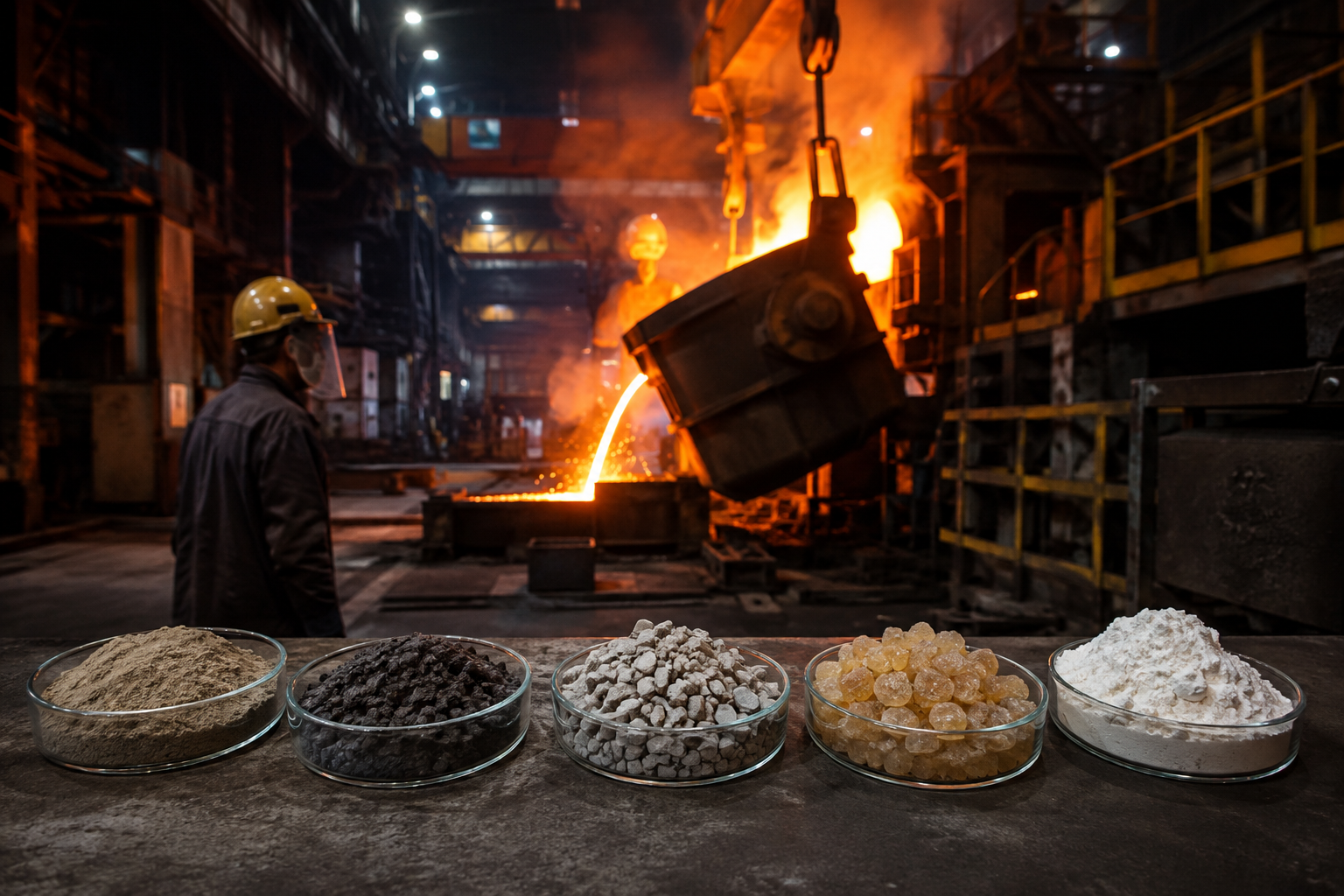
Track slag line erosion and analyze slag FeO content via X-ray fluorescence (XRF). High-performing bentonite practice should yield a stable, crusty top slag with FeO levels consistently below 12% in the ladle furnace.
Steel plants use mechanical, pneumatic, and chemical techniques to manage slag carryover. Combining mechanical systems with chemical bentonite additives produces the best results.
| Method | Primary Mechanism | Capital Cost | Efficiency | Main Advantage | Main Limitation |
|---|---|---|---|---|---|
| Mechanical Darts / Balls | Physical blockage of EAF/BOF taphole | Moderate | 75% - 85% | Simple mechanical operation | Prone to misplacement or early floating |
| Pneumatic Slag Stoppers | Gas-blast closure upon slag detection | High | 85% - 92% | Automated, fast response | High installation and maintenance costs |
| Synthetic Calcium Aluminates | Chemical fluxing and slag modification | Low (OpEx) | 70% - 80% | Fast melting and fluidization | Expensive; does not form a stiff slag crust |
| Sodium Bentonite Additives | Viscosity expansion and coagulation | Very Low | 80% - 90% | Inexpensive, traps oxides, builds stable crust | Requires accurate timing during tapping |
Avoid these operational pitfalls to maximize slag control efficiency:
EAF operations using Eccentric Bottom Tapping (EBT) systems already limit slag carryover. However, vortexing during the final seconds of tapping still transfers 200 kg to 500 kg of EAF slag into the ladle. Adding 1 kg/ton of sodium bentonite to the ladle pre-tap thickens this carryover, preventing FeO from reacting with aluminum deoxidizers.
BOF tapping carries over larger slag volumes due to taphole flare. Adding bentonite granules into the ladle stream during the final 20% of tapping creates an immediate crust that prevents slag-metal mixing and suppresses rephosphorization during long secondary refining cycles.
Consistent slag control requires reliable material quality. Axewelledge supplies high-grade sodium bentonite processed specifically for demanding industrial applications.
With over 60 million tons of owned reserves and 15+ years of mineral export experience, Axewelledge delivers sodium bentonite featuring exceptional thermal stability, high swelling capacity, and low moisture levels. Whether you operate an EAF mini-mill or an integrated BOF steel plant, Axewelledge provides stable, high-purity minerals that keep your steel clean and reduce production costs.
Contact the technical export team at Axewelledge today to request product specifications, sample batches, or customized granule sizing for your meltshop.













Have questions about our products? We're here to help!