Axewelledge, a leading exporter from India, specializes in high-quality Bentonite. With a commitment to excellence, we supply premium Bentonite to the Middle East and Southeast Asia markets.


North Angle Complex, 304,
150 Feet Ring Rd, Opposite Ambedkar Nagar BRTS Stop,
Madhav Park, Punit Nagar,
Mavdi, Rajkot, Gujarat 360004
© Axewelledge 2026, All Rights Reserved.
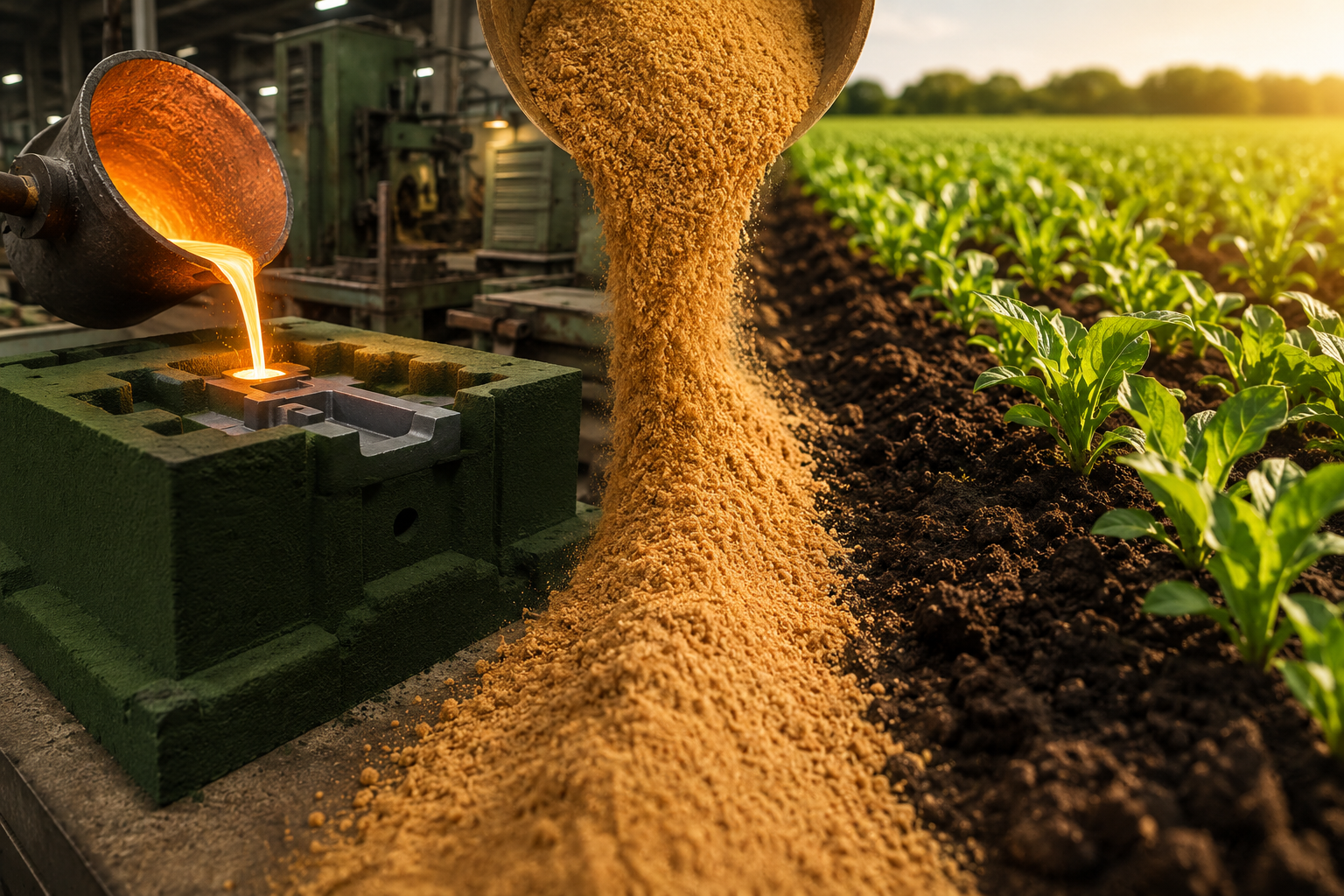
Foundry engineers battle casting defects like scabbing, veinings, and pinholes every single day. Miles away on farms, growers fight nutrient leaching, soil erosion, and water runoff. On the surface, metal casting and crop production seem worlds apart. Yet both industries share a common challenge: achieving peak operational performance without exhausting valuable natural resources or harming the environment.
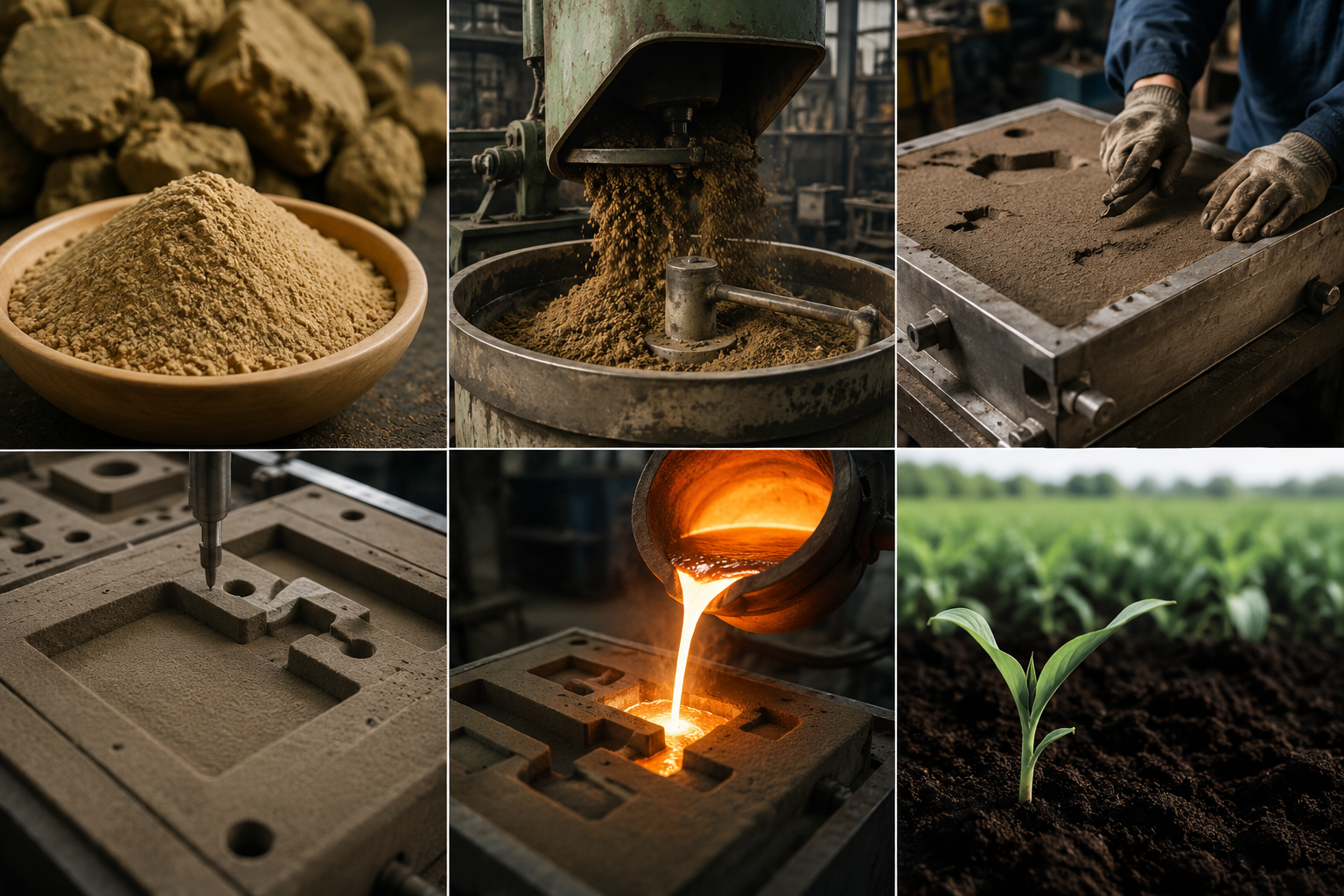
The solution to both problems lies underground. Processed bentonite solutions—derived from naturally occurring clay minerals rich in montmorillonite—serve as high-performance binders in metal foundries and transformative soil amendments in agriculture. When correctly refined, milled, and processed, bentonite reduces industrial waste, lowers energy consumption during casting, restores degraded soils, and optimizes water retention.
Here is a complete breakdown of how processed bentonite transforms modern foundry operations and agricultural practices, how sodium and calcium bentonite compare, and how to select the right grade for your applications.
Bentonite is an absorbent aluminum phyllosilicate clay derived primarily from volcanic ash deposited millions of years ago. Its remarkable physical properties stem from its dominant mineral phase: montmorillonite. Montmorillonite possesses a layered crystal structure consisting of an aluminum octahedral sheet sandwiched between two silicon tetrahedral sheets (a 2:1 layer lattice).
+-------------------------------------------------------+
| Silicon Tetrahedral Layer | +-------------------------------------------------------+
| Aluminum Octahedral Layer | +-------------------------------------------------------+
| Silicon Tetrahedral Layer | +-------------------------------------------------------+ [ Interlayer cations: Na+, Ca2+, Mg2+ ]
When water enters these interlayers, the clay expands. This basic crystallographic behavior gives bentonite its unique characteristics:
Raw bentonite straight from the mine contains varying moisture levels, grit, shale, and non-clay impurities. Unprocessed ore lacks the consistency required for strict engineering standards. Raw clay may swell unevenly, contain excessive quartz silica, or exhibit variable moisture absorption rates.
Processed bentonite undergoes systematic refining:
In metal casting, green sand molds—made from silica sand, water, bentonite, and sea coal—account for over 70% of all metal castings worldwide, including automotive engine blocks, iron pipes, and heavy machinery components.
+---------------------------------------------------------------+
| GREEN SAND MOLD COMPOSITION | +---------------------------------------------------------------+
| Silica Sand (85-92%) | Bentonite (7-10%) | Water (3-5%) | +---------------------------------------------------------------+
Bentonite acts as the structural glue. It coats individual sand grains, forming a plastic clay film that binds the grains together under pressure. When molten iron, steel, or aluminum is poured into the mold at temperatures exceeding 1,400°C (2,550°F), the bentonite film must maintain its strength without collapsing.
When molten metal hits a green sand mold, heat drives off water molecules bound to the clay lattice. If temperatures surpass the clay's thermal breakdown threshold (around 600°C to 700°C for high-grade sodium bentonite), the clay loses its structural water permanently and becomes dead-burned.
Dead-burned clay can no longer hydrate or swell. Superior processed sodium bentonite features a higher thermal threshold, meaning more active clay survives each casting cycle. Foundries can reclaim up to 95% of their sand, adding only small amounts of fresh bentonite to replenish what was thermalized. This dramatically cuts sand purchasing, transport energy, and landfill disposal fees.
Farmers worldwide face intensifying challenges: soil degradation, groundwater contamination from fertilizer runoff, and severe water scarcity. Processed bentonite provides a chemical-free, mineral-based approach to building sustainable soil systems.
+-------------------------------------------------------------------+
| AGRICULTURAL BENTONITE BENEFITS | +-------------------------------------------------------------------+
| Water Retention | Improves sandy soil moisture capacity by 30-50% |
| Nutrient Holding | CEC prevents nitrogen & potassium leaching |
| Soil Structure | Creates stable aggregates in degraded soils | +-------------------------------------------------------------------+
Sandy soils have large pore spaces that allow irrigation water to drain past crop roots within hours. Incorporating processed agricultural-grade bentonite into the root zone alters soil physical structure:
Plant nutrients like ammonium (NH4+), potassium (K+), calcium (Ca2+), and magnesium (Mg2+) carry positive electrical charges. Unamended sandy soils have low CEC values (often below 5 meq/100g), meaning they cannot hold these cations. Synthetic fertilizers simply wash through into groundwater, causing financial loss for the grower and environmental eutrophication in streams and rivers.
Processed bentonite delivers a CEC ranging from 60 to 100 meq/100g. When mixed into the soil:
Modern agricultural processing uses bentonite as a substrate for granulating chemical and organic fertilizers. Coating fertilizer granules with bentonite or blending nutrients directly into a clay matrix slows the dissolution rate of urea and NPK blends. This steady nutrient release aligns perfectly with crop growth curves, preventing fertilizer burn and lowering atmospheric ammonia volatility.
Not all bentonites perform the same way. The dominant charge-balancing cation sitting inside the clay lattice radically alters its behavior in foundries and fields.
| Feature | Sodium Bentonite (Natural High-Swell) | Calcium Bentonite (Low-Swell / Non-Swelling) |
|---|---|---|
| Primary Cation | Na+ (Sodium) | Ca2+ (Calcium) |
| Swelling Capacity | High (10x to 18x dry volume) | Low (1.5x to 3x dry volume) |
| Thermal Durability | Exceptional (resists thermal breakdown up to 700°C) | Moderate (loses structural water at lower temperatures) |
| Green Compression Strength | High when combined with water | Moderate |
| Dry / Hot Strength | Excellent (resists mold erosion during pour) | Lower (susceptible to hot tearing/scabbing) |
| Primary Foundry Use | Ferrous casting (grey iron, ductile iron, steel) | Non-ferrous casting (aluminum, brass, low temp) |
| Primary Agriculture Use | Water retention in coarse soils, dam sealing | Soil conditioning, acid neutralization, CEC boost |
| Cation Exchange Capacity | 70 - 100 meq/100g | 40 - 70 meq/100g |
In regions where natural sodium bentonite reserves are scarce, manufacturers process calcium bentonite using sodium carbonate (soda ash). This chemical process—known as activation—exchanges calcium ions for sodium ions:
Ca-Bentonite+Na 2 ?
CO 3 ?
?2(Na-Bentonite)+CaCO 3 ?
While activated sodium bentonite displays improved swelling and viscosity compared to raw calcium clay, naturally occurring sodium bentonite generally offers superior long-term thermal stability in high-temperature foundries. Activated clays tend to lose their swelling properties more quickly when exposed to repeated high-heat casting cycles.
Achieving defect-free castings requires balancing sand, clay, water, and compactability. Follow this step-by-step procedure to optimize your green sand system:
+---------------------------------------------------------------+
| GREEN SAND PROCESS CHECKLIST | +---------------------------------------------------------------+
| [ ] Verify Sand GFN (50-65) |
| [ ] Maintain Active Bentonite at 7.0-8.5% |
| [ ] Keep Compactability between 38-42% |
| [ ] Perform Daily Methylene Blue (MBI) Tests | +---------------------------------------------------------------+
Correct application methods ensure bentonite integrates smoothly into the soil profile without creating impermeable clay pockets.
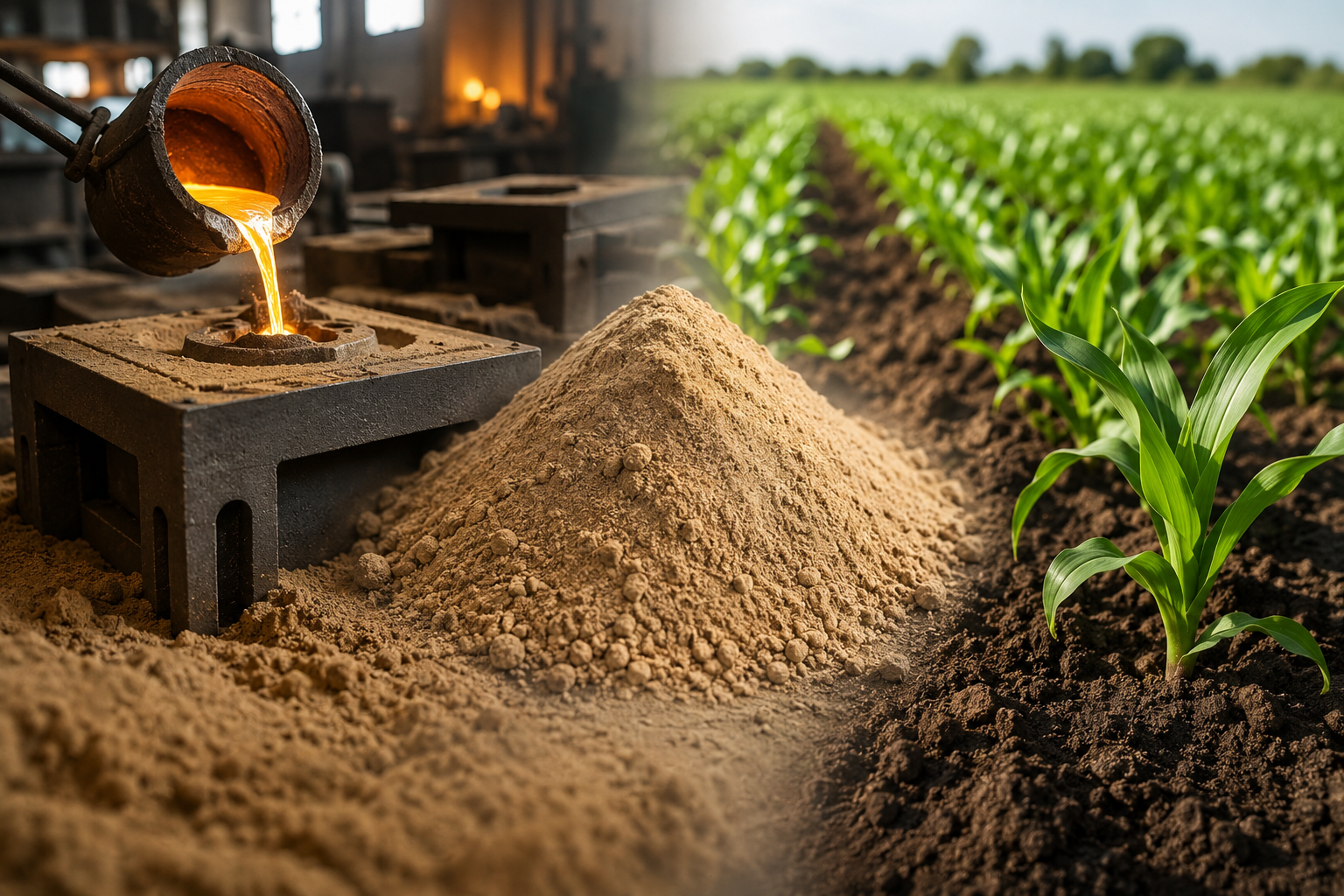
Even experienced foundry engineers and agricultural managers encounter pitfalls when specifying or applying bentonite. Here are the most common mistakes and how to fix them:
Foundries often assume that high swelling in water automatically equals high binding strength. Swelling tests indicate the presence of sodium ions, but Methylene Blue Index (MBI) testing is required to verify actual active montmorillonite content. Always demand full technical data sheets showing both swell index and MBI active clay levels.
When applying bentonite as a pond liner or soil amendment, dumping raw dry clay into standing water causes clump formation (fish-eye effect). The outer layer hydrates instantly, creating an impermeable barrier that prevents the interior from wetting properly. Always mix dry bentonite thoroughly into dry soil before applying moisture.
Using low-cost calcium bentonite in high-temperature iron or steel casting causes rapid thermal degradation. The clay breaks down instantly on the first pour, leading to high scrap rates and massive consumption of fresh binder. Match the thermal capacity of your bentonite to your metal pouring temperature.
Excessive deep tillage after applying bentonite can push the clay below the active crop root zone (deeper than 30 cm). Keep incorporation focused strictly within the primary root layer (top 15–20 cm) where water and nutrient uptake occur.
Adopting high-grade processed bentonite yields measurable sustainability gains across industrial and agricultural operations:
+-------------------------------------------------------------------+
| SUSTAINABILITY HIGHLIGHTS | +-------------------------------------------------------------------+
| Foundries | Up to 95% sand reclamation rate |
| | 15-20% reduction in casting scrap waste |
| Agriculture | 30-50% increase in soil water retention |
| | 20-25% reduction in fertilizer leaching | +-------------------------------------------------------------------+
Not all bentonite deposits or processing facilities deliver equal quality. When sourcing industrial or agricultural bentonite globally, evaluate your supplier against four key benchmarks:
An automotive casting facility producing ductile iron components experienced elevated scrap rates (4.2%) due to sand expansion scabbing and erosion during peak summer production runs. The foundry was using a low-cost activated calcium bentonite binder.
The Solution: The facility switched to a high-purity natural sodium bentonite featuring higher thermal durability and an MBI active clay content exceeding 88%.
The Results:
A commercial farming operation in a dry coastal plain struggled with severe water loss in light sandy soil. Irrigation water drained rapidly past the root zone of high-value vegetable crops, requiring daily watering and heavy fertilizer applications.
The Solution: The farm incorporated processed agricultural sodium bentonite at a rate of 12 metric tons per hectare into the top 20 cm of soil during pre-season preparation.
The Results:
Securing a consistent supply of premium mineral solutions shouldn't be a gamble. Axewelledge stands as a major producer and global supplier of high-purity bentonite products, supported by extensive mine reserves.
With over 15 years of specialized mining, processing, and export expertise, Axewelledge supplies premium sodium and calcium bentonite tailored precisely for foundry sand systems, agricultural soil conditioning, civil engineering, and specialized industrial uses. Combining advanced processing facilities in India with strategic regional distribution hubs in the UAE, Axewelledge provides reliable bentonite solutions to over 100 industrial clients across North America, the Middle East, Southeast Asia, and worldwide.
Whether you need to reduce mold defects on your casting line or optimize soil water retention for your crops, Axewelledge offers technical guidance, consistent quality control, and seamless global logistics.
Whether you manage a high-volume foundry or oversee large-scale agricultural land, processed bentonite provides a proven, eco-friendly way to boost efficiency. By matching the right clay properties—high swelling, thermal durability, and strong cation exchange capacity—to your specific operational needs, you lower costs, reduce waste, and build sustainable performance for the long run.
Ready to elevate your foundry precision or restore your soil productivity? Contact the mineral specialists at Axewelledge today to request technical data sheets, custom mesh sizing, or sample testing for your next project.













Have questions about our products? We're here to help!