About Us

Axewelledge, a leading exporter from India, specializes in high-quality Bentonite. With a commitment to excellence, we supply premium Bentonite to the Middle East and Southeast Asia markets.


Contact Info

  • Address

    North Angle Complex, 304,
    150 Feet Ring Rd, Opposite Ambedkar Nagar BRTS Stop,
    Madhav Park, Punit Nagar,
    Mavdi, Rajkot, Gujarat 360004

  • Email

    info@axewelledge.com

© Axewelledge 2026, All Rights Reserved.
Sodium vs Calcium Bentonite Fining: Wine Clarification Guide | Axewelledge – Leading Bentonite Exporter from India | Quality Bentonite for USA & Europe
Sodium vs Calcium Bentonite Fining: Wine Clarification Guide
  • Aug 06, 2026

Sodium vs Calcium Bentonite Fining: Wine Clarification Guide

Why Bentonite Choice Dictates Wine Clarity and Profitability

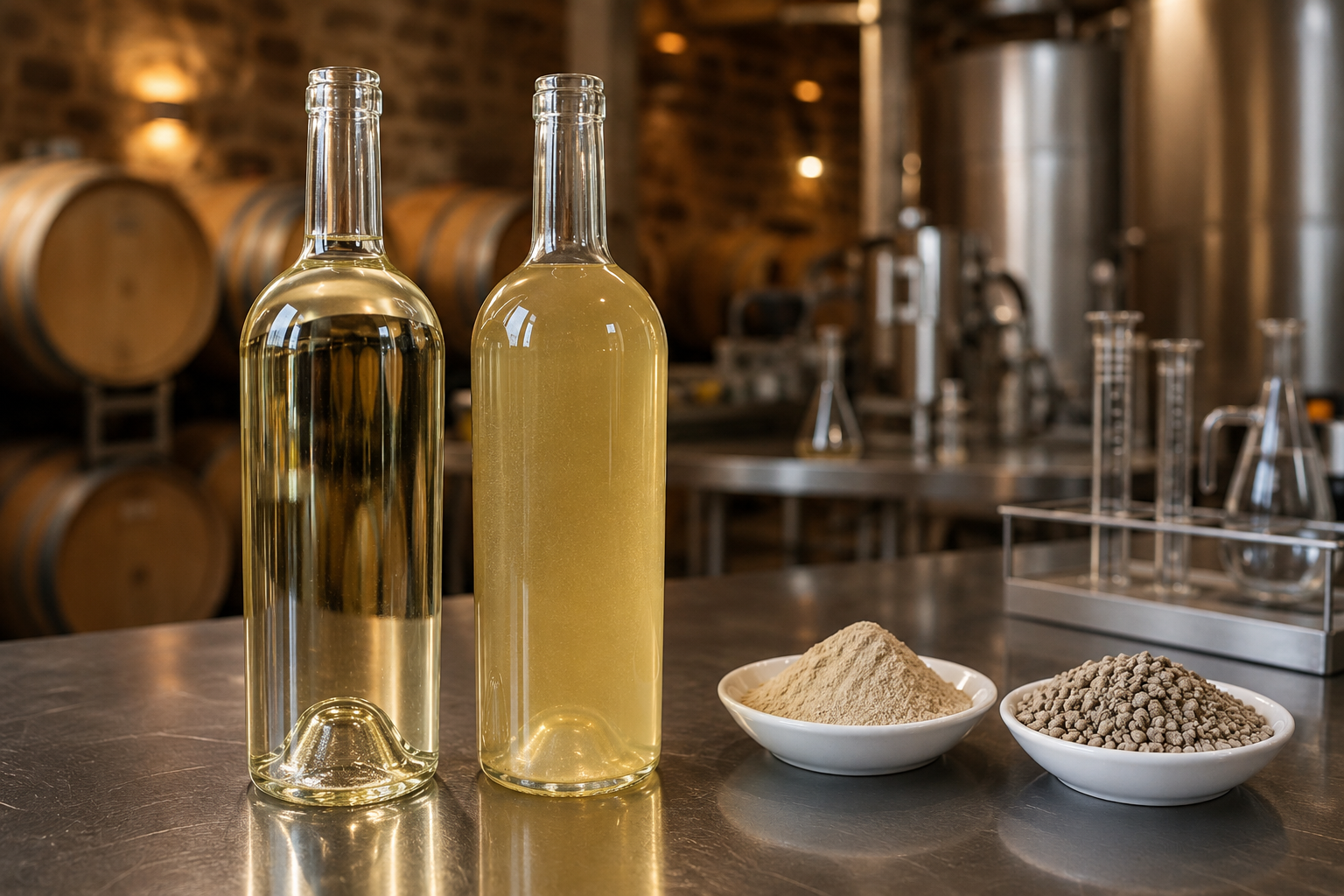
Sodium bentonite strips protein faster at lower doses, but calcium bentonite leaves behind significantly tighter lees with up to 30% less wine loss. Choosing the wrong fining agent isn't just a chemical oversight—it directly impacts your bottom-line yield and aromatics.

Protein haze remains one of the most frustrating post-bottling defects in commercial and craft winemaking. You ferment a clean, aromatic Sauvignon Blanc or Pinot Grigio, filter it to brilliant clarity, and ship it out. Months later, a shipment sits in a warm distribution warehouse or a customer's sunlit kitchen. Suddenly, heat-unstable pathogenesis-related proteins—specifically chitinases and thaumatin-like proteins—unfold, aggregate, and turn a pristine bottle into a cloudy, unmarketable mess.

To prevent this, winemakers rely on bentonite: a natural montmorillonite clay prized for its high cation-exchange capacity and massive surface area. But when you open a catalog from a winemaking supplier, you face an immediate chemical fork in the road: Sodium Bentonite vs. Calcium Bentonite (and their engineered relative, Sodium-Activated Calcium Bentonite).

This guide breaks down the core structural differences between these two clays, compares their performance across binding capacity, lees compaction, and sensory preservation, and gives you actionable dosage protocols for your cellar.


Understanding Bentonite: The Chemistry of Montmorillonite Clay

To understand why sodium and calcium bentonites behave so differently in a tank of wine, you have to look at their molecular structure. Bentonite is an aluminum silicate clay belonging to the smectite group. Its fundamental building block is a 2:1 layer structure: an octahedral sheet of aluminum oxide sandwiched between two tetrahedral sheets of silicon dioxide.

Because of natural substitutions within these mineral sheets—such as aluminum replacing silicon, or magnesium replacing aluminum—the clay layers carry a net negative electrical charge. To balance this negative charge, hydrated cations settle into the interlayer spaces between the sheets.

Cation Exchange and Electrostatic Binding

At typical wine pH levels (3.0 to 3.8), heat-unstable proteins carry a net positive charge because the wine pH sits below their isoelectric point (pI). When you add bentonite to wine, it acts as an electrostatic magnet through a clear three-step mechanism:

  1. Positively charged proteins diffuse into the hydrated interlayer spaces of the negatively charged clay.
  2. The exchangeable cations (sodium or calcium ions) on the clay surfaces swap places with the positively charged protein molecules.
  3. The clay particles and bound proteins flock together, form dense aggregates (flocs), and settle out of liquid suspension by gravity.

Swelling Capacity and Surface Area

The nature of that exchangeable ion changes the clay's physical properties:

  • Sodium ions ($Na^+$) have a single positive charge and a large hydration shell. They push the clay sheets far apart, allowing water to force its way in. This gives sodium bentonite incredible swelling capacity—expanding up to 15 to 20 times its dry volume.
  • Calcium ions ($Ca^{2+}$) carry a double positive charge. They bind the negative clay sheets together much more tightly like a chemical bridge. As a result, calcium bentonite swells moderately—expanding only 3 to 8 times its dry volume.

This single structural difference explains almost every practical operational trade-off you experience in the winery.


Sodium Bentonite: High Efficiency, Fluffy Lees

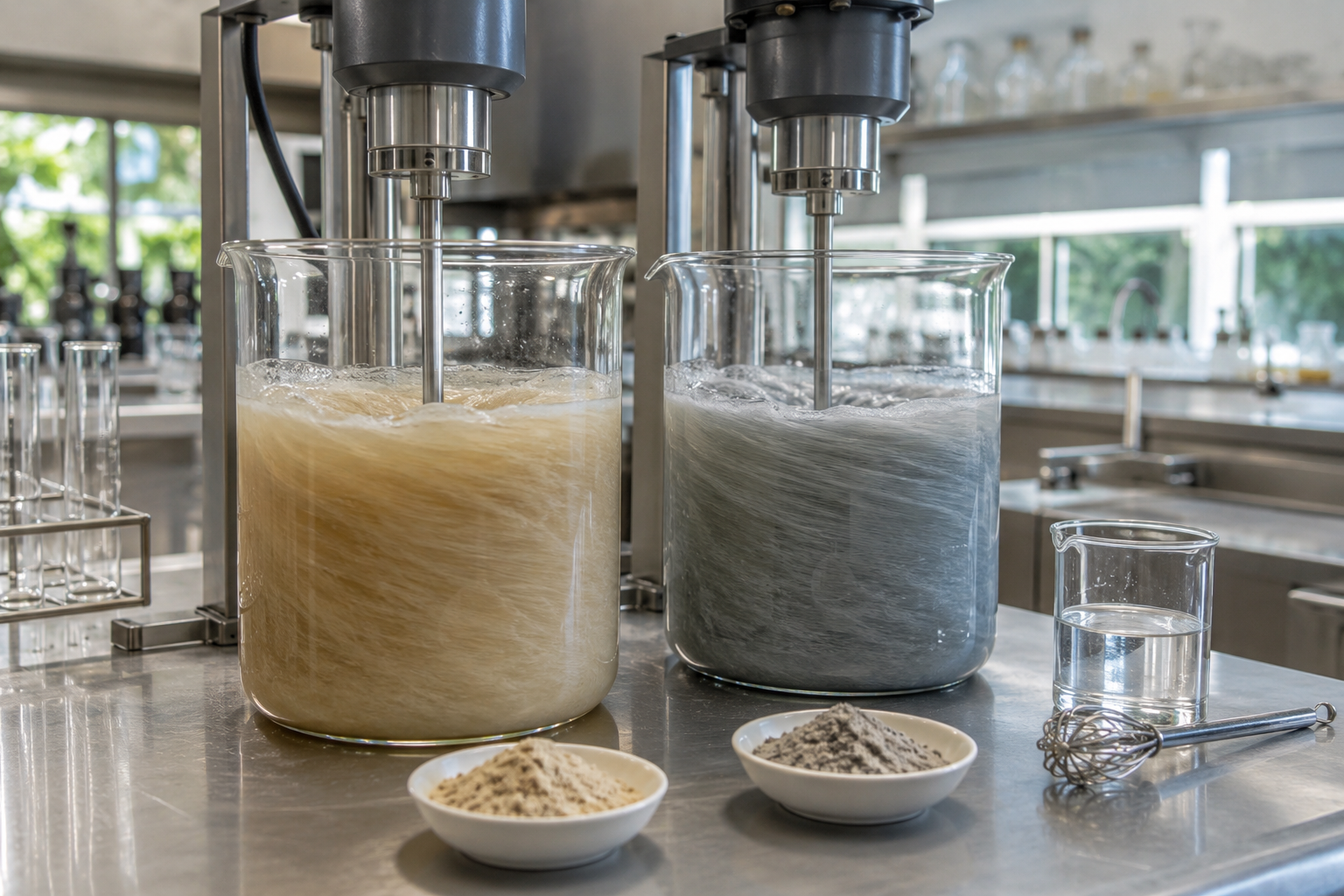
Sodium bentonite is widely considered the heavy-duty standard for protein removal. Because its mineral layers expand so dramatically in water, it exposes an immense surface area—often exceeding 700 to 800 square meters per gram.
Advantages of Sodium Bentonite

  • Superior Binding Efficiency: Because the clay layers separate completely upon hydration, sodium bentonite exposes maximum binding sites. You need less total dry clay by weight to clear a given volume of wine.
  • Fast Protein Stripping: It works quickly. In high-risk wines with elevated heat-labile proteins (such as Gewürztraminer, Muscat, or early-picked Sauvignon Blanc), sodium bentonite reaches heat stability at significantly lower dosages.
  • Rapid Clarification: It forms large, light flocs that grab floating particles and sweep down through the tank quickly during initial settling.

Disadvantages of Sodium Bentonite

  • Voluminous, Soft Lees: Because the clay holds vast amounts of trapped water within its expanded gel lattice, it leaves behind light, fluffy lees that do not compact easily. It is not uncommon to lose 5% to 8% of your total tank volume to light lees that cannot be racked cleanly.
  • Sodium Pick-up in Wine: Sodium ions migrate into the wine during cation exchange. While generally low, this can be a regulatory concern in regions with strict limits on sodium content, or a health concern for low-sodium wine styles.
  • Sensory Stripping Risk: High surface area is a double-edged sword. At elevated doses, sodium bentonite non-specifically binds positive aroma compounds, esters, and color-stabilizing monomeric anthocyanins, flattening the wine's bouquet.
Sodium vs Calcium Bentonite Fining: Wine Clarification Guide

Calcium Bentonite: Tighter Compactness, Gentle Fining

Calcium bentonite is held together by divalent calcium ions, limiting its internal expansion. While this reduces its total exposed surface area compared to sodium bentonite, it changes its physical behavior in the tank.

Advantages of Calcium Bentonite

  • Compact, Dense Lees: The defining feature of calcium bentonite is how tightly its flocs aggregate at the bottom of the tank. It forms firm, dense sediment beds that allow you to rack off up to 95% to 98% of clean wine without disturbing the bottom layer.
  • Lower Wine Loss: Smaller lees volume means higher operational yields. For high-value small-lot wines or expensive varietals, saving 2% to 4% of volume translates directly into dozens of extra cases per tank.
  • Preservation of Aromatics and Structure: Calcium bentonite acts more selectively. Because its sheets remain partially clustered, it is less prone to stripping delicate varietal thiols, esters, and mid-palate mouthfeel-contributing macromolecules.

Disadvantages of Calcium Bentonite

  • Higher Dosage Requirements: Because less surface area is exposed per gram, you usually need 20% to 50% more calcium bentonite by weight to reach the same level of protein stability as sodium bentonite.
  • Slower Reaction Rates: The tighter clay matrix means proteins diffuse more slowly into the interlayer spaces, requiring slightly longer contact times.
  • Calcium Instability Risk: Swapping calcium ions into the wine can marginally increase dissolved calcium levels. If your wine already sits close to calcium tartrate saturation, adding calcium bentonite can trigger late-stage calcium tartrate precipitation in the bottle.

Activated Calcium Bentonite: The Hybrid Approach

To balance these trade-offs, mineral manufacturers developed Sodium-Activated Calcium Bentonite.

This process starts with natural calcium bentonite clay, which is treated with sodium carbonate ($Na_2CO_3$) during processing. The sodium ions swap into the interlayer positions, replacing a portion of the natural calcium.

Why Use Activated Bentonite?

The result is a hybrid clay that offers a balance between both worlds:

  • It swells significantly more than natural calcium bentonite (exposing higher surface area for efficient protein removal).
  • It forms denser, more compact lees than pure natural sodium bentonite.
  • It provides predictable, standardized performance across different wine matrices.

Most modern commercial "wine-grade" bentonites sold by major enological suppliers are engineered activated calcium bentonites or precision blends tailored specifically for beverage clarification.


Direct Comparison: Sodium vs. Calcium Bentonite

To make the right operational choice during harvest or cellar aging, evaluate these key parameters side-by-side:

Operational ParameterNatural Sodium BentoniteNatural Calcium BentoniteSodium-Activated Calcium
Swelling CapacityHigh (15x – 20x dry volume)Moderate (3x – 8x dry volume)Medium-High (10x – 14x dry volume)
Protein Binding EfficiencyVery High (Lower dosage required)Moderate (Requires higher dosage)High (Balanced dosage)
Lees VolumeHigh (Fluffy, loose, light)Low (Dense, compact, firm)Moderate-Low (Compact)
Wine Yield LossHigher (~5% to 8%)Lower (~2% to 3%)Moderate (~3% to 4%)
Ion Migration RiskSodium ($Na^+$) additionCalcium ($Ca^{2+}$) additionMild Sodium & Calcium addition
Sensory Stripping RiskHigher at elevated dosesLow to Moderate (Gentle)Moderate
Clarification SpeedFast settlingSlower settlingFast to Moderate
Ideal ApplicationHighly unstable juice, low-cost volume winesHigh-value whites, delicate aromatics, Pinot NoirGeneral winemaking, standardized fining

Step-by-Step Bentonite Rehydration Protocol

Adding raw bentonite powder directly to wine is a major mistake. Dry clay clumps instantly, creates unhydrated balls that sink to the bottom, and loses over 80% of its binding capability.

To get full performance out of your bentonite, follow this standard cellar rehydration protocol.
Step 1: Measure Water Volume and Temperature

  • Ratio: Use a 1:10 to 1:20 ratio of bentonite to clean, chlorine-free water (e.g., 50g to 100g of bentonite per 1 Liter of water).
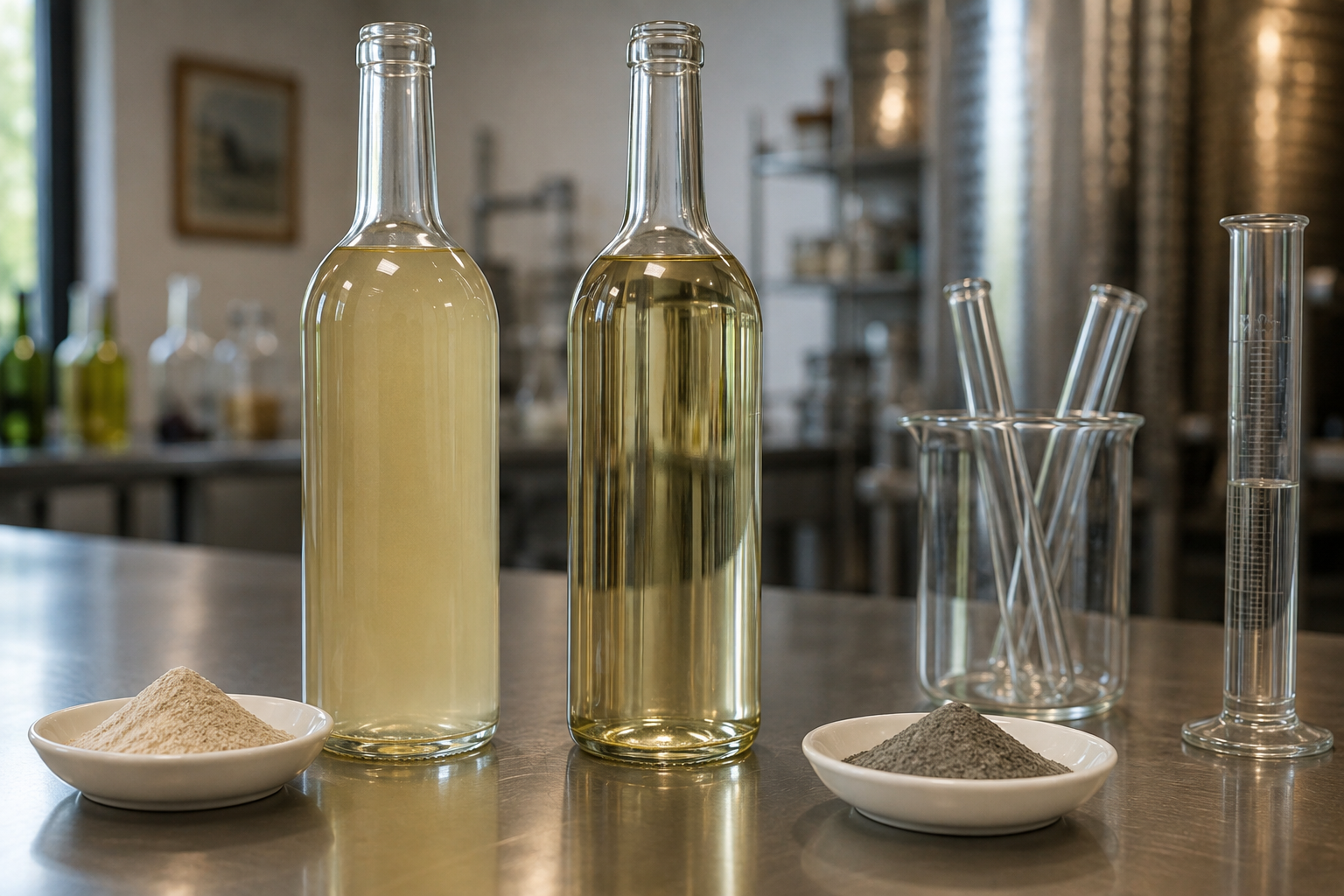
  • Temperature: Heat the water to 45°C to 60°C (113°F to 140°F). Warm water drastically speeds up the swelling process and opens up the interlayer spaces of the clay.

Step 2: High-Shear Mixing

  • Slowly sprinkle the dry bentonite powder into the hot water while stirring vigorously with a mechanical mixer or whisk.
  • Crucial Rule: Always add powder to water, never water to powder. Adding water onto dry clay creates a thick, impermeable paste at the bottom of your bucket.

Step 3: The Swelling/Resting Phase

  • Allow the suspension to hydrate and swell for 12 to 24 hours before use.
  • Sodium bentonites require at least 12–16 hours to swell fully; calcium bentonites can swell slightly faster, but a 24-hour hydration window yields consistent results for both.
  • Stir the slurry thoroughly once or twice during the resting period to break up remaining micro-clumps.

Step 4: Addition to the Tank

  • Right before adding the slurry to your wine tank, mix it again to ensure complete suspension.
  • Inject the slurry into the wine during a tank re-circulation (pump-over) or mix thoroughly with a tank mixer to guarantee uniform distribution throughout the entire liquid column.

How to Conduct Bench Trials for Heat Stability

Sodium vs Calcium Bentonite Fining: Wine Clarification Guide

Never fine a full tank based on guesswork. Bentonite dosage must be calculated using bench trials to determine the minimum effective dose required to achieve heat stability without over-fining or stripping sensory character.

Bench Trial Process

Executing a bench trial follows a straightforward sequence:

  1. Collect a representative wine sample.
  2. Prepare a 5% rehydrated bentonite stock solution.
  3. Dose individual test bottles across a 0.25 to 1.25 g/L range.
  4. Heat-stress the filtered samples at 80°C for 30 minutes.
  5. Measure baseline and post-heating turbidity using an NTU meter.

Equipment Needed

  • 5% rehydrated bentonite stock solution (5g bentonite in 100mL water)
  • Clean wine samples (6 x 375mL or 750mL bottles)
  • Syringes or micropipettes for accurate dosing
  • Water bath or temperature-controlled kettle
  • Turbidimeter (NTU meter) or high-intensity flashlight

Dosing Scale for Bench Trials

Set up a control sample (0 g/L) along with graduated treatments using your prepared 5% stock solution (where 1 mL of stock in 100 mL of wine equals 0.5 g/L of bentonite):

  1. Control: 0 g/L (No addition)
  2. Sample A: 0.25 g/L (~2.1 lbs/1000 gal)
  3. Sample B: 0.50 g/L (~4.2 lbs/1000 gal)
  4. Sample C: 0.75 g/L (~6.3 lbs/1000 gal)
  5. Sample D: 1.00 g/L (~8.3 lbs/1000 gal)
  6. Sample E: 1.25 g/L (~10.4 lbs/1000 gal)

The Heat Stability Test Protocol

  1. Add the calculated bentonite stock volumes to each wine sample, cap, invert gently, and let settle for 24–48 hours at cellar temperature.
  2. Filter or centrifuge each sample to clear the bentonite completely.
  3. Measure and record the baseline turbidity of each sample using a turbidimeter in NTU (Nephelometric Turbidity Units).
  4. Place the sealed sample tubes in a water bath heated to 80°C (176°F) for 30 to 60 minutes (or 60°C for 4 hours for a gentler test).
  5. Remove the samples from the heat and allow them to cool down completely to room temperature (20°C/68°F).
  6. Remeasure the turbidity on the NTU meter.

Interpreting Results

  • Pass Criterion: A wine is generally considered heat stable if the difference in turbidity ($Delta NTU$) before and after heating is less than 2.0 NTU (or less than 0.5 NTU for ultra-strict commercial standards).
  • Select Your Dose: Choose the lowest bentonite concentration that passes the $Delta NTU < 2.0$ threshold. Adding more than this minimum effective dose strips color, mouthfeel, and aromatics unnecessarily.

5 Common Bentonite Fining Mistakes to Avoid

Even experienced cellarmasters occasionally run into issues with bentonite additions. Here are five frequent mistakes and how to avoid them:

1. Fining Cold Wine Below 10°C (50°F)

Bentonite performance drops off dramatically in cold wine. The kinetic energy of the particles is lower, viscosity is higher, and electrical double-layers shrink, slowing down flocculation. Always fine wine at standard cellar temperatures (14°C to 18°C / 57°F to 64°F) for efficient protein binding and settling.

2. Using Cold or Chlorinated Tap Water for Rehydration

Rehydrating bentonite in cold water limits swelling and creates lumpy slurry. Worse, using chlorinated municipal tap water allows bentonite—which is an aggressive absorber—to soak up chlorophenols and introduce trichloroanisole (TCA/cork taint risk) or off-chemical taints directly into your clean wine. Always use warm, filtered, chlorine-free water.

3. Fining Before Enzymatic Pectin Breakdown

In fresh white musts or juice, high pectin levels act as protective colloids. Pectin keeps particles suspended, preventing bentonite flocs from settling out and trapping the clay in suspension. Always apply pectic enzymes first, allow adequate reaction time, and verify pectin breakdown before adding bentonite.

4. Over-Fining Aromatic Varieties

Highly aromatic varieties like Sauvignon Blanc, Viognier, Riesling, and Traminer rely on volatile thiols and monoterpenes for their signature bouquet. Adding excess sodium bentonite strips these delicate compounds alongside proteins. Use bench trials to target the absolute minimum effective dose, or consider calcium or activated bentonite blends to protect delicate fruit expressions.

5. Racking Too Early

Premature racking off bentonite lees cuts the contact time short before protein binding reaches equilibrium, leaving unstable proteins behind in the wine. It also drags loose, unsettled fine clay particles into your clean receiving tank, which blinds downstream filters. Give the tank at least 7 to 14 days to clarify and compact fully before racking.


Commercial Sourcing & Industrial Considerations

When sourcing bentonite for commercial beverage clarification, mineral quality matters immensely. Not all bentonites are processed to food-grade and enological standards.

Industrial bentonites used in drilling muds or civil engineering often contain elevated levels of heavy metals (such as lead, arsenic, or iron) and crystalline silica impurities. Using non-enological grades can contaminate wine, leach heavy metals, or create hazy iron-cassies.

Key specifications to verify when purchasing commercial winemaking bentonite include:

  • Enological Compliance: Conformance with OIV (International Organisation of Vine and Wine) standards or Codex Alimentarius food-grade requirements.
  • Low Heavy Metal Content: Minimal soluble iron, lead, and arsenic leaching potential.
  • Standardized Cation Ratio: Consistent sodium-to-calcium ratios for repeatable swelling and settling rates batch after batch.
  • High Purity Montmorillonite: High purity ensures low grit content, protecting cellar pumps and cross-flow filtration membranes from abrasive damage.

As a global producer in mineral processing and export, Axewelledge leverages extensive high-purity reserves and advanced processing technology to supply high-performance sodium and processed bentonites. Whether managing large-scale industrial clarification processes or specialized agricultural applications, sourcing pure, consistent, and strictly processed minerals remains the foundation of reliable performance.


Final Recommendations: Matching Clay to Wine Style

Selecting between sodium and calcium bentonite comes down to balancing your stability requirements with your yield and sensory goals:


  • Choose Sodium Bentonite when processing high-protein, highly unstable juices, or low-cost, high-volume wines where rapid protein removal at the lowest possible dry-weight dosage is the primary objective.
  • Choose Calcium Bentonite when working with high-value white wines, delicate aromatic styles, or reds where protecting sensory structure, minimizing lees volume, and maximizing clean wine recovery yield are critical.
  • Choose Activated Calcium Bentonite for general-purpose cellar operations where you want a reliable balance of high protein binding capacity and tight, compact lees sedimentation.
×

We'd Love to Hear from You










