Axewelledge, a leading exporter from India, specializes in high-quality Bentonite. With a commitment to excellence, we supply premium Bentonite to the Middle East and Southeast Asia markets.


North Angle Complex, 304,
150 Feet Ring Rd, Opposite Ambedkar Nagar BRTS Stop,
Madhav Park, Punit Nagar,
Mavdi, Rajkot, Gujarat 360004
© Axewelledge 2026, All Rights Reserved.
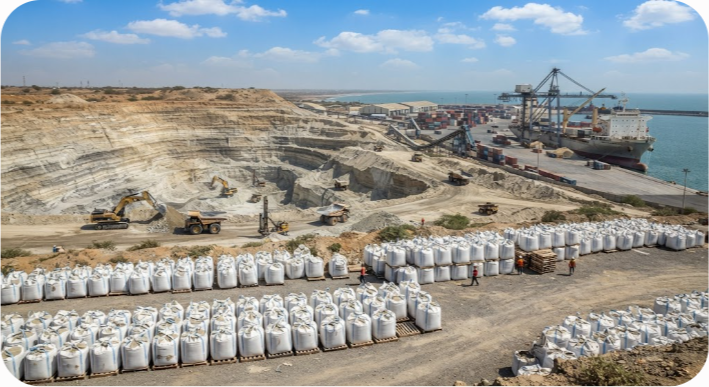
If you take a look behind the scenes of major US construction sites, deep-water drilling rigs, or high-volume metal foundries, you will find one quiet material holding everything together: bentonite clay. This natural, highly versatile mineral does the heavy lifting in applications ranging from stabilizing massive trench walls to sealing hazardous waste containment sites and keeping drilling bits running cool under extreme pressure.
For decades, North American procurement teams relied almost exclusively on domestic reserves, primarily out of the Wyoming deposits. While American bentonite remains an industry fixture, modern supply chain dynamics, rising operational overheads, and the relentless pressure on margins have forced industrial buyers to look broader. That search leads straight to Western India.
India has quietly emerged as a powerhouse in the global industrial minerals landscape. Driven by massive high-grade deposits in regions like Kutch, Gujarat, Indian mines now yield some of the highest-swelling sodium bentonite and exceptionally pure calcium bentonite on the market. But sourcing raw minerals across oceans isn't as simple as clicking a button. It requires a clear understanding of mineralogy, quality assurance protocols, international logistics, and supplier relationships.
Whether you are sourcing material for a major oilfield service company, an iron ore pelletizing plant, or a commercial foundry, this guide breaks down the technical, logistical, and strategic steps required to import high-performing bentonite directly from Indian mines.
Not all clay is created equal. Bentonite is primarily composed of montmorillonite, a soft phyllosilicate mineral that swells when exposed to water. The degree to which it swells, gels, and binds depends on the specific cations trapped between its microscopic crystalline layers.
When sourcing from India, understanding the distinct commercial grades is your first line of defense against choosing the wrong spec.
The epicenter of India's bentonite industry lies in the Kutch district of Gujarat. Millions of years ago, intense volcanic activity coupled with specific marine deposition environments created vast, thick beds of montmorillonite-rich clay. What makes Kutch bentonite world-renowned among geologists and industrial buyers is its exceptional natural swelling capacity, low grit content, and high thermal stability.
Because these deposits sit relatively close to the surface, Indian mining operators can utilize efficient open-pit mining techniques. This lowers the cost of extraction without degrading the structural integrity of the raw ore.
Before engaging with Indian exporters, you must define the exact physical and chemical parameters your process requires. Sourcing 'generic' bentonite usually results in performance headaches down the line.
| Industry / Application | Primary Bentonite Type | Key Metric / Specification | Why It Matters |
|---|---|---|---|
| Oil & Gas Drilling Mud | High-Swelling Sodium | API Spec 13A Section 9 / Section 10 | Maintains viscosity, suspends cuttings, and prevents borehole collapse under high temperatures. |
| Metal Casting & Foundries | Sodium-Activated or Natural Sodium | Green Compression Strength (GCS), Thermal Stability | Binds silica sand grains together to form durable molds that withstand molten metal pour temperatures. |
| Civil Engineering & Piling | Rapid-Hydrating Sodium | Marsh Funnel Viscosity, Yield Point, Fluid Loss | Forms impermeable filter cakes along trench walls, preventing groundwater infiltration and structural collapse. |
| Iron Ore Pelletizing | Fine-Ground Sodium | Dry Strength, Water Absorption Capacity | Acts as a binder to shape fine iron ore concentrate into sturdy spheres ready for blast furnace processing. |
| Environmental Liners (GCLs) | High-Purity Natural Sodium | Free Swell Index (>24 mL/2g), Fluid Loss (<18 mL) | Creates impenetrable barriers in landfills and tailing ponds to prevent leachate contamination. |
If you work in the energy sector, your baseline benchmark will likely be the American Petroleum Institute (API) Spec 13A standards. Indian processors routinely manufacture bentonite that meets or exceeds these international benchmarks. Key testing parameters include:
Understanding how your supplier handles the material from raw earth to packaged product helps you assess their quality control and supply chain reliability.
+-----------------------------------------------------------------------+

| 1. OPEN-PIT MINING |
| Selective extraction of rich montmorillonite seams in Kutch, Gujarat | +-----------------------------------------------------------------------+ | v +-----------------------------------------------------------------------+
| 2. FIELD SUN-DRYING & BLENDING |
| Moisture reduction via natural solar drying; precise grade blending | +-----------------------------------------------------------------------+ | v +-----------------------------------------------------------------------+
| 3. ACTIVATION & CRUSHING (OPTIONAL) |
| Soda ash activation for performance tuning; initial size reduction | +-----------------------------------------------------------------------+ | v +-----------------------------------------------------------------------+
| 4. MILLING & PULVERIZATION |
| Raymond mill processing to ultra-fine specs (200 to 325 mesh) | +-----------------------------------------------------------------------+ | v +-----------------------------------------------------------------------+
| 5. PACKAGING & PORT SHIPMENT |
| Jumbo bags or 25kg sacks shipped via Mundra or Kandla ports | +-----------------------------------------------------------------------+
Modern Indian operations do not simply scoop up dirt. Geologists map the pit walls, taking core samples to identify high-purity seams. High-grade sodium layers are mined separately from lower-grade overburden to ensure raw material consistency.
Once extracted, raw lump bentonite contains 25% to 35% moisture. Rather than immediately burning expensive fossil fuels, Indian processors spread the raw clay across large outdoor drying pads. The intense sun of Western India naturally reduces moisture content to around 12-15%. This eco-friendly step significantly reduces the carbon footprint of the final product.
Depending on the end application, the raw lumps undergo activation. In some cases, soda ash (sodium carbonate) is introduced during the wet stage to swap calcium ions for sodium ions, dramatically boosting swelling capacity. The dried lumps then pass through heavy-duty pulverizers or Raymond mills, reducing the clay to fine powder ranging from 200 mesh to 325 mesh, depending on client requirements.
The biggest risk in global mineral procurement isn't price fluctuations; it's product inconsistency. A shipment that tests well in January might perform poorly in April if the supplier cuts corners on pit selection or testing protocols. Here is how you lock down quality before containers leave the Indian coast.
Never rely on a generic product sheet. Demand a lot-specific Certificate of Analysis for every batch. Key metrics to verify include:
Before final payment release, engage independent international inspection agencies like SGS, Intertek, or Bureau Veritas. These auditors inspect the cargo directly at Indian ports (such as Mundra or Kandla). They perform:
Shipping heavy, fine powders across ocean routes requires careful attention to packaging and transit mechanics.
The proximity of major mining fields in Gujarat to deep-water ports provides a distinct logistics edge:
Transit times from Western India ports to US East Coast hubs generally range between 24 to 32 days, while Gulf Coast routes take roughly 28 to 35 days depending on transshipment stops.
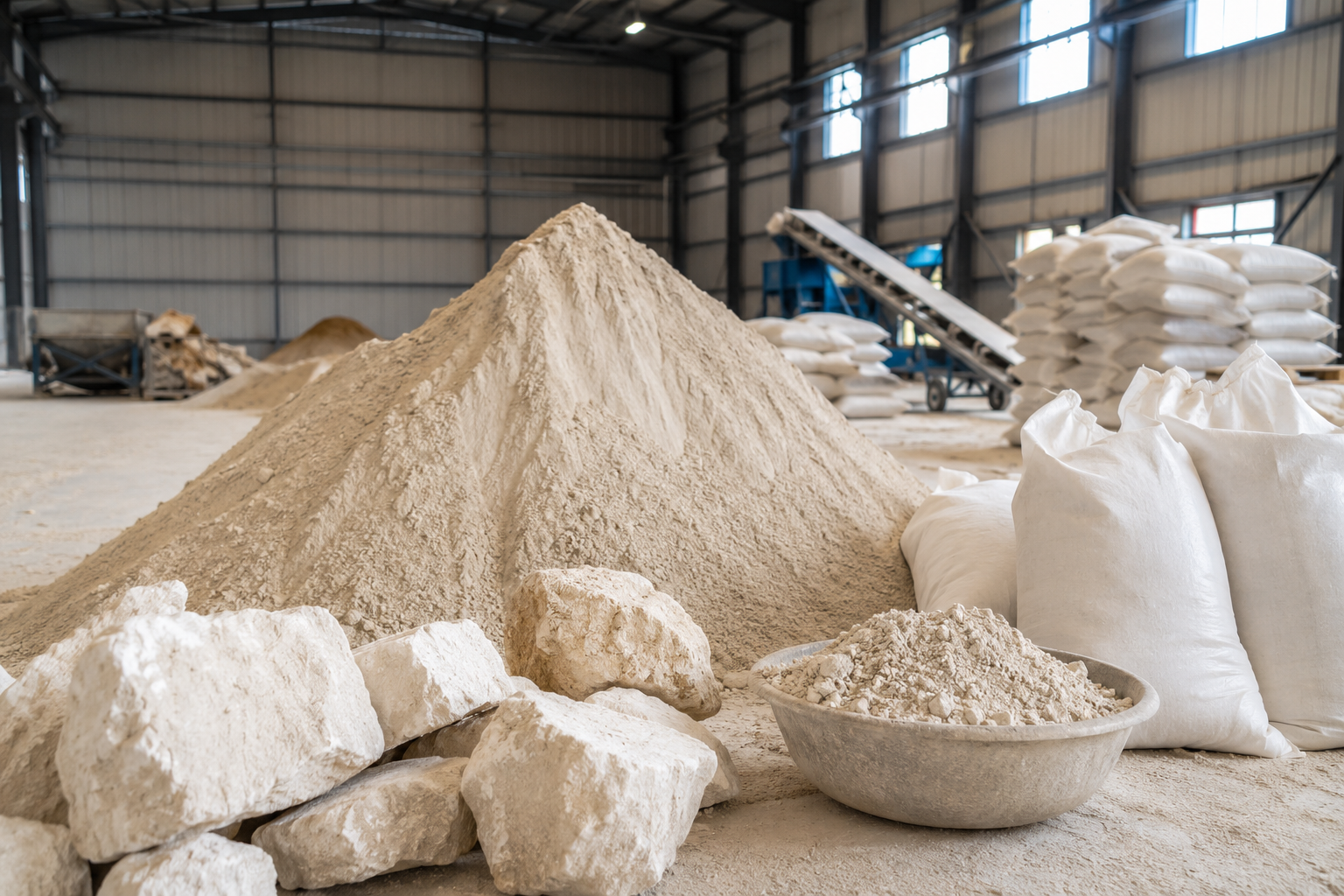
Why are US buyers looking to India when local reserves exist? The answer comes down to total landed cost efficiency.
While ocean freight rates fluctuate based on global trade lanes, the sheer labor efficiency, favorable currency conversion, and low extraction costs in Indian open-pit mines mean that high-grade Indian bentonite often arrives at US ports at a lower cost per ton than domestic alternatives hauled cross-country via rail or truck.
To build an accurate cost matrix, account for:
$$ ext{Total Landed Cost} = ext{FOB Indian Port Price} + ext{Ocean Freight} + ext{Marine Insurance} + ext{US Customs Duty (HTS Code)} + ext{Drayage to Warehouse}$$
When drafting supply contracts with Indian partners, keep these practical points in mind:
Environmental impact matters today more than ever. US corporations face mounting pressure to verify that their upstream raw materials are sourced responsibly. When auditing an Indian bentonite partner, assess their commitment to sustainable operations.
Top-tier Indian producers like Axewelledge prioritize environmental management through modern open-pit rehabilitation. After extracting bentonite seams, progressive backfilling techniques restore topsoil, allowing former mining land to revert to agricultural use or local vegetation cover.
Furthermore, using natural solar heat for primary drying reduces thermal energy needs by up to 60% compared to plants relying entirely on gas-fired rotary dryers. Partnering with suppliers who respect local ecosystems protects your company's brand reputation and ESG compliance.
Ready to test Indian bentonite in your production pipeline? Follow this streamlined execution blueprint:
+-----------------------------------------------------------------------+
| 1. DEFINE SPECIFICATIONS |
| Document mesh size, swell index, yield point, and purity limits. | +-----------------------------------------------------------------------+ | v +-----------------------------------------------------------------------+
| 2. REQUEST LAB SAMPLES |
| Obtain 2-5 kg samples for bench testing in your US facility. | +-----------------------------------------------------------------------+ | v +-----------------------------------------------------------------------+
| 3. CONDUCT BENCHMARKS |
| Run yield, rheology, and thermal testing against existing stocks. | +-----------------------------------------------------------------------+ | v +-----------------------------------------------------------------------+
| 4. TRIAL CONTAINER ORDER |
| Import a single 20ft container (approx. 20-24 MT) to test logistics.| +-----------------------------------------------------------------------+ | v +-----------------------------------------------------------------------+
| 5. AUDIT & SCALE |
| Review container condition, delivery times, and batch consistency. | +-----------------------------------------------------------------------+
Don't request 'bentonite.' Specify exact target values for viscosity, swelling, water loss, grid content, and packaging style based on your plant's specific needs.
Reputable Indian exporters will supply air-couriered lab samples (2 to 5 kg) for your quality team to analyze. Run these samples through your standard lab procedures—whether that means API rheology loops or foundry green strength compression tests.
Before committing to annual contracts, order a single 20-foot container load (roughly 20 to 24 metric tons). This lets you test not just the raw product, but also the packaging durability, moisture protection, customs clearing process, and port drayage timeline.
Once the trial cargo clears your plant's internal standards, establish a long-term supply agreement with scheduled quarterly shipments. This secures priority allocation at the processing mills and shields your operation from spot-market ocean freight swings.
Global mineral sourcing doesn't have to feel like a high-risk gamble. By understanding the unique geological features of Indian deposits, setting clear product specifications, and partnering with experienced mine owners and exporters, US companies can build a resilient, highly cost-effective supply chain.
India's combination of massive high-purity reserves, natural sun-drying advantages, and modern port infrastructure makes it an exceptional source for industrial bentonite. With the right quality checks and logistics plan in place, sourcing bentonite from Indian mines can provide a clear competitive edge for years to come.













Have questions about our products? We're here to help!