Axewelledge, a leading exporter from India, specializes in high-quality Bentonite. With a commitment to excellence, we supply premium Bentonite to the Middle East and Southeast Asia markets.


North Angle Complex, 304,
150 Feet Ring Rd, Opposite Ambedkar Nagar BRTS Stop,
Madhav Park, Punit Nagar,
Mavdi, Rajkot, Gujarat 360004
© Axewelledge 2026, All Rights Reserved.
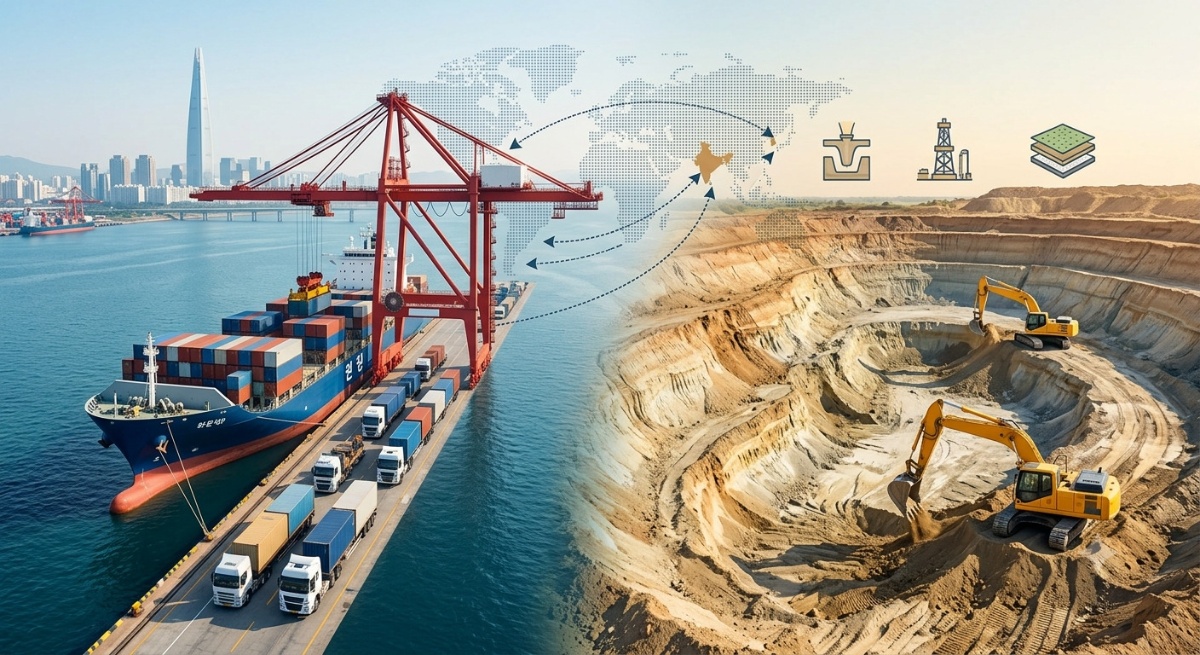
The global industrial landscape relies heavily on specialty minerals that act as silent backbones for massive engineering and manufacturing achievements. Among these, bentonite clay—often called the "clay of a thousand uses"—holds a position of critical value. For South Korea, a global powerhouse in automotive manufacturing, heavy heavy-industry engineering, precision metal casting, and large-scale civil infrastructure, securing a reliable supply of premium-grade industrial minerals is vital for maintaining production efficiency and quality control.
As domestic reserves across East Asia face economic and qualitative constraints, South Korean procurement managers and raw material distributors are increasingly shifting their focus toward global markets. India has emerged as a premier source for high-quality bentonite, striking an optimal balance between exceptional geological properties, customizable technical formulations, and highly competitive macro-economics.
Navigating the international sourcing process requires a comprehensive understanding of mineral variations, industry-specific technical requirements, shipping frameworks, and strategic partnership metrics. This comprehensive guide serves as a practical roadmap for South Korean industrial buyers looking to streamline their supply chain by importing high-grade bentonite from trusted Indian manufacturers.
South Korea’s rapid economic evolution and its dominant position in high-tech manufacturing require an uninterrupted supply of raw materials that meet exact tolerances. Industrial bentonite is not a generic commodity; rather, it is a sophisticated, reactive mineral whose performance directly influences the structural integrity of infrastructure, the surface finish of multi-ton engine blocks, and the safety of environmental containment facilities.
Premium industrial bentonite powder processed for global export.. Source: KathyKafka / Getty Images
South Korea houses some of the world’s most advanced foundries, supporting major domestic automotive brands like Hyundai and Kia, alongside global shipbuilding giants in Ulsan and Geoje. In these facilities, green sand molding remains the dominant method for casting complex ferrous and non-ferrous metal components.
Bentonite serves as the essential binding matrix that holds the silica sand grains together under the extreme thermal stresses of molten steel and iron pouring. Without high-grade bentonite possessing superior thermal durability and precise green compression strength, sand molds would suffer from surface erosion, structural collapse, or gas defects. This directly leads to expensive casting rejections and production bottlenecks.
From the expansion of Seoul’s intricate metropolitan subway networks to deep-sea port developments and complex coastal land reclamations, South Korea’s construction sector routinely tackles demanding geological environments.
In these deep-piling, diaphragm walling, and micro-tunneling operations, bentonite slurry acts as an indispensable stabilizing fluid. It exerts outward hydrostatic pressure against trench walls to prevent earth collapses while cooling drilling assemblies and suspending heavy stone cuttings for extraction. The structural safety of multi-billion-won urban infrastructure projects depends directly on the rheological stability of the bentonite used.
As a country with limited landmass and highly stringent environmental regulations, South Korea prioritizes long-term sustainable waste management and groundwater preservation. The engineering of state-of-the-art landfills and industrial containment barriers relies extensively on Geosynthetic Clay Liners (GCLs).
These engineered barriers utilize a highly uniform layer of high-swelling sodium bentonite sandwiched between durable geotextiles. When exposed to hydration, the embedded clay swells dramatically to form a virtually impermeable hydraulic seal, preventing hazardous chemical leachates from infiltrating local water tables.
To establish a highly profitable and technically sound import pipeline, procurement professionals must move past basic trade names and thoroughly analyze the mineralogical and chemical makeup of the material. Bentonite is an aluminum phyllosilicate clay consisting primarily of montmorillonite. However, the specific exchangeable cation present within its molecular lattice determines its ultimate commercial utility.
[Raw Volcanic Ash Weathering]
│
â–¼
[Montmorillonite Clay]
│
┌───────────┴───────────â”
â–¼ â–¼
[Sodium Ions] [Calcium Ions]
(High-Swelling) (Low-Swelling)
│ │
┌───────┴───────┠┌───────┴───────â”
â–¼ â–¼ â–¼ â–¼
Foundry Slurry Civil Feed/Agri Purification
Natural sodium bentonite features sodium (Na+) as the dominant exchangeable cation within its crystalline layers. This specific structural layout allows water molecules to enter the interlayer spaces, causing the clay to expand up to 15 to 20 times its original dry volume. When hydrated, it transforms into a highly viscous, gel-like slurry with excellent sealing capabilities.
Primary Uses in South Korea: Drilling fluids, civil engineering slurry walls, tunneling lubricants, foundry sand binders, and GCL manufacturing.
Key Metrics to Monitor: Swelling volume (ml/2g), liquid limit, gel time, and Marsh funnel viscosity.
Calcium bentonite contains calcium (Ca2+) as its primary exchangeable cation. Because of the stronger divalent bond of calcium ions, water cannot easily wedge the crystalline layers apart, resulting in minimal swelling behavior. However, its high porosity and exceptional surface charge density provide superior adsorption capabilities. It excels at drawing out heavy metals, polar impurities, and organic toxins from liquids.
Primary Uses in South Korea: Eco-friendly wastewater management, chemical clarification, edible oil refining, specialized agricultural soil adjustment, and mycotoxin binders for advanced livestock feed mills.
Key Metrics to Monitor: Cation Exchange Capacity (CEC), surface area density, decolorizing power, and particle size distribution.
South Korean buyers traditionally evaluate multiple international supply hubs, including regional options within Southeast Asia and traditional Western producers. However, India has steadily built a dominant position in international mineral markets, offering an unmatched combination of natural geological quality and modern chemical engineering.
Understanding the broader dynamics of the market helps explain why the top 10 industries that import bentonite from India consistently choose this sourcing route over closer regional competitors.
The global quality of bentonite varies wildly depending on its geographic source. Many international suppliers harvest low-grade calcium bentonite and use intense chemical processing (sodium carbonate activation) to artificially swap out calcium ions for sodium ions. While this artificial activation provides a temporary boost to swelling indices, the material often suffers from poor thermal stability and breaks down rapidly under high heat or saline conditions.
In stark contrast, the Kutch region in Gujarat, Western India, is home to some of the richest and highest-purity deposits of natural sodium bentonite in the world. Formed millions of years ago through the weathering of volcanic ash in unique marine-estuarine environments, this clay is naturally rich in sodium montmorillonite right out of the ground. This gives the raw material:
An inherently high and permanent swelling index.
Excellent thermal durability, allowing foundry sand to be recycled multiple times without losing its binding properties.
High gel strengths that remain stable even when exposed to contaminants or brackish groundwater during deep excavation.
India maintains an expansive, highly organized mining ecosystem with massive production capacities. The combination of efficient open-cast mining methods, optimized local labor dynamics, and highly integrated processing plants allows Indian producers to manufacture high-spec bentonite at a fraction of the operating costs seen in Western nations. These structural cost savings are passed directly to international buyers, enabling South Korean importers to land premium minerals at highly competitive price points.
Modern industrial mineral sourcing requires highly precise technical tailoring. Reputable Indian suppliers don't just ship raw, unrefined lumps. They run advanced milling and blending facilities that can adjust grind size distributions (from coarse granules down to ultra-fine 325-mesh powders), modulate activation levels, and introduce specialized polymers. This capability allows them to deliver customized formulations that precisely match the distinct equipment requirements of South Korean foundries or tunneling contractors.
To prevent product failures or shipping delays, procurement teams must ensure that their technical purchase contracts contain detailed, non-negotiable quality metrics aligned with their specific application.
For automated, high-pressure green sand molding lines (such as DISAMATIC systems used in modern automotive foundries), the bentonite must provide exceptional bonding power and high thermal endurance.
| Quality Parameter | Standard Target Value | Operational Importance for Korean Foundries |
|---|---|---|
| Montmorillonite Content | ≥ 80% to 85% | Ensures high chemical purity and strong structural bonding. |
| Methylene Blue Active Clay | 350 - 400 mg/g | Verifies the percentage of highly active, working clay minerals. |
| Green Compression Strength | 9.0 - 11.0 N/cm2 | Prevents mold collapse during handling and transport. |
| Dry Compression Strength | 25.0 - 35.0 N/cm2 | Resists the intense washing action of flowing molten metal. |
| Shatter Index | 65 - 75% | Confirms the mold's ability to resist brittle cracking. |
| Moisture Content | 9% - 12% | Optimized for smooth feeding without causing dry dust or clogging. |
Slurry fluids used in deep piling and tunneling must quickly build a thin, impermeable "filter cake" along excavation walls while maintaining stable flow properties under high mechanical shear. This requires a premium sodium bentonite supply from India optimized for rheological stability.
Marsh Funnel Viscosity: 35 to 50 seconds (customizable based on the specific soil profile encountered).
Apparent Viscosity: Minimum 15 cP.
Fluid Loss (Filtrate Volume): Less than 15 ml at high pressure, ensuring minimal water migration into surrounding weak soils.
Cake Thickness: Under 2.0 mm, preventing drilling assemblies from becoming mechanically wedged in the borehole.
Sand Content: Maximum 4.0% in raw powder to protect expensive high-pressure mud pumps from abrasive wear.
Bentonite intended for Geosynthetic Clay Liners must maintain long-term hydraulic sealing stability under variable chemical exposure.
Free Swell Volume: Minimum 24 ml / 2g.
Fluid Flux Control: Highly restricted to guarantee low hydraulic conductivity (K≤5×10⁻¹¹ m/s).
pH Range: 8.5 to 10.5, ensuring non-corrosive, long-term chemical compatibility with surrounding geotextiles and reinforced steel.
The financial viability of a mineral import strategy depends heavily on ocean freight economics and port logistics. Because bentonite is a high-density, high-volume cargo, minimizing inland hauling distances within the exporting nation is essential for controlling container freight costs.
 [Kutch Mining Hubs] ──(Short Inland Haul)──► [Mundra / Kandla Ports]
                                                    │
                                           (Direct Shipping Lanes)
                                                    │
                                                    â–¼
                                      [Busan / Incheon / Gwangyang]
The primary bentonite mining regions in Gujarat are located close to India's most modern, automated maritime hubs: Mundra Port and Kandla Port. This geographic layout provides significant structural advantages:
Reduced Inland Transit Costs: Raw materials move efficiently from processing mills to the export docks over short, well-maintained highway and rail networks.
Year-Round Sailing Reliability: As all-weather, deep-water ports, Mundra and Kandla experience minimal seasonal weather disruptions, ensuring predictable shipping schedules.
Massive Container Capacity: Regular sailings by global shipping lines ensure constant container availability and competitive freight rates to East Asia.
Containers loaded in Western India follow well-established maritime lanes through the Strait of Malacca, connecting directly to South Korea's primary industrial discharge hubs:
Port of Busan: The primary gateway for deliveries bound for automotive foundries and heavy engineering plants across the southeastern industrial regions (Ulsan, Changwon, Daegu).
Port of Incheon: Optimized for serving construction projects, GCL production plants, and industrial manufacturing operations within the Seoul National Capital Area.
Port of Gwangyang: Ideally situated to handle bulk and containerized mineral inputs for heavy steelworks and chemical refining centers across the southern provinces.
To protect fine mineral powders from maritime humidity and physical handling stresses during long ocean voyages, suppliers utilize heavy-duty, export-grade packaging options:
Jumbo FIBC Bags (1.0 to 1.25 Metric Tons): Made from tough, UV-stabilized woven polypropylene, these large bulk bags feature specialized bottom spout discharge systems for dust-free integration into automated factory silos.
Multi-Wall 25kg Kraft Paper/PP Bags: Stacked evenly onto sturdy, heat-treated ISPM-15 export pallets and securely wrapped in heavy stretch-film. This setup is perfect for smaller distributors or facilities that rely on manual batch mixing.
Container Liners: For large-scale industrial buyers with specialized pneumatic bulk-unloading systems, bulk container liners maximize container space while driving handling costs down to the absolute minimum.
Importing raw minerals into South Korea requires navigating detailed customs protocols, health and safety regulations, and corporate quality assurance checks. Working with a structured, international exporter is key to avoiding costly port clearance delays.
When shipments arrive at South Korean customs, clearance teams must present a complete, error-free documentation package:
Bill of Lading (B/L): Master or House documents confirming clean, on-board ocean transit.
Commercial Invoice & Detailed Packing List: Accurately stating specific batch numbers, weights, and commercial values.
Comprehensive Certificate of Analysis (CoA): Issued by an accredited independent laboratory, verifying that the specific batch matches all technical parameters agreed upon in the purchase contract.
Certificate of Origin (CoO): Essential for verifying the source of the material and leveraging applicable bilateral trade agreements.
South Korean environmental and industrial safety agencies enforce strict limits regarding trace chemical impurities within imported minerals, particularly for materials used in civil engineering, agriculture, or water treatment.
Importers must ensure that their Indian supplier runs rigorous testing on every single production batch to guarantee that heavy metals (such as Lead, Cadmium, Arsenic, and Mercury) fall well below maximum permitted levels. Furthermore, the mineral must be certified free of dangerous asbestos mineral fibers through modern X-ray diffraction (XRD) testing.
Sourcing industrial minerals across international borders involves more than just comparing raw prices on a spreadsheet; it requires a deep partnership with a reliable supplier who understands the technical nuances of your industry. A minor variance in clay mineralogy can lead to significant production disruptions on an automated factory floor.
Axewelledge has established itself as an elite, international partner in the industrial minerals sector, specializing in exporting high-grade, naturally active sodium and calcium bentonite from India's premier reserves. By operating a modern infrastructure network that spans from advanced extraction sites to automated processing mills, the company ensures complete control over mineral consistency and quality.
┌────────────────────────────────────────────────────────â”
│ THE AXEWELLEDGE ADVANTAGE │
├───────────────────┬───────────────────┬────────────────┤
│ NATURAL PURITY │ EXTENSIVE TESTING │ GLOBAL LOGISTCS│
│ Kutch deposits │ Advanced in-house │ Smooth transit │
│ rich in active │ XRD analysis for │ from Kandla / │
│ montmorillonite. │ batch uniformity. │ Mundra ports. │
└───────────────────┴───────────────────┴────────────────┘
By prioritizing technical transparency and long-term customer relationships, Axewelledge assists international procurement teams in moving past generic options. They deliver tailored mineral formulations optimized for the specific machinery, soil profiles, or manufacturing processes used by their clients.
Every single export shipment undergoes rigorous quality verification, backed by detailed international documentation. This ensures that when the material arrives at South Korean ports, it moves smoothly through customs and integrates seamlessly into your production line.
For companies ready to diversify their mineral supply chain and tap into the cost advantages of high-spec Indian deposits, following a structured onboarding process helps mitigate risk:
[Phase 1: Share Specs] ──► [Phase 2: Lab Testing] ──► [Phase 3: Trial Order] ──► [Phase 4: Full Scale]
Do not rely on generic grade descriptions. Gather your internal engineering teams and compile a comprehensive technical specification sheet detailing your exact requirements for swelling capacity, particle size distribution, moisture tolerances, and green compression strength.
Before signing commercial contracts, contact a proven producer like Axewelledge to request authentic, batch-verified laboratory samples. Run these samples through your own in-house testing facilities to verify that their real-world performance matches your production requirements.
Once laboratory testing confirms the mineral quality, initiate a trial order of one to two shipping containers. This small-scale trial allows your logistics team to evaluate the transit timeline, check the physical durability of the export packaging under real maritime conditions, and monitor how easily the material passes through South Korean customs clearance.
After verifying both mineral performance and logistical reliability, transition to a structured, long-term supply contract. Establishing predictable, scheduled shipping volumes helps secure stable pricing, protects your factory from sudden global market shifts, and ensures your plant maintains an optimal buffer stock of high-grade industrial minerals year-round.
To explore deep technical studies regarding how premium minerals optimize production setups across diverse international industrial hubs, browse through the comprehensive Axewelledge industry blog. If you are ready to request custom specification sheets or secure initial product samples for your facility, connect directly with their engineering and export teams by visiting the official Axewelledge corporate portal. Sourcing high-purity minerals from India helps protect your bottom line, ensure manufacturing uniformity, and give your business a strong competitive edge in today's demanding global market.













Have questions about our products? We're here to help!