Axewelledge, a leading exporter from India, specializes in high-quality Bentonite. With a commitment to excellence, we supply premium Bentonite to the Middle East and Southeast Asia markets.


North Angle Complex, 304,
150 Feet Ring Rd, Opposite Ambedkar Nagar BRTS Stop,
Madhav Park, Punit Nagar,
Mavdi, Rajkot, Gujarat 360004
© Axewelledge 2026, All Rights Reserved.
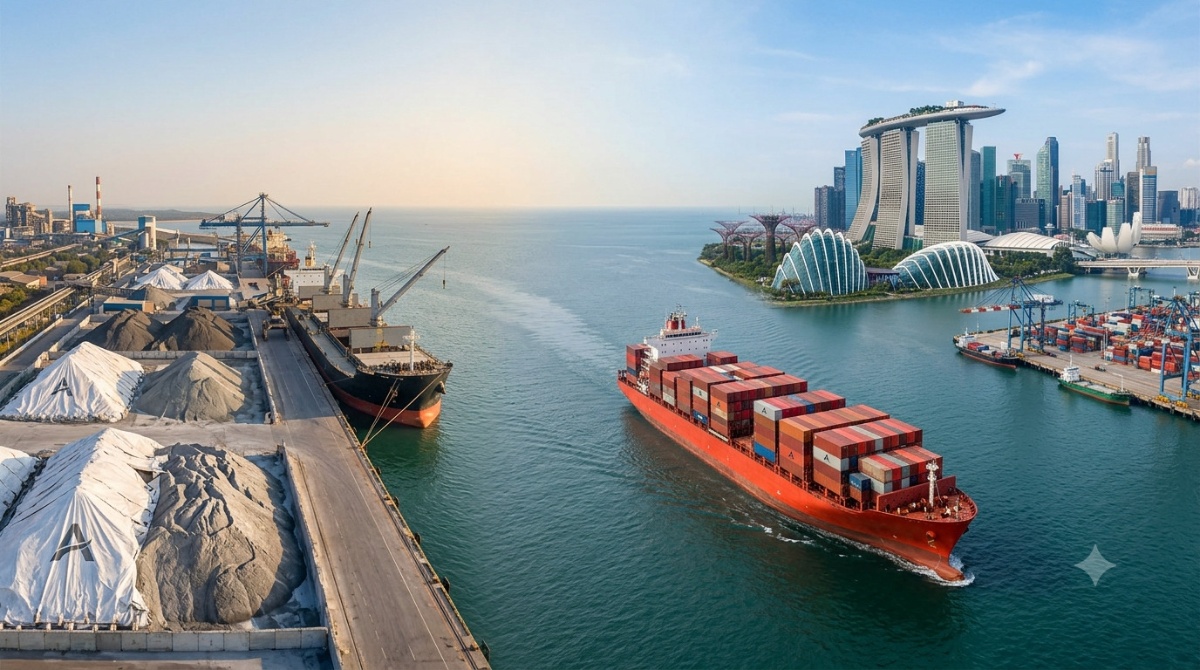
Singapore is widely recognized as a global economic powerhouse, a hub for maritime trade, and a leader in advanced civil engineering and urban development. However, despite its towering skyscrapers, sophisticated underground transit networks, and massive maritime infrastructure, the city-state faces a fundamental geographical challenge: it has virtually no natural mineral resources. To fuel its massive infrastructure projects, land reclamation drives, environmental management programs, and maritime activities, Singapore relies heavily on importing high-grade industrial raw materials.
Among these critical materials, Sodium Bentonite holds a place of strategic importance. Known as the "clay of a thousand uses," this naturally occurring mineral is highly valued for its exceptional swelling, sealing, binding, and absorption characteristics.
When it comes to sourcing this mineral, Singaporean procurement managers, civil engineering firms, and industrial operators consistently turn their eyes toward India. But what makes Indian Sodium Bentonite the premier choice for a hyper-efficient market like Singapore?
The answer lies in a combination of geological abundance, exceptional mineralogical properties, cost efficiencies, and reliable supply chains. This comprehensive analysis explores why Singapore companies prioritize importing Sodium Bentonite from India and highlights how specialized Indian producers are meeting this critical demand.
Before diving into the logistics and trade economics, it is essential to understand what makes Sodium Bentonite so unique and why it is indispensable to Singapore’s industrial landscape.
Bentonite is a volcanic ash-derived clay composed primarily of the clay mineral montmorillonite. It generally exists in two main forms: Calcium Bentonite and Sodium Bentonite. While Calcium Bentonite has lower swelling capabilities and is often used in absorbents or animal feed, Sodium Bentonite features high concentrations of sodium ions in its crystal lattice.
When exposed to water, Sodium Bentonite can absorb several times its dry weight in moisture, expanding up to 15 to 20 times its original dry volume. This extraordinary swelling capacity transforms the clay into a thick, gelatinous, and highly impermeable barrier. This single property makes it invaluable for:
Preventing Water Ingress: Creating watertight seals in underground structures, basements, and tunnels.
Stabilizing Excavations: Providing hydrostatic pressure to hold open deep trenches before concrete is poured.
Environmental Containment: Lining the bottoms of landfills or industrial waste containment zones to block harmful contaminants from leaching into groundwater tables.
For Singapore—a nation that builds deep into the ground and reclaims vast stretches of land from the sea—having a dependable, high-performance sealing agent isn't just a preference; it is a structural necessity.
Singapore’s urban landscape is a marvel of engineering, but it requires a constant influx of structural support minerals. The domestic demand for Sodium Bentonite is driven primarily by three massive sectors:
Singapore’s limited land area means the city must continuously optimize its subterranean space. The expansion of the Mass Rapid Transit (MRT) subway lines, the construction of the Deep Tunnel Sewerage System (DTSS), and the development of deep underground highways require extensive excavation.
During deep piling, diaphragm wall construction, and micro-tunneling, contractors use a slurry mixture predominantly composed of Sodium Bentonite and water. This slurry performs several vital functions:
Borehole Stability: It exerts outward hydrostatic pressure against the walls of the excavation, preventing the surrounding earth or soft sand from collapsing inward.
Cuttings Suspension: It carries drilled soil and rock fragments up to the surface for removal.
Lubrication: It cools and lubricates drilling bits and cutter heads, extending the lifespan of expensive machinery.
Land reclamation has been a cornerstone of Singapore's growth strategy since its independence. Projects like the Tuas Mega Port and the ongoing expansions around Changi Airport require stabilizing soft, waterlogged marine clay.
Sodium Bentonite is widely used in geotechnical engineering across Singapore to create impervious grout curtains, stabilize foundations, and prevent saltwater intrusion into freshwater or land-based structures. Its natural chemical stability ensures that once it forms a barrier, it remains resilient against the corrosive effects of marine environments.
Singapore is a global pioneer in water sustainability, famously known for its NEWater and comprehensive desalination plants. Industrial facilities and water management bodies use the high adsorption and ion-exchange capabilities of bentonite clay to clarify wastewater, remove heavy metal impurities, and manage sludge dewatering.
For businesses seeking to understand how this mineral performs in these specific purification systems, reading about the best Indian bentonite exporter for Saudi water treatment plants offers excellent insights into how Indian producers optimize mineral parameters for international environmental systems.
With many nations producing industrial clays, why do Singaporean buyers consistently choose Indian suppliers? The preference comes down to a set of distinct advantages that India offers over other global competitors.
The global quality of bentonite varies wildly depending on its geographic source. The Kutch region in Gujarat, India, is globally renowned for hosting some of the finest natural deposits of high-swelling Sodium Bentonite in the world.
Unlike many regions where bentonite must be artificially activated using chemicals to swap calcium ions for sodium ions, Indian Sodium Bentonite from Kutch is naturally rich in sodium montmorillonite. This natural composition gives the clay:
An inherently high swelling index.
Superior thermal stability.
Excellent gel strength and high viscosity parameters.
Long-term durability when exposed to variable environmental conditions.
Singaporean engineers demand predictable, field-tested performance. Sourcing minerals from dedicated entities that control their own mining resources ensures that the raw material behaves precisely as specified in structural engineering blueprints. Organizations can explore the exact mechanics of these extraction zones by reviewing details regarding our mines, which highlight how state-of-the-art infrastructure preserves the natural characteristics of the clay from extraction to shipping.
| Property | Typical Value (Natural Indian Sodium Bentonite) | Engineering Benefit for Singapore |
| Swelling Volume | 20 – 30 ml / 2g | Outstanding sealing and waterproofing efficiency |
| Montmorillonite Content | 75% – 85%+ | High ion-exchange capacity and superior binding |
| Moisture Content | 10% – 13% | Lower shipping weight, balanced for easy mixing |
| pH Range | 8.5 – 10.0 | Non-corrosive to drilling equipment and rebar |
| GEL Time | Instant to High | Optimal suspension of heavy drill cuttings |
In any procurement process, cost-effectiveness is crucial. India offers highly competitive pricing structures for industrial minerals due to several factors:
Large-Scale Mechanical Mining: Massive economies of scale reduce the per-ton extraction costs.
Affordable Processing Operations: Refinement, milling, and pulverization operations are highly cost-efficient compared to Western alternatives.
Favorable Exchange Rates: The trade dynamics between the Singapore Dollar (SGD) and Indian Rupee (INR) maximize purchasing power for Singaporean importers.
Different applications in Singapore require completely different technical specifications. A tunnel boring project requires a specific mesh size and viscosity index, while a foundry casting operation or a civil engineering piling project requires a totally different grade.
Indian exporters have invested heavily in modern processing facilities equipped with advanced air-classifier mills and computerized laboratory testing systems. This allows them to supply customized particle size distributions—ranging from coarse granules to ultra-fine powders (200 mesh to 300 mesh)—tailored precisely to the buyer’s technical data sheets.
While product quality and price are vital, a great product is useless if it cannot be delivered on time. For Singapore's strict construction schedules, a delay of even a few days can trigger massive contractual penalties. This makes the logistical relationship between India and Singapore a major competitive advantage.
[Mundra / Kandla Ports, Gujarat, India]
                 │
                 â–¼ (Direct Maritime Shipping Route)
                 │
[Port of Singapore (PSA) - Global Transit Hub]
                 │
                 â–¼ (Just-In-Time Local Distribution)
[Singapore Infrastructure & Construction Sites]
The primary bentonite-producing hubs in India are strategically situated in close proximity to major all-weather deep-water ports such as Mundra Port and Kandla Port in Gujarat.
Direct Sea Routes: Vessels sail directly from the western coast of India, through the Indian Ocean and the Strait of Malacca, arriving right at the Port of Singapore (PSA).
Short Transit Times: The maritime journey typically takes only 10 to 14 days. This short timeline allows Singaporean companies to maintain a lean "Just-In-Time" (JIT) inventory model, minimizing expensive warehousing costs in space-constrained Singapore.
Containerized and Bulk Options: Indian exporters routinely ship materials in flexible packaging structures, ranging from standard 25 kg bags for smaller applications to heavy-duty 1 to 1.5-ton Jumbo Bags (FIBC) equipped with moisture-proof liners, ensuring the product arrives completely dry and ready for use.
Singaporean regulatory frameworks and statutory bodies, such as the Building and Construction Authority (BCA) and the Public Utilities Board (PUB), enforce strict quality standards for all imported construction and chemical materials. Every batch of material entering a project site must be accompanied by comprehensive documentation, including a Certificate of Analysis (COA), Material Safety Data Sheets (MSDS), and rigorous laboratory testing records.
Indian exporters have successfully aligned their manufacturing workflows with global benchmarks like ISO 9001:2015, API (American Petroleum Institute), and OCMA (Oil Companies Materials Association) standards.
To maintain transparency, premier exporters perform multi-stage testing covering:
X-Ray Diffraction (XRD): To verify high percentages of montmorillonite content.
Filter Loss Testing: Ensuring the slurry forms an effective, low-permeability filter cake along trench walls.
Rheological Characterization: Measuring Marsh Funnel viscosity, yield point, and plastic viscosity to guarantee smooth field operations.
This meticulous approach to quality control reduces the risk of rejection at Singaporean ports, giving local buyers complete confidence in their supply chains.
For Singaporean companies looking to tap into the Indian mineral market, selecting the right partner is the most critical step in the procurement process. The market is filled with various traders, but long-term industrial success requires collaborating with an integrated producer who understands the nuances of global trade.
When vetting potential suppliers from India, look for the following criteria:
Working with an exporter that directly owns or controls its mining reserves offers immense stability. It protects your business from sudden market price fluctuations and ensures that the mineral composition remains uniform across multiple shipments over a multi-year project cycle. To understand how leading suppliers structure their production capacities and global distribution channels, organizations can explore how a top bentonite exporter from India coordinates operations across various international markets.
A professional supplier should always be willing to provide technical pre-shipment samples for internal laboratory verification. Testing parameters should always align with your local project specifications. For procurement professionals looking for a structured, step-by-step framework on how to handle the documentation, sampling protocols, and verification stages during an import cycle, reading a comprehensive how to import bentonite from India to Saudi Arabia step-by-step guide serves as an incredibly useful blueprint that can be easily adapted to the Singapore-India trade corridor.
Because Sodium Bentonite interacts differently depending on the surrounding chemical environment (such as saltwater vs. freshwater), choose a partner whose portfolio spans multiple high-stakes sectors. Whether your project involves piling, heavy industrial manufacturing, environmental lining, or foundry casting, selecting a supplier with a diverse operational footprint ensures they can easily adjust their manufacturing formulations to match your specific operational needs. Importers looking to evaluate the broader industrial footprint of these minerals can learn more by checking out the top 10 industries that import bentonite from India, which highlights the extensive, multi-sector utility of high-grade Indian clay.
As Singapore continues to push the boundaries of urban architecture, marine logistics, and green infrastructure, the demand for reliable raw materials will only grow. Navigating international supply lines requires an expert partner who blends geological excellence with logistics mastery.
This is where Axewelledge stands out as a world-class leader. Positioned among the top producers globally, Axewelledge acts as an integrated mine owner, manufacturer, and international exporter specializing in premium-grade Sodium and Calcium Bentonite solutions.
With vast, high-quality reserves centered in the mineral-rich regions of Bhuj and Kutch in Gujarat, India, Axewelledge possesses an elite infrastructure capable of processing over 60 million tons of premium minerals. Shipping over 100 containers daily to clients across Southeast Asia, Europe, and the Middle East, the company combines advanced R&D facilities with precision milling systems to produce highly consistent, customized industrial grades.
Whether your company is a civil contractor working on the next major MRT line, an environmental firm constructing secure containment liners, or an industrial distributor supplying local manufacturing plants, exploring the core corporate portal at Axewelledge connects you directly with high-performance mineral solutions designed to elevate your operational efficiency.
The trade connection between Singaporean buyers and Indian Sodium Bentonite suppliers is a perfect example of industrial synergy. Singapore offers world-class engineering vision and market demand, while India provides unparalleled natural resources, processing expertise, and logistical advantages.
By sourcing high-swelling Sodium Bentonite from trusted Indian partners, Singapore companies gain a decisive competitive edge. They secure access to a premium, cost-effective material that protects infrastructure investments, guarantees project stability, and ensures the city-state's built environment continues to thrive safely and sustainably for decades to come.
Are you ready to optimize your company's industrial raw material supply chain? Navigate through our complete range of high-yield drilling muds, piling slurries, and specialized civil engineering clays by visiting the official product and insights catalog at Axewelledge Blog to discover how premium Indian minerals can support your next major project.













Have questions about our products? We're here to help!