Axewelledge, a leading exporter from India, specializes in high-quality Bentonite. With a commitment to excellence, we supply premium Bentonite to the Middle East and Southeast Asia markets.


North Angle Complex, 304,
150 Feet Ring Rd, Opposite Ambedkar Nagar BRTS Stop,
Madhav Park, Punit Nagar,
Mavdi, Rajkot, Gujarat 360004
© Axewelledge 2026, All Rights Reserved.
If you have ever stood on an active civil construction site, watched a horizontal directional drilling (HDD) rig pull pipeline under a riverbed, or visited a high-volume iron foundry, you have seen bentonite at work. This natural montmorillonite clay is the quiet workhorse of heavy industry. It seals ponds, stabilizes deep boreholes, binds green sand molds, and purifies water. For decades, industrial buyers cared almost exclusively about technical performance: yield, liquid limit, swell index, and plastic viscosity.
Times have shifted dramatically. Engineers, procurement officers, and project managers across North America and beyond are asking tougher questions about origin and impact. Where did this clay come from? How much water was consumed during refinement? How much carbon was emitted while drying it down to 10% moisture? Can a producer deliver high-yield sodium bentonite that satisfies API Spec 13A or ISO 13500 without leaving a scarred landscape behind?
The answer is a clear yes, but achieving that balance requires a fundamental overhaul of traditional mineral processing. Sustainable mineral processing is no longer a corporate buzzword or a vague greenwashing claim; it is a rigorous discipline combining smarter extraction, energy-efficient drying, closed-loop water recovery, chemical minimization, and proactive land stewardship.
Let's walk through how modern bentonite processing connects environmental responsibility with strict adherence to international performance benchmarks.
To appreciate why processing methods matter, we first need to look at what makes bentonite unique. Bentonite is an aluminum hydrosilicate clay consisting predominantly of montmorillonite, a 2:1 smectite mineral layer structure. The key to its industrial utility lies in these sub-microscopic crystalline sheets. When water enters the interlayer space of sodium montmorillonite, the clay swells up to 15 to 18 times its dry volume, forming a dense, low-permeability gel.
Industry categorizes bentonite into two primary mineralogical forms:
+ ), this variant possesses exceptional hydration capacity, high thermal stability, and superior thixotropic behavior. It is the gold standard for oil and gas drilling, trenchless HDD, environmental containment liners, and foundry casting molds.
2+ ), this form absorbs liquids effectively but exhibits minimal swelling. It is widely used in absorbent applications, cat litter, edible oil bleaching, and clarification process streams.
When a project engineer specifies sodium bentonite for a diaphragm wall or a deep geothermal well, they rely on specific rheological properties. If the material fails to build gel strength quickly or breaks down under thermal stress, boreholes collapse and containment barriers leak. Historically, achieving maximum rheological performance required heavy processing, high energy inputs, and chemical additives. Modern sustainable processing proves we can achieve these exact performance metrics using cleaner, smarter methodologies.
Meeting international quality standards ensures that a metric ton of bentonite processed in India, Wyoming, or Greece performs predictably on a job site in Texas, Alberta, or Rotterdam. Reliable producers align their quality management systems with several international standards organizations:
Published by the American Petroleum Institute, API Spec 13A (and its international equivalent ISO 13500) sets the worldwide baseline for drilling fluid materials. For Section 4 (Section 9 for high-yield sodium bentonite or Section 10 for OCMA grade), the specification outlines precise limits:
Hitting these targets means the bentonite will form an impermeable filter cake along the borehole wall, preventing costly fluid loss into surrounding formations while lifting heavy drill cuttings to the surface.
In iron and steel foundries, bentonite acts as the binder that holds green sand molds together under extreme heat. Standards established by the American Foundry Society (AFS) and European DIN specifications require:
For geosynthetic clay liners (GCLs), cut-off walls, and tunneling slurry shields, ASTM D5890 (Swell Index) and ASTM D5891 (Fluid Loss) dictate performance:
?9 cm/sec or lower when hydrated with water.
How do we move raw clay from a deposit into a finished, high-spec powder while slashing carbon emissions and water consumption? The process involves every phase of the value chain.
[ Selective Mining & Ore Blending ] ? ? [ Eco-Friendly Activation & Milling ] ? ? [ Low-Carbon Hybrid & Solar Drying ] ? ? [ Closed-Loop Water & Dust Recovery ] ? ? [ Rigorous QC Testing (API/ISO/ASTM) ] ? ? [ Sustainable Packaging & Logistics ]
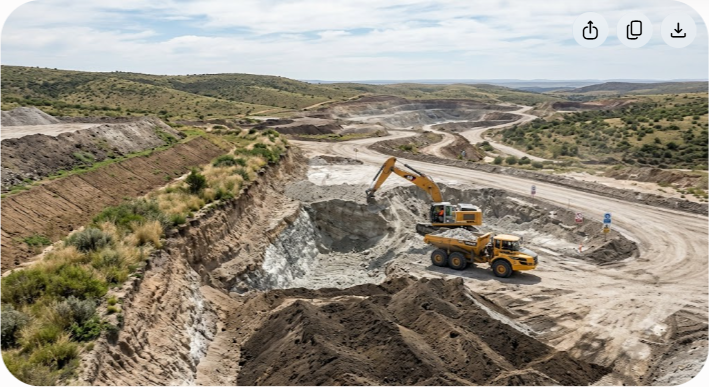
Sustainability begins long before heavy machinery reaches the refinery. High-quality bentonite beds lie near the surface, covered by topsoil and rock layers known as overburden.
Traditional mining often indiscriminately stripped earth, mixing poor-grade clay with high-purity seams. Sustainable practices utilize advanced geological mapping, core drilling grid samples, and selective layer mining.
By segregating ore in the pit based on montmorillonite content and natural sodium ratio, processing plants reduce the energy required later during refining and chemical modification. Overburden is stripped in separate stages and stored nearby for progressive backfilling—a critical step for immediate land restoration.
Raw bentonite as mined contains anywhere from 25% to 40% natural moisture. Removing this water is the single most energy-intensive stage of processing.
Instead of dumping wet clay directly into high-temperature rotary kilns driven by fossil fuels, progressive producers employ spread-field solar drying. Raw clay is spread across dedicated, paved drying fields and mechanically turned using harrows or plows.
Over several days of exposure to direct sunlight and ambient wind, moisture levels drop from 35% down to 18-20% without burning a single liter of fuel oil or natural gas. This single step can reduce a processing plant's thermal energy footprint by up to 60%.
Once pre-dried, the clay is transported to the processing plant for fine grinding and, if necessary, sodium activation.
While high-grade natural sodium bentonite is ideal, many global reserves contain sodium-calcium mixed clays. To achieve API or AFS specifications, these clays undergo sodium activation (alkaline activation), converting calcium montmorillonite to sodium montmorillonite via reaction with soda ash (sodium carbonate, Na 2 ?
CO 3 ?
):
$$ ext{Ca-Montmorillonite} + ext{Na}_2 ext{CO}_3 longrightarrow ext{2 Na-Montmorillonite} + ext{CaCO}_3 downarrow$$
In conventional plants, this step consumes substantial water and mechanical power. Sustainable activation incorporates high-shear, low-moisture extrusion technology. By optimizing mechanical friction and moisture during extrusion, soda ash reacts efficiently at ambient temperatures, reducing chemical usage by 15-20% and avoiding unnecessary wastewater generation.
For particle sizing, state-of-the-art vertical roller mills (VRMs) equipped with dynamic high-efficiency air classifiers have largely replaced outdated ball mills. VRMs consume up to 30% less electricity per ton ground while allowing precise control over particle distribution, ensuring sub-75 micron powders with minimal grit.
When wet refining or wet activation processes are required—such as producing high-purity bentonite for pharmaceutical, cosmetic, or specialized paper applications—water management becomes critical.
Modern facilities implement closed-loop circuit systems where process water passes through high-efficiency thickeners, ceramic microfiltration, and reverse osmosis (RO) units.
This reclaims up to 95% of process water for reuse in production, eliminating runoff into local watersheds and drastically cutting freshwater intake from surrounding communities.
Fine bentonite powder is easily airborne. Uncontrolled fugitive dust poses occupational health risks and creates local air pollution.
Sustainable processing facilities operate under continuous negative pressure systems, capturing air from grinding, classifying, and bagging lines. High-ratio pulse-jet baghouses collect fine particulates, returning captured clay dust directly into the finished product stream. This protects workers and keeps ambient dust emissions below strict regulatory limits (e.g., OSHA and EU standards of less than 5 mg/m³).
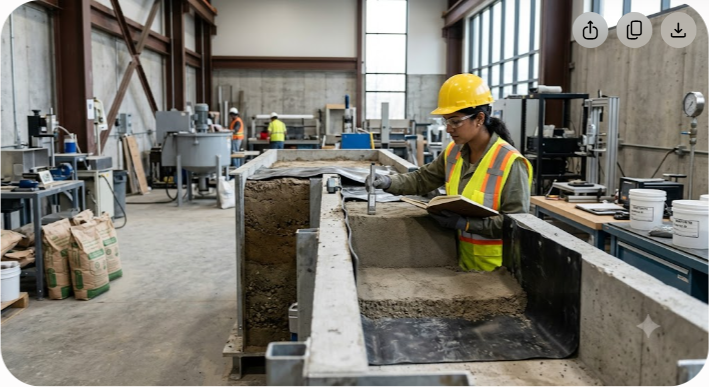
How do we verify that a mineral processing method is genuinely sustainable? Industrial buyers increasingly require Life Cycle Assessments (LCAs) and Environmental Product Declarations (EPDs). An LCA quantifies environmental impacts across the product lifespan, evaluating key metrics:
| Sustainability Metric | Traditional Bentonite Processing | Sustainable Modern Processing | Percentage Reduction |
|---|---|---|---|
| Thermal Energy (MJ/ton) | 1,200 - 1,800 MJ | 400 - 600 MJ | ~65% Lower |
| Electrical Energy (kWh/ton) | 65 - 85 kWh | 45 - 55 kWh | ~30% Lower |
| Freshwater Consumption (m 3 /ton) | 1.2 - 2.5 m 3 | 0.1 - 0.3 m 3
| ~88% Lower | | Scope 1 & 2 Carbon Footprint | 180 - 240 kg CO 2 ?
e/ton | 70 - 110 kg CO 2 ?
e/ton | ~55% Lower |
| Land Reclamation Rate | Post-mining (Delayed years) | Progressive (Concurrent with mining) | Continuous |
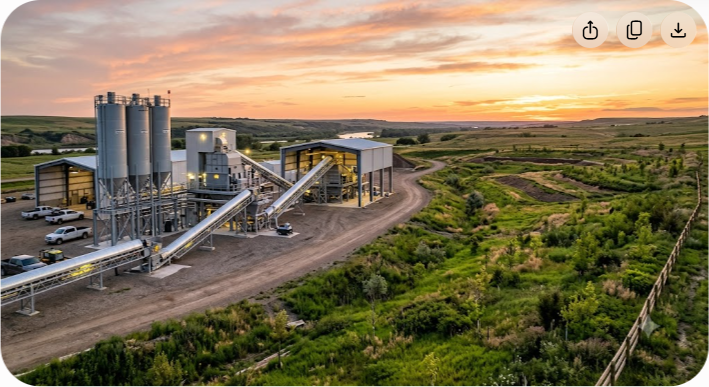
Producers like Axewelledge, with vast high-purity reserves exceeding 60 million tons, demonstrate how integrating large-scale reserves with solar pre-drying and modernized processing assets significantly lowers embedded carbon per ton delivered to global markets.
Different industrial sectors require specific bentonite grades. Let me show you how sustainable processing delivers exact technical requirements across key sectors.
?9 cm/s.
? C, wet tensile strength >0.25 N/cm².
Mineral extraction is a temporary land use. A truly sustainable producer plans for mine closure before the first excavator digs into the soil.
Progressive overburden handling makes concurrent land reclamation standard practice. As mining moves forward along a seam, exhausted pit sections are immediately backfilled with stored overburden.
Topsoil—carefully stockpiled during initial clearing—is re-applied over backfilled areas. The land is re-contoured to match natural drainage patterns, seeded with indigenous grasses and trees, and returned to agriculture or forestry within two to three years of extraction.
This continuous restoration cycle prevents soil erosion, preserves local biodiversity, and eliminates the legacy of abandoned open pits.
If you manage procurement or quality assurance for an industrial enterprise, transitioning to sustainably sourced bentonite requires evaluating your suppliers. Here is a practical checklist for auditing your clay supplier's process:
The industrial mineral sector is evolving fast. As global infrastructure projects, energy transition initiatives, and industrial foundries face strict Scope 3 emission targets, the materials powering these operations must keep pace.
Investing in sustainable mineral processing proves that industrial performance and environmental protection go hand in hand. By selecting high-yield bentonite produced with minimal environmental footprints, engineers and buyers protect project deadlines, safeguard natural ecosystems, and secure reliable supply chains for decades to come.













Have questions about our products? We're here to help!