Axewelledge, a leading exporter from India, specializes in high-quality Bentonite. With a commitment to excellence, we supply premium Bentonite to the Middle East and Southeast Asia markets.


North Angle Complex, 304,
150 Feet Ring Rd, Opposite Ambedkar Nagar BRTS Stop,
Madhav Park, Punit Nagar,
Mavdi, Rajkot, Gujarat 360004
© Axewelledge 2026, All Rights Reserved.
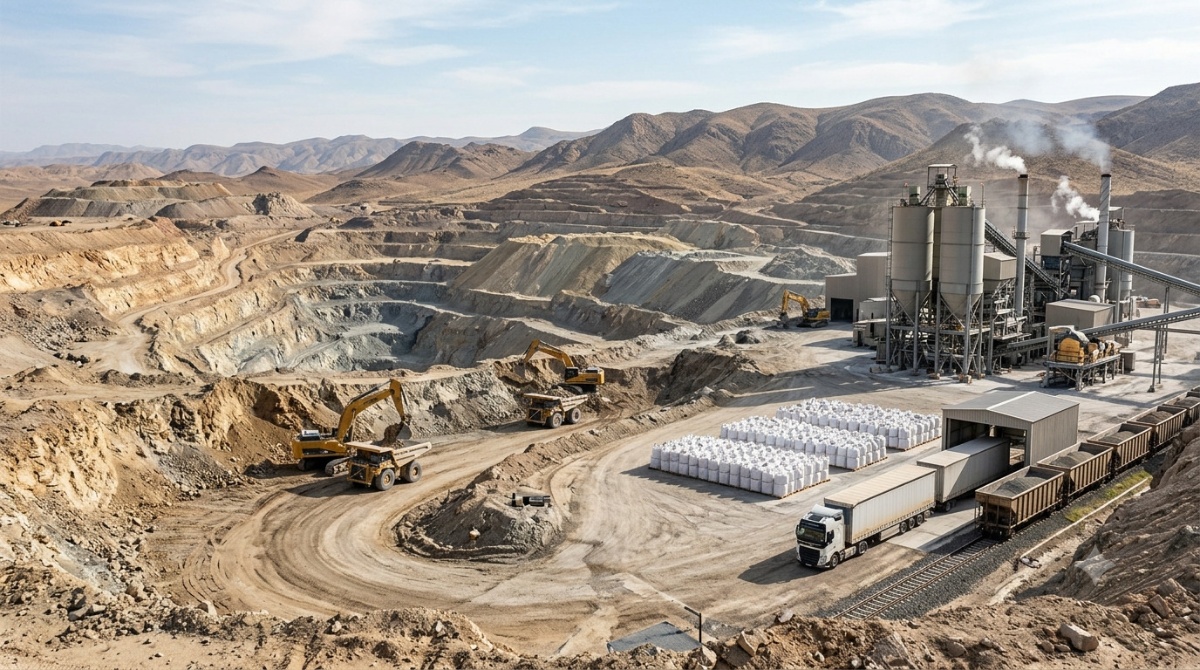
Thailand’s industrial landscape is expanding rapidly. From mega-infrastructure projects across Bangkok to the deep-foundation construction of maritime utilities, the demand for high-grade industrial minerals has reached an all-time high. Among these minerals, bentonite clay stands out as a critical raw material powering civil engineering, geotechnical drilling, metal casting, and environmental remediation.
Because of Thailand's unique geographic and geological realities, local domestic extraction cannot keep up with the technical specifications required by modern machinery. This supply gap has turned India—specifically the mineral-rich Kutch region in Gujarat—into the primary hub for Thai businesses looking to import high-swelling sodium bentonite and versatile calcium bentonite.
Successfully managing an international mineral supply chain requires a deep understanding of mineral chemistry, logistics, and partner verification. This guide provides a detailed breakdown of how to identify the premier Indian bentonite supplier for your specific industry, optimize your procurement pipeline, and choose a partner capable of keeping your operations running smoothly.
Thailand’s key industrial sectors rely heavily on bentonite's unique physics and chemistry. Often referred to as the "clay of a thousand uses," this volcanic ash-derived material consists primarily of montmorillonite. When interacting with liquids, its internal structure expands, providing high viscosity, low permeability, and strong thermal binding properties.
Different industries require completely different technical grades of this mineral.
Large-scale infrastructure developments across Thailand, including Mass Rapid Transit (MRT) extensions, deep foundation bridge constructions, and high-rise commercial structures, require superior trench and borehole stabilization.
During bored piling and diaphragm walling, workers pump a dense bentonite slurry into the excavation zone. This slurry exerts continuous hydrostatic pressure against the surrounding soil formations, which prevents borehole walls from collapsing. Simultaneously, the clay forms an impermeable filter cake along the excavation edges, sealing off porous soil layers and halting groundwater intrusion. For these critical operations, companies must source civil engineering bentonite that provides exceptional thixotropic gel strength and predictable yield points.
As Thailand modernizes its urban infrastructure, trenchless technologies like Horizontal Directional Drilling (HDD), micro-tunneling, and sub-sea pipe jacking are becoming standard for laying fiber-optic networks, electrical conduits, and water lines.
HDD fluids need high-yield drilling bentonite capable of carrying heavy cuttings out of deep underground tunnels. The drilling fluid must be viscous enough to suspend excavated rock and soil while circulating, yet fluid enough to minimize friction on the drill string and cool the cutting bits. Thai drilling companies regularly seek out premium products that comply strictly with American Petroleum Institute (API) or OCMA international standards to prevent expensive downhole tool failures.
Thailand’s robust automotive manufacturing and machinery casting industries depend on high-quality green sand molding processes. In these foundries, bentonite serves as the primary binding agent holding silica sand molds together during molten metal pouring.
The clay must withstand extreme temperatures without losing its structural integrity. Selecting a foundry-grade bentonite with excellent thermal stability, high green compression strength, and optimal dry strength helps prevent surface defects, gas porosity, and mold deformation, ensuring clean metal finishes for automotive components.
With stricter environmental regulations surrounding industrial wastewater and hazardous waste disposal throughout Rayong and other industrial zones, containment systems are vital. High-swelling sodium bentonite serves as a natural, low-permeability liner for landfill cells, tailing ponds, and hazardous waste storage. Its high cation-exchange capacity also makes it an excellent natural flocculant in industrial water treatment, binding to suspended solids and capturing heavy metal ions.
When Thai procurement teams look at international sourcing options, they must choose between naturally occurring minerals and chemically modified alternatives. This choice heavily impacts both project costs and long-term performance.
| Bentonite Property | Natural Indian Sodium Bentonite | Chemically Activated Alternatives |
| Primary Composition | Naturally rich in Sodium Montmorillonite | Calcium Bentonite treated with Soda Ash |
| Free Swelling Volume | 20 to 30 ml per 2 grams | Variable (degrades under thermal stress) |
| Thermal Durability | Retains crystalline structure at high heat | Tends to break down under high heat cycles |
| Long-Term Sealing | Permanent, stable hydraulic barrier | Prone to ion-exchanges that increase permeability |
The Kutch region in Gujarat, India, holds some of the world's most valuable deposits of natural sodium bentonite. Unlike many global regions where suppliers must take lower-grade calcium bentonite and chemically activate it using soda ash treatments to swap out calcium ions for sodium ions, premium Indian deposits are naturally rich in sodium ions.
This natural mineral structure gives Indian sodium bentonite a major competitive edge. It can absorb multiple times its dry weight in water, expanding 15 to 20 times its original dry volume into a thick, watertight gel. This makes it highly stable under thermal stress and prevents it from breaking down over long storage cycles or extended exposures to variable groundwater chemistries. For a Thai importer, sourcing a naturally superior raw material reduces the risk of structural failures during deep piling operations or casting defects in automated foundries.
Sourcing industrial minerals globally requires vetting more than just a low price per metric ton. To secure your supply chain and protect your production lines, look for several foundational capabilities when evaluating an Indian mineral exporter.
[ Indian Supplier Selection Framework ]
│
┌──────────────────────────────┼──────────────────────────────â”
â–¼ â–¼ â–¼
Mine Ownership Advanced Lab Testing Logistics Infrastructure
(Price stability, (API/OCMA standards, (Custom packaging, bulk bags,
60M+ tons reserve) batch certificates) port-proximate shipping)
The global mineral market can experience sudden price spikes and sudden supply shortages. Working with a broker or a third-party trader exposes your Thai business to these volatile fluctuations. Choosing an exporter that owns and operates its own mining reserves provides long-term price stability and ensures that the mineral composition remains uniform across multiple shipments over multi-year projects.
When assessing capacity, look for suppliers with deep, multi-million-ton reserves. For example, checking how a top bentonite exporter from India coordinates large-scale extraction shows that direct control over mining assets allows a supplier to scale production easily, whether you need a few containers or thousands of tons of bulk cargo.
Industrial processes leave no room for guesswork. A variation of even 2% in moisture content or a drop in liquid limit values can ruin a foundry mold mix or cause a borehole wall collapse.
Your chosen supplier must operate an advanced, in-house laboratory to analyze every extracted batch. They should consistently measure key metrics like:
Montmorillonite purity percentages
Marsh funnel viscosity
Fluid loss volumes
Particle size distribution using precise mesh grading
A professional supplier will always provide pre-shipment samples and include a certified Certificate of Analysis (COA) with every container shipped to Laem Chabang or Bangkok Port.
Raw bentonite clay directly out of the ground contains varying amounts of moisture and stone impurities. Bringing it up to industrial standards requires sophisticated processing machinery. Look for a partner that utilizes advanced drying, milling, and air-classification systems. This technology ensures uniform particle sizing—whether you require a fine 200-mesh powder for drilling fluids or granulated pellets for agricultural soil adjustments—while minimizing the risk of grit or abrasive contamination.
Bentonite is highly sensitive to ambient humidity. If moisture seeps into the packaging during maritime transit across the Bay of Bengal, the clay can clump and lose its performance characteristics before it ever arrives at your facility.
Your Indian supplier must offer secure, export-grade packaging options. This includes multi-wall paper bags for smaller quantities or heavy-duty, moisture-resistant Jumbo Bags (FIBCs) fitted with internal plastic liners for large-scale operations. Furthermore, ensure their processing plants are located close to major container ports along India's western coast, such as Mundra or Kandla. This proximity cuts down on internal transport times, lowers overall freight costs, and guarantees consistent delivery schedules.
Importing industrial minerals across international borders involves a structured process of technical verification, legal compliance, and careful logistics planning. For procurement managers new to sourcing raw minerals from the Indian subcontinent, following a step-by-step framework ensures smooth execution and eliminates unexpected delays.
Never initiate a mineral purchase using generic terms like "drilling clay" or "foundry bentonite." Work directly with your internal engineering and production teams to document a precise technical data sheet. Clearly specify your required parameters, such as free swell index, moisture limits, grid residue tolerances, thixotropic gel strength, and pH levels.
Before signing contract agreements or transferring funds, request an initial 2kg to 5kg technical sample from the supplier's active production batch. Run this sample through your own internal quality control labs or a certified third-party testing facility in Thailand. This step confirms that the physical performance of the clay matches your machinery requirements and local environmental conditions.
Once the sample passes inspection, establish clear commercial terms. Your purchase contract should clearly define:
IncoTerms (such as FOB Mundra or CIF Laem Chabang)
Exact packaging types and labeling requirements
Delivery timelines and agreed Minimum Order Quantities (MOQ)
Accepted payment terms (such as Irrevocable Letters of Credit or structured Telegraphic Transfers)
Ensure your Indian partner prepares all critical export documentation accurately to avoid custom clearance delays in Thailand. This documentation includes the Bill of Lading, Commercial Invoice, Packing List, Certificate of Origin, and Phytosanitary Certificates if required. Working with an experienced maritime freight forwarder ensures your cargo moves efficiently through port terminals and arrives safely at your factory floor.
For procurement professionals seeking a deeper look into the documentation, sampling protocols, and verification stages of a cross-border mineral cycle, reviewing a detailed how-to import bentonite guide provides a helpful blueprint that applies directly to Southeast Asian trade routes.
For Thai industrial enterprises searching for a dependable, high-capacity partner in India, Axewelledge delivers premium mineral solutions backed by extensive infrastructure. Operating as one of India's premier mine owners and exporters, Axewelledge ranks among the top global producers of bentonite and Fuller's Earth.
┌──────────────────────────â”
│ AXEWELLEDGE INDIA │
└────────────┬─────────────┘
│
┌─────────────────────────┼─────────────────────────â”
â–¼ â–¼ â–¼
Premium Reserves Advanced Processing Global Logistics
Bhuj & Kutch, Gujarat 60M+ tons capacity via 100+ containers daily
(Sodium & Calcium Grade) state-of-the-art mills to over 50 countries
Axewelledge directly controls massive, high-quality bentonite mining reserves located across Bhuj and Kutch in Gujarat, India. With direct access to over 60 million tons of premium-grade sodium and calcium bentonite reserves, the company maintains complete control over raw material quality from initial extraction to final processing. This vast operational scale insulates international buyers from sudden market shortages and guarantees a uniform, reliable mineral composition across long-term supply contracts.
Axewelledge supports diverse industrial segments around the world, exporting high-performance minerals to more than 50 countries across the Middle East, Europe, and Southeast Asia. Their specialized product line includes:
Drilling & Civil Engineering Grades: High-yield bentonite engineered to meet strict API/OCMA standards, providing the superior thixotropic properties needed to stabilize deep boreholes and support trenchless HDD operations.
Foundry Grade Bentonite: Specially milled clay featuring high green sand compression strength and superior thermal durability, designed to create flawless metal castings in automated industrial foundries.
Iron Ore Pelletization Bentonite: High-purity binding agents that improve the green and dry strength of iron pellets, optimizing blast furnace efficiencies.
Environmental & Agricultural Formulations: Highly absorbent clays used for wastewater treatment, secure landfill liners, and specialized soil conditioning applications.
Equipped with cutting-edge milling facilities and a modern research and development laboratory, Axewelledge ensures that every batch meets rigorous international quality standards. Their high-capacity processing plants manage large-scale volume shifts effortlessly, shipping more than 100 containers daily to international markets.
By utilizing secure, moisture-proof bulk packaging and taking advantage of prime plant locations near India's top western container ports, Axewelledge ensures competitive freight rates, streamlined export documentation, and on-time delivery directly to your production facilities in Thailand.
To maximize the efficiency of your mineral import strategy and maintain an uninterrupted production pipeline, consider implementing these sourcing best practices:
Avoid placing last-minute spot orders for critical raw materials. Shipping schedules, port congestion, and seasonal monsoons can impact maritime transit times across Southeast Asian shipping lanes. Providing your Indian supplier with a rolling 3-to-6-month volume forecast allows them to reserve processing capacity and schedule container space ahead of time, preventing unexpected inventory stockouts.
Partnering with an exporter that understands diverse industrial challenges gives you access to vital technical support. Exploring the top industries importing bentonite shows how a versatile supplier can easily pivot and customize product parameters—such as adjusting particle sizing or enhancing swelling indexes—to match your exact processing needs.
While chasing the lowest spot price can yield minor short-term savings, it often introduces significant risks regarding batch consistency and delivery reliability. Building a structured, long-term relationship with an asset-owning supplier like Axewelledge secures your business priority status during periods of high global demand, ensures stable contract pricing, and guarantees a steady supply of high-performance minerals tailored to your specific operations.
As Thailand’s infrastructure and manufacturing sectors continue to advance, the importance of high-grade raw materials cannot be overstated. Sourcing high-swelling sodium or specialized calcium bentonite from India provides Thai businesses with an ideal combination of natural quality and cost-effectiveness.
By shifting away from intermediate brokers and partnering directly with an established mine owner and exporter like Axewelledge, you gain complete visibility over your material sourcing, access to advanced laboratory testing, and the logistical support of a global supplier. Investing time in proper technical verification, selecting the right product grade, and building a reliable supply partnership ensures your industrial operations run smoothly, safely, and efficiently for years to come.













Have questions about our products? We're here to help!