Axewelledge, a leading exporter from India, specializes in high-quality Bentonite. With a commitment to excellence, we supply premium Bentonite to the Middle East and Southeast Asia markets.


North Angle Complex, 304,
150 Feet Ring Rd, Opposite Ambedkar Nagar BRTS Stop,
Madhav Park, Punit Nagar,
Mavdi, Rajkot, Gujarat 360004
© Axewelledge 2026, All Rights Reserved.
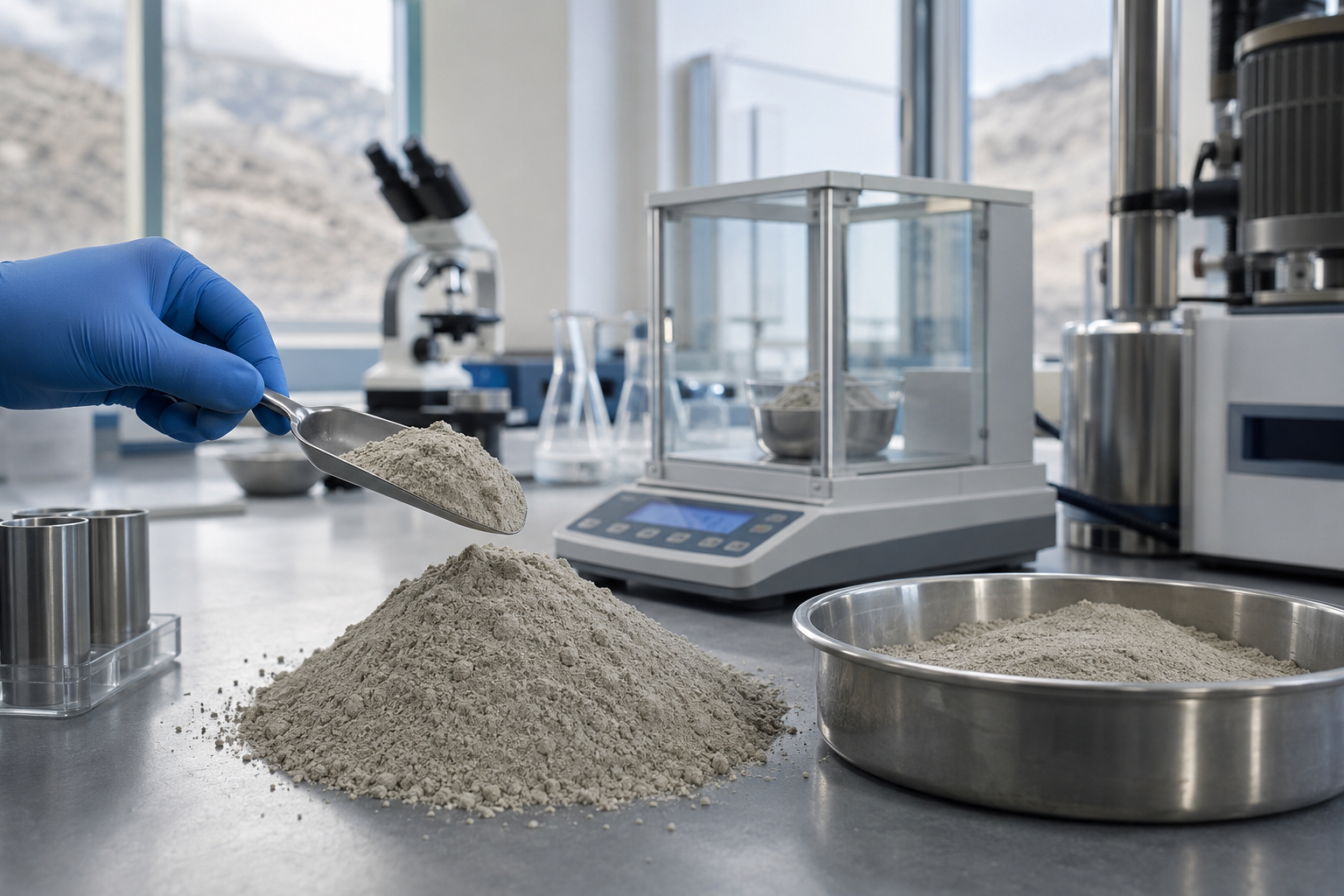
Walk onto any heavy construction site, peer down a multi-thousand-foot oil drilling borehole, or examine a complex municipal wastewater lining project, and you will find a common hero at work: bentonite clay. To the untrained eye, it is just dirt. Toss a handful into water, and it transforms into a thick, slippery, viscous gel that defies standard expectations of earth. But if you have spent any time managing industrial procurement or engineering oversight, you already know that not all clay is created equal.
Raw, unrefined clay straight from an earth deposit is a chaotic mix of minerals, quartz, feldspar, and assorted impurities. If you tried to use crude pit-run bentonite in a high-pressure horizontal directional drilling operation or a sensitive civil engineering slurry wall, your equipment would seize, your seals would fail, and your project timelines would evaporate. The difference between success and catastrophic failure often boils down to two critical factors: purity and refinement.
We have spent over fifteen years working deep within the mineral extraction and processing sector, managing massive reserves and fine-tuning the science of clay. Along the way, we have learned that achieving true industrial-grade performance requires far more than just digging up the earth. It demands rigorous beneficiation, precise particle sizing, chemical activation, and an unwavering commitment to quality control. Let us take a deep dive into why purity and refinement dictate the performance ceiling of industrial bentonite, and how minor changes in processing yield massive dividends on the job site.
Bentonite is fundamentally an absorbent aluminum phyllosilicate clay consisting mostly of smectite minerals, primarily montmorillonite. The magic of bentonite lies in its unique microscopic structure. The crystal lattice of montmorillonite is made up of ultra-thin layers stacked together. Between these layers sit water molecules and exchangeable cations, usually sodium or calcium.
When sodium bentonite comes into contact with water, those water molecules wedge themselves between the crystal layers. The clay swells to many times its original dry volume, creating a thixotropic gel—a fluid that flows easily when agitated by pumping or mixing, but thickens into a stable gel when left undisturbed.
When industrial buyers look for high-grade material, they are usually hunting for sodium bentonite with a high cation exchange capacity (CEC) and minimal inert mineral interference. That is where refinement steps in.
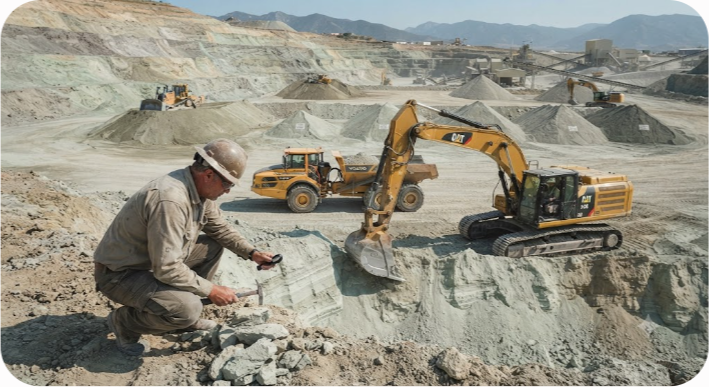
If you scoop clay out of a deposit and bag it without processing, you are buying a lottery ticket. Raw deposits are exposed to millions of years of geological activity, meaning they are laced with non-swelling accessory minerals. Common interbedded impurities include:
Imagine running a multimillion-dollar horizontal directional drilling rig beneath a metropolitan riverbed. Your drilling fluid needs consistent viscosity to suspend cuttings and stabilize the borehole wall. If your unrefined bentonite contains hidden pockets of coarse quartz sand, those abrasive grains will scour your mud motors and wear out your pump impellers in hours. If random soluble salts destabilize your fluid, your borehole caves in. The upfront savings of buying cheap, unrefined clay vanish the moment a single drill string gets stuck.
Turning a crude geological deposit into a high-performance industrial asset requires a sophisticated sequence of processing steps. At our processing plants, we treat mineral preparation as a precision science. Here is what that journey looks like behind the scenes.
Quality starts long before the processing plant fires up its motors. Because natural deposits vary in mineral composition across depth and lateral spread, raw extraction must be managed strategically. By maintaining deep, well-mapped reserves, operators can selectively mine different grades of clay and blend them systematically. This ensures that the baseline feed entering the plant has a stable, predictable chemistry, eliminating wild swings in performance from batch to batch.
Raw bentonite often emerges from the ground with high moisture content and large, rock-hard chunks. The material goes through heavy-duty jaw and roll crushers to break it down into manageable fragments. Next, it passes through rotary dryers to reduce moisture to optimal levels. Controlling drying temperatures is vital; overheat the clay, and you risk collapsing the delicate crystal structure, permanently ruining its swelling capacity.
For calcium-dominant or mixed-layer bentonites destined for high-swelling applications, this stage involves sodium activation. By introducing precise amounts of soda ash (sodium carbonate) under controlled moisture and temperature conditions, calcium ions are displaced by sodium ions. This chemical swap dramatically boosts the clay's swelling potential, transforming a mediocre mineral into a heavy-duty industrial performer.
Particle size distribution dictates how quickly and thoroughly bentonite hydrates. Coarse particles hydrate too slowly, leaving unreacted cores that drop out of suspension. Over-ground powder creates excessive dust and handling hazards. Modern processing utilizes high-efficiency roller mills paired with air classifiers. The classifier acts as an industrial sieve, separating oversized particles and returning them for further grinding while pulling off the precise, uniform micro-powder required for demanding industrial applications.
Different sectors demand different performance metrics from bentonite, but purity and refinement remain the common denominator for success.
In drilling operations, the mud system is the lifeblood of the project. High-purity sodium bentonite creates a thin, low-permeability filter cake on the borehole wall. This cake prevents fluid loss into surrounding formations and stabilizes loose strata. If the bentonite is riddled with impurities, the filter cake becomes thick, permeable, and unstable, leading to fluid loss, formation damage, and potential pipe sticking. Refined bentonite ensures steady rheological properties, keeping mud weights reliable even under high down-hole temperatures and pressures.
Slurry walls, diaphragm walls, and landfill liners rely on bentonite's impermeable nature to keep hazardous fluids and groundwater where they belong. Environmental containment projects have zero margin for error. Regulatory bodies require strict hydraulic conductivity thresholds—often 10 ?7 centimeters per second or lower. Achieving this tight seal requires high-purity sodium bentonite with maximum swelling potential to bridge microscopic voids in the soil matrix.
Foundries use bentonite as a binder for green sand molds used in iron and steel casting. Here, thermal stability and consistent green compressive strength are paramount. Impurities like excess iron oxides or carbonates can alter the melting point of the sand mixture, leading to casting defects, surface roughness, and mold erosion. Clean, refined clay ensures predictable mold behavior pour after pour.
Because of its high surface area and cation exchange capabilities, bentonite acts as an effective clarifier and absorbent in wastewater management. It binds with heavy metals, organic pollutants, and suspended solids, dragging them out of solution. Impurities in the clay itself can leach unwanted minerals back into the water stream, counteracting the purification process. Purity here is not just an efficiency metric; it is an environmental necessity.
It is easy to view raw mineral procurement through the narrow lens of cost per ton. On a spreadsheet, unrefined or low-grade bentonite always looks cheaper. But seasoned project managers know that purchasing industrial minerals is an exercise in total cost of ownership.
When you use high-purity, expertly refined bentonite, you experience:
We see this firsthand at Axewelledge. By integrating advanced R&D, cutting-edge processing technology, and rigorous quality assurance across our expansive mining reserves, we ensure that every batch of bentonite leaving our facilities meets international quality standards. Whether supplying major infrastructure projects in the Middle East or supporting advanced industrial applications across Southeast Asia and beyond, our focus remains fixed on delivering consistent, high-purity mineral solutions that engineers can trust.
If you are sourcing industrial bentonite for your next project, do not rely solely on generic product data sheets. Here are a few practical steps to verify that you are getting a truly refined, high-purity product:
By demanding transparency from your mineral supplier and understanding the mechanics of refinement, you remove the guesswork from your supply chain. High-grade bentonite is a precision tool; treat it as such, and your operations will run smoother, cleaner, and more profitably.
As global infrastructure demands grow more complex and environmental regulations tighten, the tolerance for substandard industrial materials is shrinking. The future belongs to mineral producers who invest in advanced beneficiation technology, sustainable mining practices, and precise quality control.
We continue to refine our processes, leveraging decades of expertise to ensure that our reserves serve as a reliable backbone for industries worldwide. Purity is not just a laboratory metric—it is the foundation of industrial reliability. When you invest in high-purity, expertly refined bentonite, you are investing in the structural integrity of your entire project.













Have questions about our products? We're here to help!