Axewelledge, a leading exporter from India, specializes in high-quality Bentonite. With a commitment to excellence, we supply premium Bentonite to the Middle East and Southeast Asia markets.


North Angle Complex, 304,
150 Feet Ring Rd, Opposite Ambedkar Nagar BRTS Stop,
Madhav Park, Punit Nagar,
Mavdi, Rajkot, Gujarat 360004
© Axewelledge 2026, All Rights Reserved.
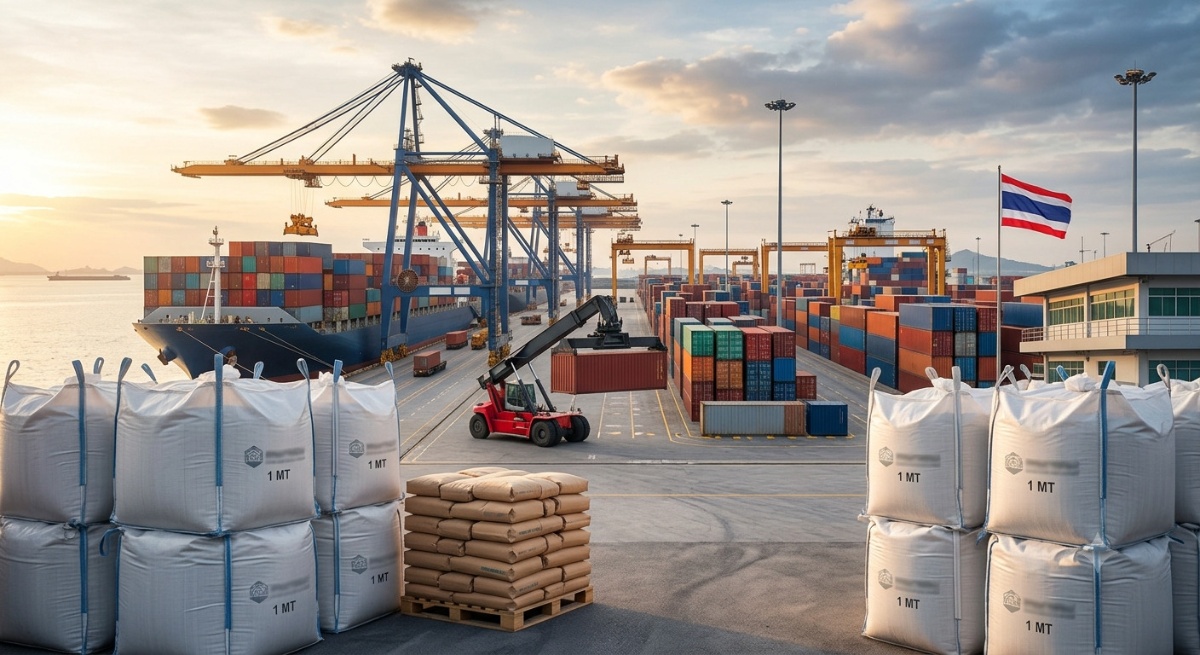
As one of Southeast Asia's major manufacturing, infrastructural, and agricultural centers, Thailand relies heavily on the importation of raw and processed industrial minerals. Because high-grade swelling clay deposits are sparse within its borders, the country looks to global markets to meet its demanding technical requirements. If you are an industrial procurement manager, an international supply chain specialist, or a manufacturing business owner planning to ship this highly versatile volcanic clay into Thai ports, navigating the intricate cross-border compliance landscape is key to preventing multi-week clearance delays and unexpected port expenses.
This comprehensive guide breaks down the essential compliance mechanisms, precise customs classification, and specialized regulatory demands of the Thai market, with an emphasis on how to optimize your supply chain using certified materials from reliable producers.
Thailand's modern economic landscape requires a diverse array of industrial clay grades. To establish an effective import process, you must match your specific technical parameters to the strict quality expectations of Thai industrial buyers. The market is primarily split into four distinct sectors:
Infrastructural Development and Civil Engineering: The Thai government’s ongoing infrastructure programs involve extensive deep-foundation piling, underground tunneling, and diaphragm wall construction. Project engineers rely on high-yield swelling sodium bentonite to create stabilizing fluids that hold open deep excavations against immense soil pressures.
The Metal Casting and Automotive Foundry Industry: As a regional hub for automotive manufacturing, Thailand operates a network of metal foundries. These casting plants utilize high-thermal-stability foundry clay as a binding agent for green sand molds, ensuring clean metal surfaces and minimal casting defects.
The Agri-Food and Animal Feed Sector: Intensive commercial livestock, shrimp farming, and poultry facilities use ultra-pure calcium and sodium bentonite clays. In these operations, the mineral serves as an indispensable technological additive, optimizing feed pellet durability and protecting livestock from toxic mold contamination by acting as a high-capacity toxin binder.
Refining and Chemical Processing: Thai chemical and vegetable oil refineries use activated bleaching earth (acid-activated clay) to clarify oils, remove color bodies, and purify industrial liquids.
Because each sector demands drastically different physical behaviors, such as varying swelling indexes, viscosity ratings, and chemical purity thresholds, your customs declarations and accompanying laboratory data sheets must precisely align with the product's intended industrial use.
To import any mineral commodity into Thailand, you must provide a precise classification under the Harmonized Commodity Description and Coding System (HS). Selecting the wrong code can lead to accusations of misdeclaration, leading to rigorous cargo audits, stiff monetary penalties, and prolonged retention at port terminals like Laem Chabang or Bangkok Port.
For bentonite clay, the classification relies entirely on whether the mineral remains in its raw, natural state or has undergone physical or chemical modification.
HS Code 2508.10.00 (Bentonite - General Classification): This is the core international code for bentonite clay. It encompasses naturally occurring clays, whether or not they have been calcined, ground, or washed.
HS Code 2508.10.10 (Crude/Unprocessed Bentonite): This sub-heading applies specifically to raw, un-pulverized rock or lumps directly extracted from the mining concession, containing its natural moisture and free of any post-extraction chemical treatments.
HS Code 2508.10.90 (Processed, Ground, or Refined Bentonite): This is the most frequently utilized code for international industrial shipments. It covers fine industrial powders, mechanically milled grains, foundry-grade variants, and sodiated clays that have undergone mechanical processing or sodium activation to boost their swelling indexes.
HS Code 3802.90.20 / 3802.90.90 (Activated Clay and Bleaching Earth): If the bentonite has been chemically modified via acid washing or thermal treatments to alter its surface area for refining or filtration purposes, it moves out of Chapter 25 (Mineral Products) and falls under Chapter 38 (Chemical Products) as an activated natural mineral.
| Industrial Application | Common Physical State | Correct HS Code | Typical Regulatory Focus |
| Piling & Civil Engineering | Fine Powder (200-300 Mesh) | 2508.10.90 | Rheological properties, Marsh Funnel Viscosity |
| Metal Casting Foundries | High-Dry-Strength Powder | 2508.10.90 | Montmorillonite content, Green Compressive Strength |
| Livestock & Feed Mills | Ultra-Fine Feed Grade Powder | 2508.10.90 | Heavy metals limits, Dioxin clearance, DLD approval |
| Oil Refining / Bleaching | Acid-Activated Granules/Powder | 3802.90.20 | Surface area, decolorizing efficiency, free acidity |
The standard statutory import duty for bentonite clay entering Thailand under Chapter 25 can vary depending on the country of origin. However, Thailand's active participation in bilateral and multilateral free trade arrangements provides savvy supply chain managers with paths to dramatically reduce or completely eliminate these import taxes.
Sourcing your material from major global mineral processing hubs allows you to capitalize on zero-duty or highly preferential tax frameworks:
ASEAN-India Free Trade Area (AIFTA): Sourcing high-grade swelling clay from premier mining hubs like India allows importers to utilize Form AI. This certificate of origin reduces the standard customs import duty to 0%, providing a major competitive edge in raw material budgeting.
ASEAN-China Free Trade Area (ACFTA): Utilizing Form E for shipments originating from Chinese processing plants similarly unlocks highly favorable, low-to-zero tariff treatments.
General Import Tariff: If a shipment arrives from a non-FTA partner or lacks the mandated, officially endorsed origin documentation, it faces standard import tariffs, along with the non-negotiable 7% Value Added Tax (VAT) applied to the total CIF (Cost, Insurance, and Freight) value plus the duty amount.
Critical Compliance Note: To successfully claim a 0% tariff rate at a Thai port, the name, address, and product descriptions listed on your Certificate of Origin must precisely match every single entry stated on your commercial invoice, packing list, and ocean Bill of Lading. A single typographic mismatch can prompt customs officials to reject the preferential form, forcing you to pay the full standard duty to clear your containers.
Unlike generic building aggregates, industrial clay applications often cross paths with environmental safety, human health, and agricultural food chain security. Depending on how your factory intends to apply the clay, you may need to clear your cargo through secondary government agencies before Thai Customs will authorize its final release into the country.
If you are importing clay intended for use as a technological ingredient, pellet binder, or anti-caking agent in animal feed manufacturing, you face strict scrutiny from the Thai Ministry of Agriculture and Cooperatives' DLD.
The DLD's primary objective is protecting the food supply chain from hazardous contamination. To clear feed-grade clay, importers must prove the shipment is entirely safe and free of biological or industrial toxins. Your supplier must provide a comprehensive, modern laboratory analysis confirming compliance with strict maximum residue limits:
Lead (Pb): Must rigidly remain under 10 ppm.
Arsenic (As): Must be strictly controlled under 2 ppm.
Cadmium (Cd) & Mercury (Hg): Must sit well below international toxic thresholds.
Dioxins and PCBs: Must register a definitive negative or non-detectable result under global safety standards.
To learn more about optimizing your procurement strategy for this demanding sector, consult the specialized bentonite clay for thailand animal feed industry buyer's guide, which outlines the precise mineralogical structures, X-ray diffraction tests, and supplier vetting steps required to pass DLD inspections without cargo rejections.
If the bentonite clay is destined for use as an ingredient in cosmetics, pharmaceutical bases, clarifying processes for human beverage consumption, or wine processing, it falls under the jurisdiction of the Thai FDA. This tracking requires specialized importer registration, pre-market product notifications, and explicit compliance with heavy metal restrictions and microbiological purity standards.
For bulk industrial commodities, the DPIM tracks the domestic consumption of minerals to balance the local economy and manage industrial manufacturing inventories. While they do not usually halt routine deliveries, large-scale industrial buyers must keep accurate records of their imported mineral stockpiles for regulatory transparency.
Successfully managing an industrial clay import requires coordination between the exporter's production facility, the ocean freight forwarder, and your licensed Thai customs broker. The process follows a strict timeline:
[Supplier Preparation: CoA, MSDS, Invoice]
                 │
                 â–¼
[Ocean Transport & Arrival at Thai Port (e.g., Laem Chabang)]
                 │
                 â–¼
[E-Customs System Submission & Duty/VAT Payment]
                 │
                 â–¼
[Regulatory Inspection (DLD/FDA if applicable)]
                 │
                 â–¼
[Green Line Auto-Release OR Red Line Physical Audit]
                 │
                 â–¼
[Cargo Release & Warehouse Delivery]
Before the vessel even departs the loading port, your international supplier must send a comprehensive document package. Ensure you have gathered:
Commercial Invoice: Detailing the exact Unit Price and total FOB/CIF value.
Packing List: Documenting net weight, gross weight, and container packing configurations (e.g., loose jumbo bags vs. palletized 25kg multi-wall paper bags).
Clean Shipped-on-Board Bill of Lading (B/L): Your document of title for the maritime transport.
Certificate of Analysis (CoA): A batch-specific laboratory report detailing the clay's chemical profile, moisture levels, swelling index, and particle size distribution.
Material Safety Data Sheet (MSDS): Essential for verifying transport safety profiles.
Preferential Certificate of Origin: (e.g., Form AI or Form E) to claim zero-duty exemptions.
Thailand utilizes a fully digitized, paperless electronic customs system. Your customs broker will convert your shipping documents into standardized electronic data files and upload them to the central customs network. This system instantly cross-checks your declared values against historical averages for identical HS codes to identify potential under-invoicing.
The electronic system automatically calculates any applicable import duties and the standard 7% VAT. These funds are typically settled electronically via the national e-Payment system, speeding up the clearance process.
Once payment is acknowledged, the customs computer system categorizes your shipment into one of two channels:
Green Line (Automatic Clearance): If your documentation is spotless, your company maintains a strong compliance history, and the origin country forms are clear, the system grants immediate clearance. Your carrier can drive straight to the container yard to pick up the cargo.
Red Line (Physical Inspection and Audit): This status requires a physical customs verification. An agent will open the shipping containers, pull random samples of the powder, examine the labeling, and carefully audit the paper invoices against physical realities. If you are importing specialized products, you can explore the thailand bentonite market top indian exporters and pricing landscape to understand current competitive valuation benchmarks, helping you avoid triggering unexpected under-valuation audits on your shipments.
Even a minor shipping error can alter the chemistry of your clay, causing a delivery that cleared customs perfectly to fail your factory's internal quality controls. Because bentonite is a highly hydrophilic, moisture-seeking mineral, your packaging configuration serves as its primary defense during transit.
The sea routes crossing the Indian Ocean and entering the Gulf of Thailand expose cargo to extreme heat and tropical humidity. If your clay is shipped in low-quality packaging, it will absorb ambient airborne moisture inside the shipping container.
This moisture gain can cause the dry powder to clump, reduce its swelling capacity, create blockages in automated factory hoppers, and foster microbial growth in feed-grade products.
To avoid these operational risks, look for industrial suppliers who offer heavy-duty, climate-resistant packaging:
Customized Jumbo Bulk Bags (FIBCs): Ranging from 1.0 to 1.25 metric tons, these should feature a thick, moisture-resistant internal polyethylene liner along with a integrated bottom discharge spout to facilitate dust-free, automated factory batching.
Multi-Wall Paper Bags (25 kg): Ideal for manual dumping stations, these bags require internal plastic moisture barriers and should arrive tightly palletized, securely wrapped in protective stretch film, and firmly strapped to prevent shifting inside the container during ocean transit.
Developing a resilient, cost-effective import supply chain requires moving past low-tier trading brokers. Instead, focus on establishing direct relationships with verified mine owners and processing firms that control their own mineral deposits.
Bentonite is a natural geological deposit, meaning its mineral composition can vary significantly from one hillside to the next. If your supplier buys raw clay from various unmapped third-party pits, each delivery may behave differently in your production line.
Partnering with an integrated producer that manages its own mining leases and operates automated processing facilities guarantees long-term product consistency. Your production team can trust that every container will deliver the exact same montmorillonite content, thermal binding profile, and viscosity behavior as the initial sample you approved.
Before signing long-term supply agreements, verify that your chosen production partner operates under globally recognized quality management and industry safety frameworks:
ISO 9001:2015: Ensures systematic quality control at every stage, from initial mining to final milling.
API/OCMA Specifications: Non-negotiable for civil engineering, tunneling, and drilling projects, confirming the clay meets strict water-retention and viscosity metrics.
GMP+ / FAMI-QS / ISO 22000: Vital certifications for the animal feed industry, guaranteeing that processing machinery is strictly managed to prevent cross-contamination from industrial chemicals or foreign matter.
By insisting on these rigorous standards, tracking your documents carefully, and choosing the proper HS classification, you can build a streamlined, cost-efficient import channel that keeps your factory operations running smoothly.
Are you currently planning an upcoming shipment or reviewing your procurement budgets? Let me know which industrial application you are focusing on, and we can look into the exact technical specifications or FTA documentation required for your project.













Have questions about our products? We're here to help!